
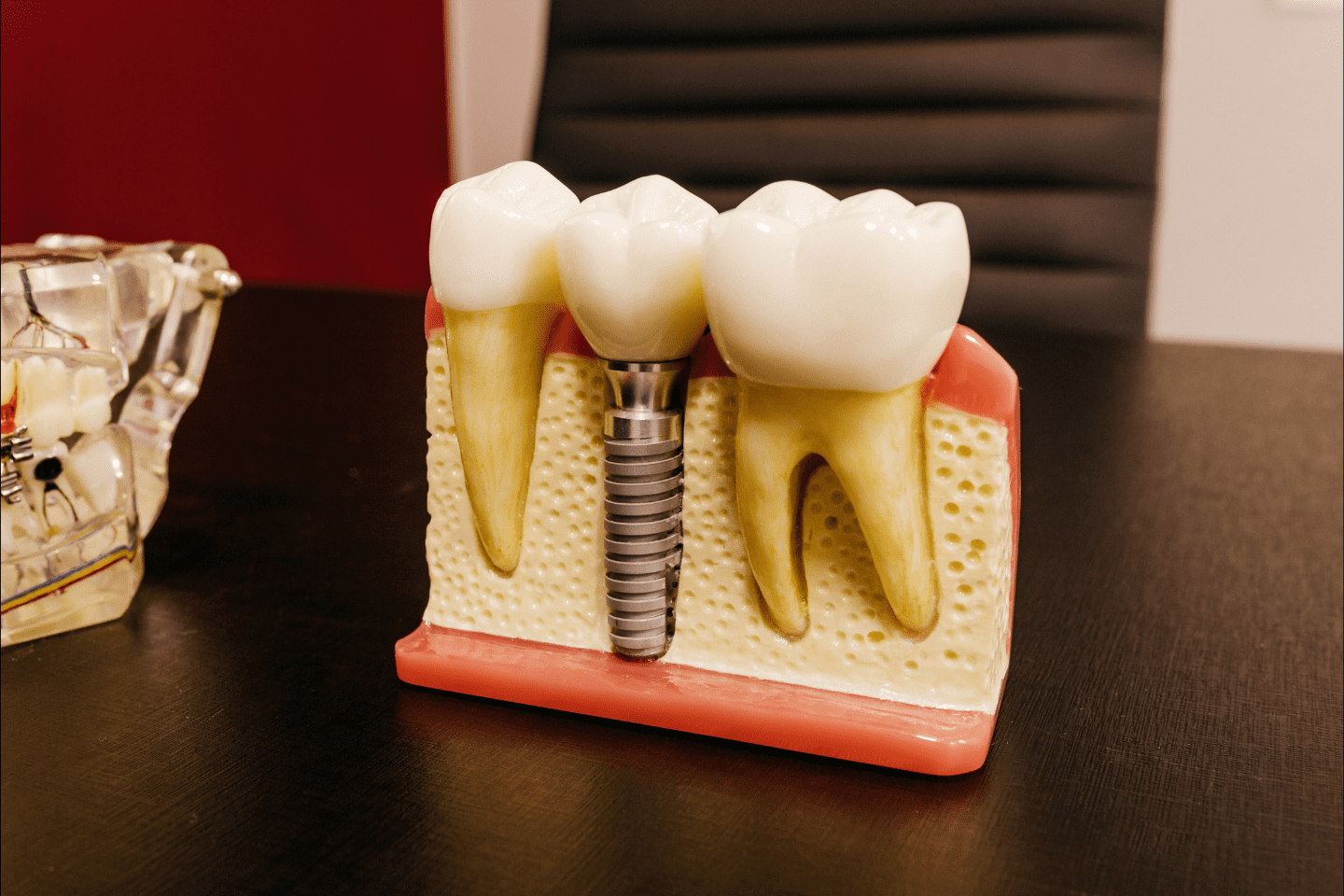

Are Single Tooth Dental Implants Painful in Schaumburg?
If you are currently sitting at your computer or scrolling through your phone, wondering if a single-tooth dental implant is going to hurt, you are definitely not alone. It is perhaps the number one question we get here at Royal Dental Care in Schaumburg. The idea of “surgery” in the mouth sounds intense, and your brain naturally wants to protect you from discomfort. But here is the truth from someone who sees these procedures every day: the anticipation of the pain is almost always significantly worse than the experience.
When we talk about a single tooth dental implant, we are talking about a sophisticated piece of technology designed to work with your body, not against it. Modern dentistry has come such a long way that the process is now streamlined, efficient, and surprisingly gentle. If you have ever had a deep cavity filled or a tooth pulled, you have already experienced something more physically demanding than what an implant typically feels like.
Breaking Down the Sensation of the Procedure
The most important thing to know is that your mouth will be completely numb. We use high-grade local anesthetics that ensure you do not feel any sharp sensations during the placement. Most of our patients in Schaumburg tell us that all they felt was a bit of “tugging” or “pressure,” similar to someone pressing a finger against your arm. It is a strange sensation, sure, but it is not painful.
Beyond the numbing, we also focus heavily on the environment of the office. We know that stress makes pain feel more intense. That is why we take the time to walk you through every step. When you know what is coming, your body stays relaxed, and a relaxed body heals much faster. For those who still feel those butterflies in their stomach, we offer sedation options that can make the whole appointment feel like a brief, hazy nap.
Why the Jawbone is Your Best Friend in Healing?
It sounds counterintuitive, but the bone in your jaw actually has very few pain receptors compared to your skin or the soft tissue of your gums. Once the dentist moves past the surface layer, the bone itself is relatively “quiet” when it comes to sending pain signals to the brain. This is why many people are shocked that they do not need heavy-duty painkillers after a single tooth dental implant.
At Royal Dental Care, we use advanced 3D imaging to see exactly where the densest bone is located. This means we are not guessing. We have a digital roadmap that allows us to place the implant with micro precision. By being so accurate, we cause less trauma to the surrounding area, which is the real secret to a recovery that feels more like a “dull ache” than actual “pain.”
The First Forty-Eight Hours at Home
Once the anesthesia wears off at home, you will start to feel the reality of the procedure. It usually feels like a bruise. If you bumped your shin on a coffee table, it would be tender to the touch and maybe a bit throbby for a day or two. That is exactly what you should expect here.
We usually recommend a simple regimen of over-the-counter Ibuprofen or Tylenol. For the vast majority of our Schaumburg patients, this is more than enough to keep them comfortable. The key is to stay ahead of the sensation. If you take your first dose before the numbness completely fades, you can usually coast through the first afternoon without any trouble at all.
Subtle Signs of Healing You Might Notice
As your body accepts the new titanium post, you might notice some minor swelling or even a tiny bit of discoloration near the site. This is just your immune system doing its job. Think of it as your body “tucking in” the new implant. Using an ice pack for twenty minutes on and twenty minutes off during that first evening is the best way to keep the swelling down.
By the time you wake up on the second or third day, that “tight” feeling in your gums usually starts to dissipate. Most people find they can get back to their normal office work or daily errands within twenty-four hours. You might want to skip the gym for a couple of days just to keep your blood pressure steady, but otherwise, life goes on as usual.
The Long-Term Trade-Off
It is helpful to look at the “pain” of a single tooth dental implant in the context of long term health. Living with a missing tooth is actually more painful in the long run. When a tooth is gone, your other teeth start to shift, which can lead to jaw misalignment, headaches, and even cracked teeth from an uneven bite.
By choosing an implant now, you are preventing years of potential dental discomfort. You are choosing a solution that feels, bites, and brushes just like a real tooth. Once the crown is placed on top of that implant, you will likely forget which tooth was the “fake” one. That is the goal of our Schaumburg team: to get you to a place where you don’t have to think about your teeth at all.
Frequently Asked Questions
Q: Will I need to take a week off work to recover?
A: Not at all. Most of our patients find that they are perfectly fine to head back to work the next morning. If your procedure is on a Thursday or Friday, you will be back to your 100% self by Monday. It is a much faster turnaround than people expect.
Q: What can I eat right after the single tooth dental implant is placed?
A: We recommend sticking to soft foods for the first few days. Think smoothies, mashed potatoes, yogurt, or lukewarm soup. You want to avoid anything crunchy or sharp (like chips) that might poke the surgical site while it is still closing up.
Q: Is there any risk of the implant hurting months later?
A: Once the implant has healed and fused with the bone, it should not hurt at all. In fact, you shouldn’t feel it at all! If you ever feel pain in a healed implant, it is usually a sign that something like gum disease is trying to settle in, and you should come see us right away for a quick checkup.
Conclusion
We know that “surgery” is a heavy word, but at Royal Dental Care, we treat it as a routine path to a better life. A single-tooth dental implant is one of the most successful and predictable procedures in all of medicine. When you combine our local expertise here in Schaumburg with the latest technology and a genuine focus on your comfort, the result is a process that is much easier than you ever imagined. You deserve a full smile, and you don’t have to suffer to get it.
If you are tired of hiding your smile or struggling to chew, let’s talk about how we can make this process easy for you. Contact Royal Dental Care today to set up a low-pressure consultation.
Real Patients. Real Reviews.

Luke
23:42 19 Aug 25
Isabella was great!! Highly recommend her

Julia Swider
23:16 19 Aug 25
Great experience, everyone is very kind and patient. Take time to educate you on what is going on, which is much appreciated. Highly recommend!
Response from the owner 03:11 23 Feb 25
Hi Julia,Thank you for leaving us a review! Your feedback is appreciated.
Pawel Blaszczak
23:12 19 Aug 25

Casey Kinsella
21:16 19 Aug 25
The atmosphere was great. The professionals were friendly. The communication between the office, dentist and patient was awful. I’ve found this with most dentist offices that once they get your money, they forget about you. Not happy with the customer service.

Scott Donaldson
20:52 19 Aug 25

Szymon Szuster
17:12 19 Aug 25

Ozzie Skenderi
13:32 19 Aug 25
Everyone is so nice and helpful!! They are great!!
Response from the owner 03:23 15 Mar 25
Hi Ozzie,We appreciate you taking the time to provide your feedback. We're happy to hear you had a positive experience at our practice!
Jacqueline Hernandez
17:39 18 Aug 25
Really clean and great service

Rafal Raszewski
17:01 18 Aug 25

vivian trankina (viv)
19:09 16 Aug 25
amazing service everyone is kind here i’ve been going here for about 2 ywars

Keluarga Bahagia
22:52 11 Aug 25
Since I moved from another dentist to this Royal Dental treatment has felt so amazing, all the women who work at the desk are very kind to help me and my husband for scheduling, especially for me a dental cleaner who cleans my teeth Lois is my favorite, she is very friendly and does clean details. The dentist is also good, twice helped by the dentist forgot his name, he is also very helpful to check, for all the good and happy come to this Kingdom's teeth

Karina Czajko
16:28 11 Aug 25
Very professional, always respectful! Highly recommend!

Yoly navarrete
15:01 10 Aug 25
The atmosphere is beautiful the place is very clean. Very professional service. I went in for a free consultation. They were very thorough at explaining everything. I will be coming back and I Recommend them.

Alyssa Silvia
18:01 07 Aug 25
Response from the owner 19:44 07 Aug 25
Hi Alyssa Silvia Thanks for visiting Royal Dental Care. We truly value your feedback and your confidence in our team.
Amreen Jalal
17:03 07 Aug 25
izabela was so sweet and made the entire appointment very easy and enjoyable. the environment was really friendly, welcoming and clean. would definitely recommend to others, they’re very thorough with their work!
Response from the owner 19:44 07 Aug 25
Hi Amreen Jalal Thanks for taking the time to leave a review. Your input helps us continue providing high-quality care at Royal Dental Care.
LUKASZ WROBLEWSKI
20:19 05 Aug 25
This is a great place for those who want a gentle dentist, a thorough hygienist, and friendly staff. Everyone is so nice, and the whole office is clean and modern.
Response from the owner 19:44 07 Aug 25
Hi LUKASZ WROBLEWSKI Thank you for your kind words. We're so pleased to know you had a great experience at Royal Dental Care. 
Katherine Dynak
19:39 05 Aug 25
Pretty good service
Response from the owner 19:44 07 Aug 25
Hi Katherine Dynak Your feedback means a lot to our team. We're committed to continuing the excellent care you’ve come to expect. 
Melissa
16:29 05 Aug 25
Very friendly staff. Professional, I’ve been coming here for years now
Response from the owner 19:44 07 Aug 25
Hi Melissa We appreciate your support and are grateful you chose Royal Dental Care for your dental needs. Looking forward to seeing you again. 
Bobby Anderson
23:23 04 Aug 25
I love this place! Been coming for years. I’ve had a lot of work done lol
Response from the owner 19:44 07 Aug 25
Hi Bobby Anderson Thank you for your kind words. We're so pleased to know you had a great experience at Royal Dental Care. 
Rosa Rendon
23:06 04 Aug 25
Very good experience, Israa was amazing and did a great job
Response from the owner 19:44 07 Aug 25
Hi Rosa Rendon Your feedback means a lot to our team. We're committed to continuing the excellent care you’ve come to expect.