

How Long Do Dental Implants Last? What Patients Should Know
When you are considering a major investment in your health and confidence, it is natural to want to know how long that investment will pay off. For many people visiting Royal Dental Care in Schaumburg, dental implants are the gold standard for replacing missing teeth. They look like natural teeth, they feel like natural teeth, and they function like natural teeth.
However, the question of longevity is often at the top of the list during a consultation. Will these last a decade? Two decades? A lifetime? Understanding the lifespan of dental implants involves looking at the technology behind them, how you care for them, and the role your overall health plays in their success.
The Short Answer: Are They Permanent?
In the world of restorative dentistry, dental implants are considered a long-term solution. While dental bridges or dentures typically need to be replaced every five to fifteen years, a dental implant is designed to be a permanent fixture in your smile.
Statistically, dental implants have a success rate of over 95 percent. When placed by experienced professionals and maintained with diligent oral hygiene, the titanium post that serves as the root of the implant can last twenty-five years or even a lifetime.
Understanding the Parts of an Implant
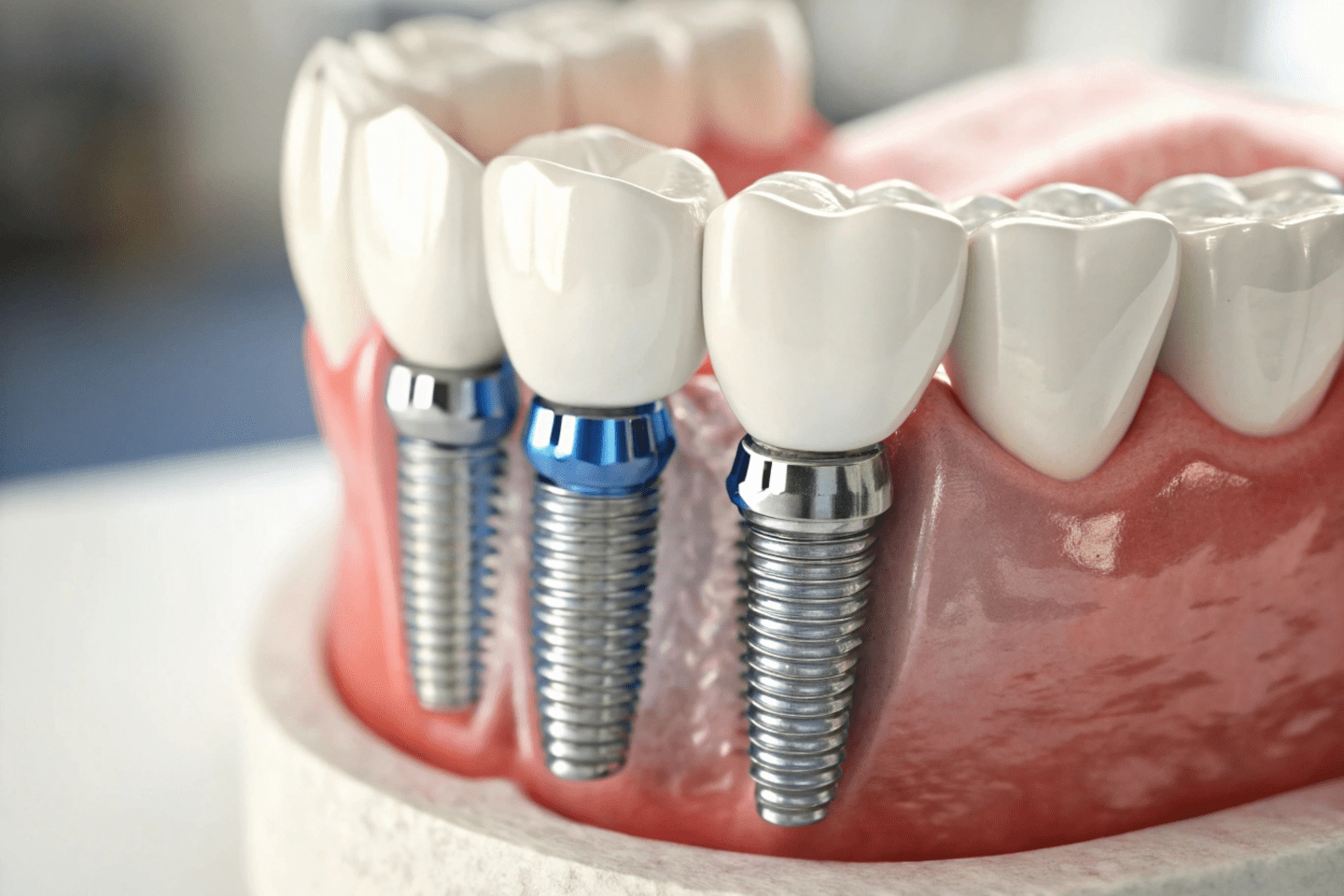
To understand how long they last, it helps to know that a dental implant is actually made of three distinct parts. Each part has a different lifespan and role in your oral health.
The Implant Post: This is the screw-like piece made of medical-grade titanium or zirconia. It is surgically placed into the jawbone. Because it fuses with your bone through a process called osseointegration, this part is intended to be permanent. It becomes a part of your anatomy.
The Abutment: This is a small connector piece that sits on top of the post and holds the replacement tooth in place. This part is very durable and rarely needs replacement unless there is a structural issue or the crown needs adjustment.
The Crown: This is the visible part of the tooth. Because it withstands the daily pressure of chewing and grinding, it may experience wear and tear over time. Most crowns last between ten and fifteen years before they might need to be swapped out for a fresh one to maintain your bite and aesthetics.
Factors That Determine Longevity
While the implant itself is built to last, several factors can influence whether it stays healthy for thirty years or fails within five. At Royal Dental Care, we emphasize that the lifespan of your implant is a partnership between our clinical expertise and your daily habits.
Bone Density and Integration
For an implant to be successful, it must fuse perfectly with the jawbone. If a patient has significant bone loss before the procedure, the implant may not have enough support. This is why we sometimes recommend bone grafting prior to the implant surgery to ensure a solid foundation. A strong foundation is the number one predictor of long-term success.
Oral Hygiene and Maintenance
This is perhaps the most critical factor under your control. Even though the implant itself cannot get a cavity, the gum tissue and bone surrounding it can still be affected by bacteria. If plaque is allowed to build up, it can lead to a condition called peri-implantitis. This is a form of gum disease that can cause the bone around the implant to deteriorate, leading to implant failure.
Lifestyle Choices
Smoking is one of the leading causes of dental implant failure. Nicotine restricts blood flow to the gums and bone, which slows down the healing process and makes it harder for the body to maintain the integration between the bone and the titanium post. If you are a smoker, we highly recommend a cessation plan before beginning the implant process.
Overall Health Conditions
Certain systemic conditions, such as uncontrolled diabetes or autoimmune disorders, can affect the body’s ability to heal and fight off infections around the implant site. If you have a chronic health condition, it does not mean you cannot get implants, but it does mean we need to manage your treatment with extra care and coordination with your primary physician.
The Role of Technology at Royal Dental Care
One reason patients in Schaumburg choose Royal Dental Care is our commitment to using advanced diagnostic tools. The precision of the placement significantly impacts how long the implant lasts.
By using 3D imaging and digital treatment planning, we can identify the densest areas of bone and avoid nerves or sinus cavities. When an implant is placed with mathematical precision, it distributes the force of your bite more evenly. This prevents the bone from being overstressed, which is a common cause of late-stage implant failure.
How to Make Your Implants Last a Lifetime
If you want to ensure your new smile stays intact for the next several decades, follow these essential maintenance tips.
Brush and Floss Like a Pro
You should treat your implants just like your natural teeth. Brush twice a day with a soft-bristle toothbrush and use a low-abrasive toothpaste. Flossing is equally important. There are special types of floss designed specifically for implants that help clean the hard-to-reach areas around the abutment without scratching the surface.
Routine Dental Checkups
Regular visits to our Schaumburg office are vital. We use these appointments to check the stability of the implant and the health of the surrounding gum tissue. Professional cleanings help remove any tartar that you cannot reach at home, ensuring the seal between your gums and the implant remains tight.
Avoid Chewing Hard Objects
While titanium is incredibly strong, the porcelain crown on top can chip or crack if you bite down on ice, hard candy, or popcorn kernels. Use your teeth for eating food, not for opening packages, biting your nails, or holding tools.
Wear a Nightguard if You Grind
If you have a habit of grinding your teeth at night, also known as bruxism, the constant pressure can put an immense amount of stress on the implant. We can provide a custom-fitted nightguard to protect both your natural teeth and your implants while you sleep. This simple step can add years to the life of your restoration.
Signs Your Implant Needs Attention
Even with the best care, issues can occasionally arise. It is important to contact Royal Dental Care if you notice any of the following symptoms.
- Mobility: A healthy implant should feel as solid as a rock. If you feel any movement or wiggling, it is a sign that the bone may not be supporting the post correctly.
- Persistent Pain: While some soreness is normal immediately after surgery, chronic pain or discomfort months later is a red flag that needs investigation.
- Swelling or Redness: If the gums around the implant look puffy, bright red, or are bleeding frequently, you may be dealing with the early stages of an infection.
- Difficulty Chewing: If it suddenly feels uncomfortable to eat on the side of your implant, we need to check if the crown has shifted or if the bite needs adjustment.
Is the Investment Worth It?
When comparing the cost of dental implants to other options, it is important to look at the long-term value. A bridge might be cheaper upfront, but if it needs to be replaced every seven years, the costs add up over time. Because dental implants are designed to last a lifetime, they are often the most cost-effective solution in the long run.
Beyond the finances, the quality of life offered by a long-lasting implant is unmatched. You do not have to worry about your teeth slipping while you talk or about avoiding certain foods because they are too difficult to chew. The confidence that comes with a permanent smile is priceless.
Why Choose Royal Dental Care in Schaumburg?
At Royal Dental Care, we understand that getting dental implants is a life-changing decision. Our team is dedicated to providing a comfortable, professional environment where your oral health is our priority. From the initial consultation to the final placement and long-term follow-up care, we are here to ensure your implants last as long as possible.
We use high-quality materials and the latest surgical techniques to give our patients results that are both beautiful and durable. If you are missing one tooth or an entire arch, we can create a customized plan that fits your needs and your lifestyle.
Ready to Restore Your Smile?
If you are living with missing teeth or uncomfortable dentures, it is time to explore a more permanent solution. Dental implants offer the durability and reliability you deserve. By choosing an experienced team and committing to good oral hygiene, you can enjoy a full, healthy smile for many years to come.
Real Patients. Real Reviews.

Luke
23:42 19 Aug 25
Isabella was great!! Highly recommend her

Julia Swider
23:16 19 Aug 25
Great experience, everyone is very kind and patient. Take time to educate you on what is going on, which is much appreciated. Highly recommend!
Response from the owner 03:11 23 Feb 25
Hi Julia,Thank you for leaving us a review! Your feedback is appreciated.
Pawel Blaszczak
23:12 19 Aug 25

Casey Kinsella
21:16 19 Aug 25
The atmosphere was great. The professionals were friendly. The communication between the office, dentist and patient was awful. I’ve found this with most dentist offices that once they get your money, they forget about you. Not happy with the customer service.

Scott Donaldson
20:52 19 Aug 25

Szymon Szuster
17:12 19 Aug 25

Ozzie Skenderi
13:32 19 Aug 25
Everyone is so nice and helpful!! They are great!!
Response from the owner 03:23 15 Mar 25
Hi Ozzie,We appreciate you taking the time to provide your feedback. We're happy to hear you had a positive experience at our practice!
Jacqueline Hernandez
17:39 18 Aug 25
Really clean and great service

Rafal Raszewski
17:01 18 Aug 25

vivian trankina (viv)
19:09 16 Aug 25
amazing service everyone is kind here i’ve been going here for about 2 ywars

Keluarga Bahagia
22:52 11 Aug 25
Since I moved from another dentist to this Royal Dental treatment has felt so amazing, all the women who work at the desk are very kind to help me and my husband for scheduling, especially for me a dental cleaner who cleans my teeth Lois is my favorite, she is very friendly and does clean details. The dentist is also good, twice helped by the dentist forgot his name, he is also very helpful to check, for all the good and happy come to this Kingdom's teeth

Karina Czajko
16:28 11 Aug 25
Very professional, always respectful! Highly recommend!

Yoly navarrete
15:01 10 Aug 25
The atmosphere is beautiful the place is very clean. Very professional service. I went in for a free consultation. They were very thorough at explaining everything. I will be coming back and I Recommend them.


Alyssa Silvia
18:01 07 Aug 25
Response from the owner 19:44 07 Aug 25
Hi Alyssa Silvia Thanks for visiting Royal Dental Care. We truly value your feedback and your confidence in our team.
Amreen Jalal
17:03 07 Aug 25
izabela was so sweet and made the entire appointment very easy and enjoyable. the environment was really friendly, welcoming and clean. would definitely recommend to others, they’re very thorough with their work!
Response from the owner 19:44 07 Aug 25
Hi Amreen Jalal Thanks for taking the time to leave a review. Your input helps us continue providing high-quality care at Royal Dental Care.
LUKASZ WROBLEWSKI
20:19 05 Aug 25
This is a great place for those who want a gentle dentist, a thorough hygienist, and friendly staff. Everyone is so nice, and the whole office is clean and modern.
Response from the owner 19:44 07 Aug 25
Hi LUKASZ WROBLEWSKI Thank you for your kind words. We're so pleased to know you had a great experience at Royal Dental Care. 
Katherine Dynak
19:39 05 Aug 25
Pretty good service
Response from the owner 19:44 07 Aug 25
Hi Katherine Dynak Your feedback means a lot to our team. We're committed to continuing the excellent care you’ve come to expect. 
Melissa
16:29 05 Aug 25
Very friendly staff. Professional, I’ve been coming here for years now
Response from the owner 19:44 07 Aug 25
Hi Melissa We appreciate your support and are grateful you chose Royal Dental Care for your dental needs. Looking forward to seeing you again. 
Bobby Anderson
23:23 04 Aug 25
I love this place! Been coming for years. I’ve had a lot of work done lol
Response from the owner 19:44 07 Aug 25
Hi Bobby Anderson Thank you for your kind words. We're so pleased to know you had a great experience at Royal Dental Care. 
Rosa Rendon
23:06 04 Aug 25
Very good experience, Israa was amazing and did a great job
Response from the owner 19:44 07 Aug 25
Hi Rosa Rendon Your feedback means a lot to our team. We're committed to continuing the excellent care you’ve come to expect.