
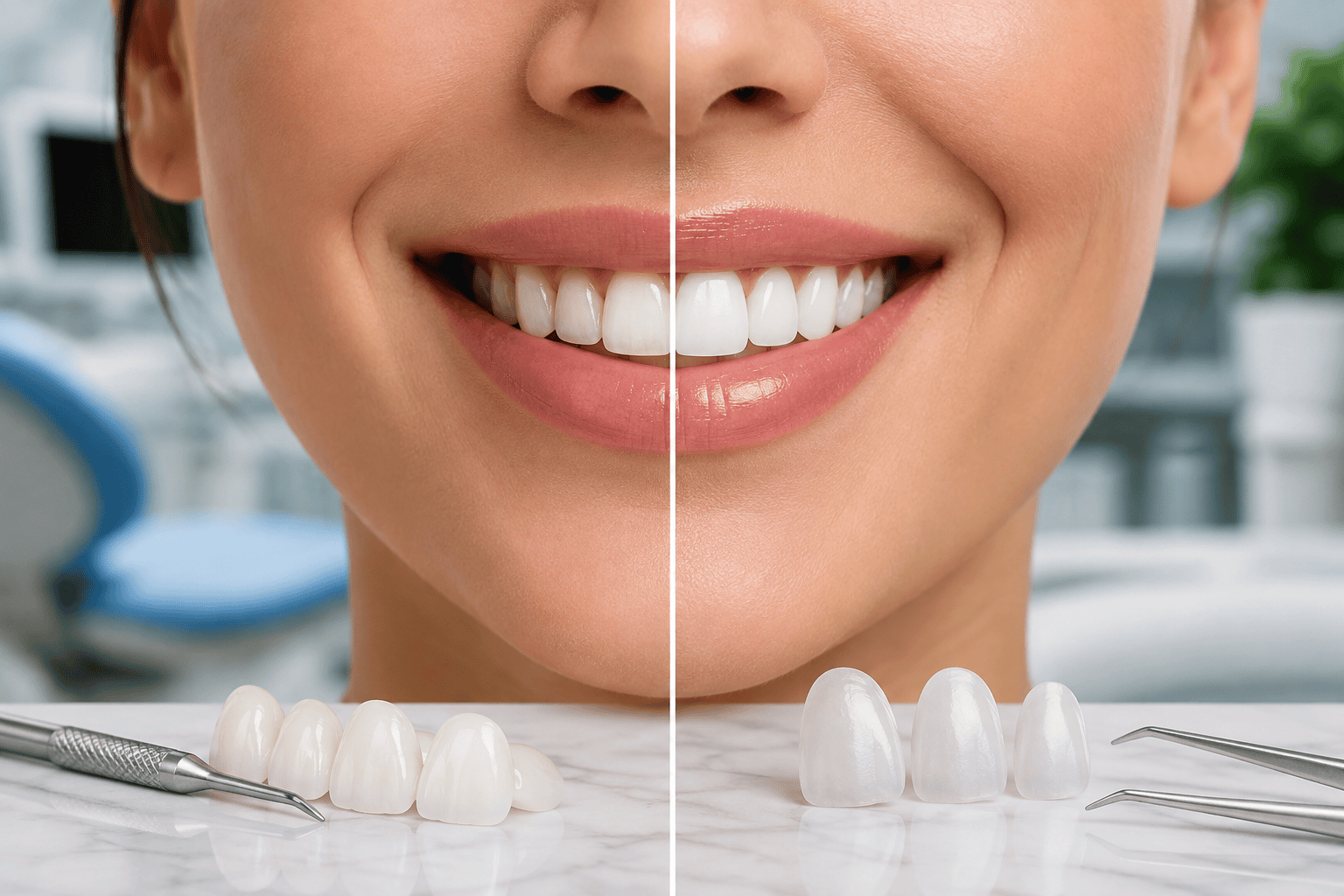

Veneers vs Lumineers: Which Is Better for Your Smile?
If you have ever spent time looking in the mirror wishing your smile looked a little brighter, straighter, or more uniform, you are definitely not alone. Minor chips, deep stains that bleaching cannot fix, or slight gaps between your teeth can make you feel self-conscious during social gatherings or when posing for a quick photo. Luckily, modern cosmetic dentistry has come a long way, offering incredibly lifelike ways to transform your appearance.
When exploring your options online, you will almost immediately run into two major terms: traditional dental veneers and lumineers. Both choices are designed to cover up surface imperfections and give you a flawless, natural-looking result. However, they go about it in very different ways, particularly when it comes to how your natural teeth are prepared before placement.
Choosing between these two popular paths can feel a bit overwhelming at first glance. Let us pull back the curtain on the veneers vs. lumineers debate, looking at how they work, how they feel, and what you can expect from each treatment.
The Fundamentals: What Is the Difference?
To figure out which option matches your lifestyle and aesthetic goals, it helps to look at what these restorations actually are.
Traditional porcelain veneers vs. lumièreers differ primarily in their physical thickness and the structural adjustments required to place them. A classic porcelain veneer is a custom-crafted shell of high-grade ceramic, typically about 0.5 millimeters thick. Because it has some relative substance to it, a dentist must carefully remove a tiny sliver of enamel from the front of your tooth to make room for it. This prep work ensures that the finished shell sits completely flush with your surrounding gumline and does not look bulky.
Lumineers, on the other hand, are a specific brand of ultra-thin digital veneers. They are roughly 0.2 millimeters thick, about the same thickness as a standard contact lens. Because they are so remarkably thin, they often fall into the category of minimal-prep or no-prep restorations. In many cases, a cosmetic dentist can bond them directly over your existing enamel without significant trimming of your natural tooth structure.
Comparing the Procedure: Lumineers vs. Veneers
The physical preparation of your teeth shapes your entire clinical experience, from the amount of time you spend in the dental chair to whether you will need a local anesthetic.
The Traditional Veneer Timeline
When you choose traditional luminaire veneers vs. porcelain veneers, the process is a multi-step journey. During your first active appointment, the dentist numbs the area and lightly shapes the target teeth. Because the protective enamel layer is slightly altered, you will wear a set of temporary acrylic restorations while a professional laboratory handcrafts your permanent porcelain shells.
A couple of weeks later, you return to have the temporaries removed. The dentist then uses a strong dental adhesive to permanently bond the custom porcelain shells to your teeth, making any final adjustments to your bite path.
The Lumineers Experience
The main draw of lumineers teeth vs. veneers is the simplicity of the placement process. Since little to no tooth reduction is often required, you usually do not need any numbing shots or local anesthesia.
The dentist takes a highly accurate digital impression or physical mold of your unaltered smile and sends it out to the specialized laboratory. Because your natural enamel stays completely intact, temporary restorations are often unnecessary. Once your custom pieces arrive, they are bonded directly over your natural teeth in a single, straightforward visit.
Weighing the Pros and Cons of Each Option
Neither option is a one-size-fits-all miracle fix. The right choice depends heavily on the current condition of your natural teeth and the specific look you hope to achieve. For patients considering a broader transformation, a smile makeover may combine multiple cosmetic treatments to address several concerns at once.
Benefits and Limitations of Traditional Porcelain
Traditional porcelain is highly regarded for its exceptional life-like quality. The material mimics the natural depth and light-reflecting properties of human enamel beautifully. Because the dentist shapes your teeth beforehand, this option is fantastic for masking severe discoloration, overlapping teeth, or larger structural chips.
The main drawback is that the process is permanent. Once your natural enamel is trimmed down, those teeth will always need to be covered by a restoration. Understanding this long-term commitment is an important part of deciding whether this approach is right for you.
Benefits and Limitations of Lumineers
The standout feature here is preservation. Knowing that your natural teeth are not being altered provides immense peace of mind, and the process may be reversible in cases where no enamel was removed.
However, because the material is incredibly thin, it may struggle to hide very dark internal stains, such as discoloration caused by old tetracycline treatments. Furthermore, adding even an ultra-thin layer directly over an unprepared tooth can occasionally result in a slightly thicker feel near the gumline if your teeth are already naturally prominent.
Financial Considerations: Veneers vs. Lumineers Cost
Budgetary planning is always a major factor when investing in a cosmetic smile transformation. When you begin mapping out your budget, looking up luminaire vs. veneer cost comparisons will show you that pricing can vary significantly based on individual needs.
In general, the upfront investment for both treatments is relatively comparable on a per-tooth basis, but the underlying fees differ. With traditional porcelain, you are paying for the extensive artistry of a laboratory technician and the advanced clinical prep work of the dentist.
When analyzing veneer vs. lumineer cost balances, Lumineers may reduce certain clinical costs in some cases because there is no need for temporary fabrications or local anesthetics. However, because Lumineers must be manufactured at a specific, authorized facility using proprietary materials, the laboratory production fees remain premium. A detailed clinical exam is the only way to get an accurate breakdown of the total investment for your specific smile.
Which Path Is Right for Your Smile?
Ultimately, the choice comes down to the unique shape and alignment of your mouth. If you have moderate crowding, minor alignment issues, or deep internal staining, traditional porcelain often provides excellent esthetic results because it allows the dentist to completely redesign the outer profile of the tooth. Patients comparing materials can also explore composite and porcelain options to better understand how different materials may affect their final result.
If your teeth are already relatively straight and structurally sound, and you simply want to close small gaps or fix minor color variations without changing your natural tooth structure, Lumineers could be an excellent match. It is also worth discussing how long your results may last when weighing your options.
Transform Your Smile in Schaumburg
Investing in cosmetic dentistry is a deeply personal decision that can completely change how you present yourself to the world. You do not have to guess which option will deliver the best results for your unique facial features and goals.
The experienced cosmetic team at Royal Dental Care is dedicated to helping you navigate your options with clear, honest guidance. We will thoroughly evaluate your oral health, discuss your long-term aesthetic goals, and design a custom treatment plan that helps you achieve your smile goals with confidence. Contact Royal Dental Care in Schaumburg today to schedule your cosmetic consultation and take the first step toward your dream smile.
Frequently Asked Questions
Q: Do Lumineers last as long as traditional porcelain veneers?
A: With proper care, both options boast impressive longevity. Traditional porcelain options typically last between ten and fifteen years, and often longer if looked after well. Despite being incredibly thin, Lumineers are made from a highly durable ceramic material that can also last 10 years or longer with proper care, good oral hygiene, and regular professional checkups.
Q: Can you switch from Lumineers to traditional porcelain later on?
A: Yes. Since the Lumineers process generally leaves your natural enamel completely untouched, you may be able to transition to traditional porcelain later if your aesthetic preferences change or if you need a more opaque restoration to hide deeper discoloration over time.
Q: Does insurance cover the cost of either cosmetic treatment?
A: In the vast majority of cases, dental insurance providers view both options as purely elective cosmetic procedures, meaning they do not cover the cost. However, if a restoration is being placed to repair structural damage caused by an unexpected injury or decay, you may want to check with your provider to see if partial coverage applies.
Q: Is the process of getting traditional porcelain painful?
A: Most patients find the procedure comfortable because your dentist will apply a local anesthetic to completely numb the area before removing any enamel. You might experience minor, temporary sensitivity to hot or cold temperatures for a few days while wearing your temporary covers, but this quickly resolves once the final restorations are permanently bonded in place.
Real Patients. Real Reviews.



Luke
1 year ago
Isabella was great!! Highly recommend her

Julia Swider
1 year ago
Great experience, everyone is very kind and patient. Take time to educate you on what is going on, which is much appreciated. Highly recommend!
Response from the owner
Hi Julia,Thank you for leaving us a review! Your feedback is appreciated.2 years ago

Pawel Blaszczak
1 year ago

Casey Kinsella
1 year ago
The atmosphere was great. The professionals were friendly. The communication between the office, dentist and patient was awful. I’ve found this with most dentist offices that once they get your money, they forget about you. Not happy with the customer service.

Scott Donaldson
1 year ago

Szymon Szuster
1 year ago

Ozzie Skenderi
1 year ago
Everyone is so nice and helpful!! They are great!!
Response from the owner
Hi Ozzie,We appreciate you taking the time to provide your feedback. We're happy to hear you had a positive experience at our practice!2 years ago

Jacqueline Hernandez
1 year ago
Really clean and great service

Rafal Raszewski
1 year ago

vivian trankina (viv)
1 year ago
amazing service everyone is kind here i’ve been going here for about 2 ywars

Keluarga Bahagia
1 year ago
Since I moved from another dentist to this Royal Dental treatment has felt so amazing, all the women who work at the desk are very kind to help me and my husband for scheduling, especially for me a dental cleaner who cleans my teeth Lois is my favorite, she is very friendly and does clean details. The dentist is also good, twice helped by the dentist forgot his name, he is also very helpful to check, for all the good and happy come to this Kingdom's teeth

Karina Czajko
1 year ago
Very professional, always respectful! Highly recommend!

Yoly navarrete
1 year ago
The atmosphere is beautiful the place is very clean. Very professional service. I went in for a free consultation. They were very thorough at explaining everything. I will be coming back and I Recommend them.


Alyssa Silvia
1 year ago
Response from the owner
Hi Alyssa Silvia Thanks for visiting Royal Dental Care. We truly value your feedback and your confidence in our team.1 year ago

Amreen Jalal
1 year ago
izabela was so sweet and made the entire appointment very easy and enjoyable. the environment was really friendly, welcoming and clean. would definitely recommend to others, they’re very thorough with their work!
Response from the owner
Hi Amreen Jalal Thanks for taking the time to leave a review. Your input helps us continue providing high-quality care at Royal Dental Care.1 year ago

LUKASZ WROBLEWSKI
1 year ago
This is a great place for those who want a gentle dentist, a thorough hygienist, and friendly staff. Everyone is so nice, and the whole office is clean and modern.
Response from the owner
Hi LUKASZ WROBLEWSKI Thank you for your kind words. We're so pleased to know you had a great experience at Royal Dental Care. 1 year ago

Katherine Dynak
1 year ago
Pretty good service
Response from the owner
Hi Katherine Dynak Your feedback means a lot to our team. We're committed to continuing the excellent care you’ve come to expect. 1 year ago

Melissa
1 year ago
Very friendly staff. Professional, I’ve been coming here for years now
Response from the owner
Hi Melissa We appreciate your support and are grateful you chose Royal Dental Care for your dental needs. Looking forward to seeing you again. 1 year ago

Bobby Anderson
1 year ago
I love this place! Been coming for years. I’ve had a lot of work done lol
Response from the owner
Hi Bobby Anderson Thank you for your kind words. We're so pleased to know you had a great experience at Royal Dental Care. 1 year ago

Rosa Rendon
1 year ago
Very good experience, Israa was amazing and did a great job
Response from the owner
Hi Rosa Rendon Your feedback means a lot to our team. We're committed to continuing the excellent care you’ve come to expect. 1 year ago