
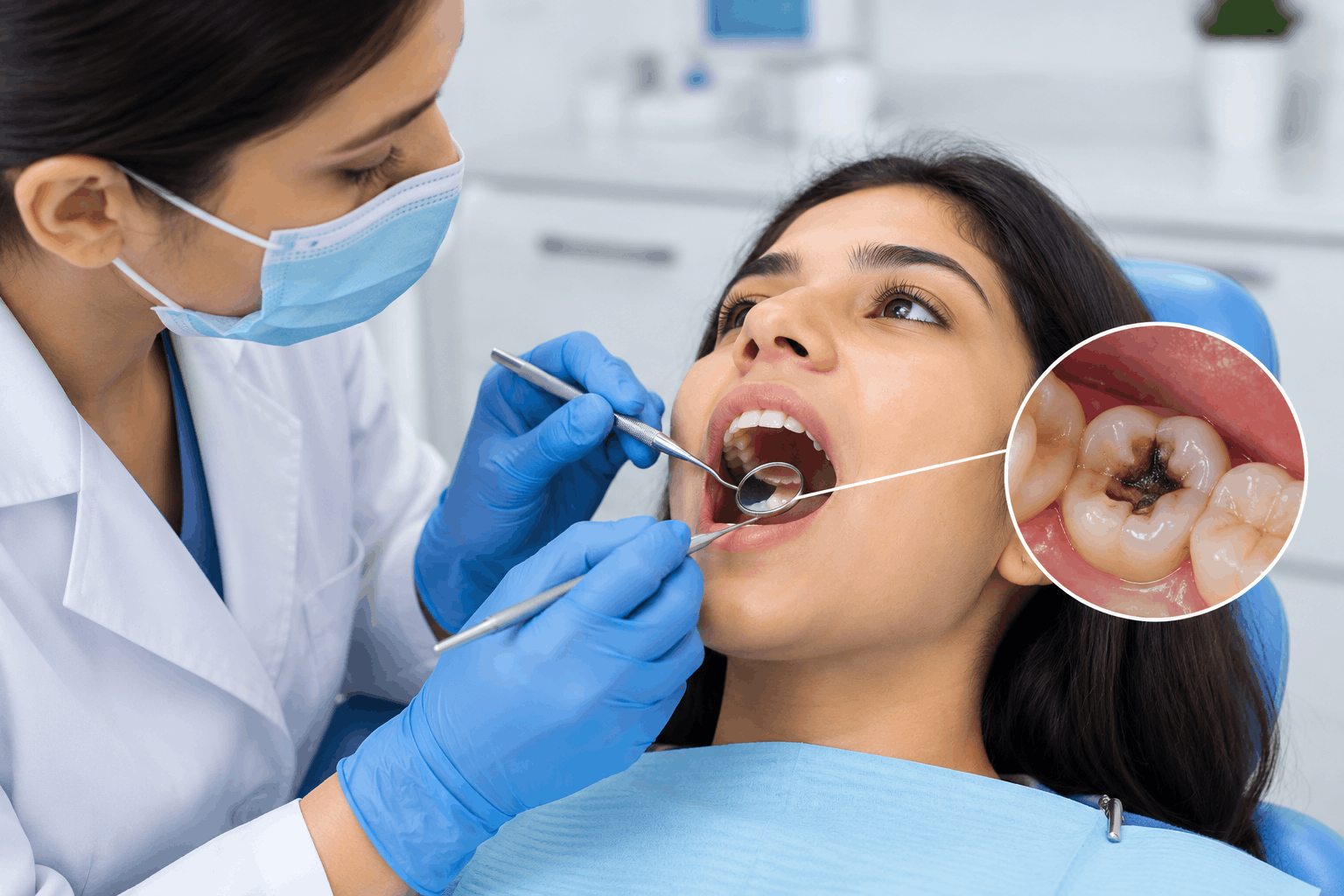

How to Know If You Have a Cavity: Signs, Symptoms & Next Steps
We have all been there. You are halfway through your morning coffee or biting into a crisp apple when suddenly, a sharp little twinge catches your attention right in the middle of a tooth. You brush it off, hoping it was just a fluke, but that tiny nagging thought pops up: could that be a cavity starting to form?
Tooth decay is sneaky. In its earliest stages, it rarely waves a giant red flag, which makes figuring out how do i know if i have cavities a surprisingly common puzzle for patients. People often assume that if nothing hurts, their teeth must be completely fine. Unfortunately, cavities love to whisper long before they start shouting.
At Royal Dental Care in Norridge, we help patients decode these subtle warning signs every day. If you have been wondering how to know if you have a cavity or searching for clues on how do you know when you have a cavity, let’s walk through what actually happens as decay develops, what symptoms to watch for, and how professionals spot what your bathroom mirror might miss.
The Early Stages: Why Cavities Stay Hidden at First
To understand how to tell if i have a cavity, it helps to know how tooth decay actually gets started. Your mouth is packed with bacteria that feed on leftover sugars from the food you eat. When they digest those sugars, they produce acid. Over time, that acid strips away the minerals in your hard outer tooth enamel, a process called demineralization.
In the absolute beginning, a cavity starts as a microscopic chalky white or sometimes brown spot on the enamel. At this stage, there are no nerves inside the enamel, meaning there is usually no pain or sensitivity and no obvious hole. If caught early, remineralization treatments can actually reverse the damage. But once that acid punches all the way through the enamel and hits the softer dentin layer underneath, the physical warning signs begin to crop up.
Common Signs and Symptoms That Point to a Cavity
When decay progresses past the outer shell, your body starts sending out distress signals. Here are some reliable signs that you may have cavities to keep on your radar:
Lingering Tooth Sensitivity
Do you wince whenever you sip ice water, gulp down hot tea, or eat a scoop of ice cream? While occasional sensitivity can happen from worn-out enamel or a loose filling, localized sensitivity that lingers for a few seconds after the hot or cold item is gone can be a sign of a cavity or other dental issue.
Unexplained, Spontaneous Pain
Sometimes a cavity will act up without any trigger at all. You might be sitting at your desk or watching TV and feel a dull, throbbing ache or a sharp, sudden twinge in a specific tooth. This may indicate that the decay has progressed deeper into the tooth and may be affecting the pulp.
Visible Pits, Holes, or Dark Spots
If you are trying to figure out how to check for cavities at home, a quick mirror check can occasionally reveal physical clues. You might spot a distinct dark brown, grey, or black spot on the surface of a tooth. A dark spot may be a sign of decay, although not every dark spot is a cavity. In other cases, you might literally see a tiny pit or visible hole forming, especially in the deep grooves of your back molars.
Rough Edges or Food Trapping
Have you noticed that a piece of food constantly gets stuck in the exact same spot between your teeth every single time you eat? Or does your tongue feel a rough, jagged edge where a tooth used to feel completely smooth? Decay can structurally weaken a tooth, causing a small piece of enamel to chip away or break off, although food trapping can also occur for other dental reasons.
Can You Actually Check for Cavities at Home?
It is completely normal to want to inspect your own smile when something feels off, but knowing how to check for a cavity on your own comes with heavy limitations. You can certainly spot surface discoloration, visible holes, or swollen, angry gum tissue right next to a troubled tooth using good lighting and a mirror.
However, a vast majority of cavities love to hide where your eyes and fingers simply cannot reach. Interproximal cavities, those that form in the tight, hidden spaces between two touching teeth, can be difficult or impossible to see from the front or top. Furthermore, secondary decay can form around or beneath the margins of an old dental filling or crown without any outward sign. This is precisely why figuring out how do i tell if i have cavities ultimately relies on a professional dental examination and appropriate dental imaging that can help detect decay within the structure of the tooth.
What to Do Next If You Suspect a Cavity
If any of these symptoms sound familiar, the best move you can make is to schedule an evaluation rather than waiting for the pain to become unbearable. Catching a cavity early means the fix is usually quick, conservative, and straightforward, often requiring just a simple, tooth-colored filling that can often be completed in a single visit. Letting a small cavity turn into a deep infection, on the other hand, can eventually lead to needing a root canal or a crown.
Schedule Your Dental Exam Today
Are you tired of wondering whether that minor twinge is a cavity or just everyday wear and tear? Let our experienced team give you clear answers and peace of mind. Contact Royal Dental Care in Norridge today to schedule your comprehensive dental exam and take control of your oral health.
Frequently Asked Questions
Q: Can a cavity heal itself without a filling?
A: In its absolute earliest phase, before a physical hole or cavity has actually formed in the enamel, fluoride treatments and diligent home care can sometimes help remineralize and repair the weakened area. However, once a true cavity or structural hole forms in the tooth, it cannot heal on its own and requires professional intervention.
Q: Do all cavities cause pain or sensitivity?
A: Not at all. Many small or moderate cavities cause no pain or sensitivity whatsoever, especially if they are located in areas of the tooth away from the nerve. This is precisely why routine dental checkups at intervals recommended for you are so critical for catching decay before it starts hurting.
Q: How quickly does a cavity grow larger?
A: The speed of tooth decay varies heavily from person to person. It depends on factors like your daily oral hygiene habits, saliva flow, diet, and natural enamel strength. Some cavities progress very slowly over several years, while others can advance rapidly within a matter of months.
Q: What happens if I ignore a cavity for too long?
A: If left untreated, bacteria will continue to bore deeper into the tooth layers until they reach the living nerve pulp at the center. This often leads to severe, throbbing toothaches, dental abscesses, infection, and eventually the potential need for root canal therapy or tooth extraction.
Real Patients. Real Reviews.



Luke
1 year ago
Isabella was great!! Highly recommend her

Julia Swider
1 year ago
Great experience, everyone is very kind and patient. Take time to educate you on what is going on, which is much appreciated. Highly recommend!
Response from the owner
Hi Julia,
Thank you for leaving us a review! Your feedback is appreciated.2 years ago

Pawel Blaszczak
1 year ago

Casey Kinsella
1 year ago
The atmosphere was great. The professionals were friendly. The communication between the office, dentist and patient was awful. I’ve found this with most dentist offices that once they get your money, they forget about you. Not happy with the customer service.

Scott Donaldson
1 year ago

Szymon Szuster
1 year ago

Ozzie Skenderi
1 year ago
Everyone is so nice and helpful!! They are great!!
Response from the owner
Hi Ozzie,
We appreciate you taking the time to provide your feedback. We're happy to hear you had a positive experience at our practice!2 years ago

Jacqueline Hernandez
1 year ago
Really clean and great service

Rafal Raszewski
1 year ago

vivian trankina (viv)
1 year ago
amazing service everyone is kind here i’ve been going here for about 2 ywars

Keluarga Bahagia
1 year ago
Since I moved from another dentist to this Royal Dental treatment has felt so amazing, all the women who work at the desk are very kind to help me and my husband for scheduling, especially for me a dental cleaner who cleans my teeth Lois is my favorite, she is very friendly and does clean details. The dentist is also good, twice helped by the dentist forgot his name, he is also very helpful to check, for all the good and happy come to this Kingdom's teeth

Karina Czajko
1 year ago
Very professional, always respectful! Highly recommend!

Yoly navarrete
1 year ago
The atmosphere is beautiful the place is very clean. Very professional service. I went in for a free consultation. They were very thorough at explaining everything. I will be coming back and I Recommend them.


Alyssa Silvia
1 year ago
Response from the owner
Hi Alyssa Silvia Thanks for visiting Royal Dental Care. We truly value your feedback and your confidence in our team.
1 year ago

Amreen Jalal
1 year ago
izabela was so sweet and made the entire appointment very easy and enjoyable. the environment was really friendly, welcoming and clean. would definitely recommend to others, they’re very thorough with their work!
Response from the owner
Hi Amreen Jalal Thanks for taking the time to leave a review. Your input helps us continue providing high-quality care at Royal Dental Care.
1 year ago

LUKASZ WROBLEWSKI
1 year ago
This is a great place for those who want a gentle dentist, a thorough hygienist, and friendly staff. Everyone is so nice, and the whole office is clean and modern.
Response from the owner
Hi LUKASZ WROBLEWSKI Thank you for your kind words. We're so pleased to know you had a great experience at Royal Dental Care. 1 year ago

Katherine Dynak
1 year ago
Pretty good service
Response from the owner
Hi Katherine Dynak Your feedback means a lot to our team. We're committed to continuing the excellent care you’ve come to expect. 1 year ago

Melissa
1 year ago
Very friendly staff. Professional, I’ve been coming here for years now
Response from the owner
Hi Melissa We appreciate your support and are grateful you chose Royal Dental Care for your dental needs. Looking forward to seeing you again. 1 year ago

Bobby Anderson
1 year ago
I love this place! Been coming for years. I’ve had a lot of work done lol
Response from the owner
Hi Bobby Anderson Thank you for your kind words. We're so pleased to know you had a great experience at Royal Dental Care. 1 year ago

Rosa Rendon
1 year ago
Very good experience, Israa was amazing and did a great job
Response from the owner
Hi Rosa Rendon Your feedback means a lot to our team. We're committed to continuing the excellent care you’ve come to expect. 1 year ago