
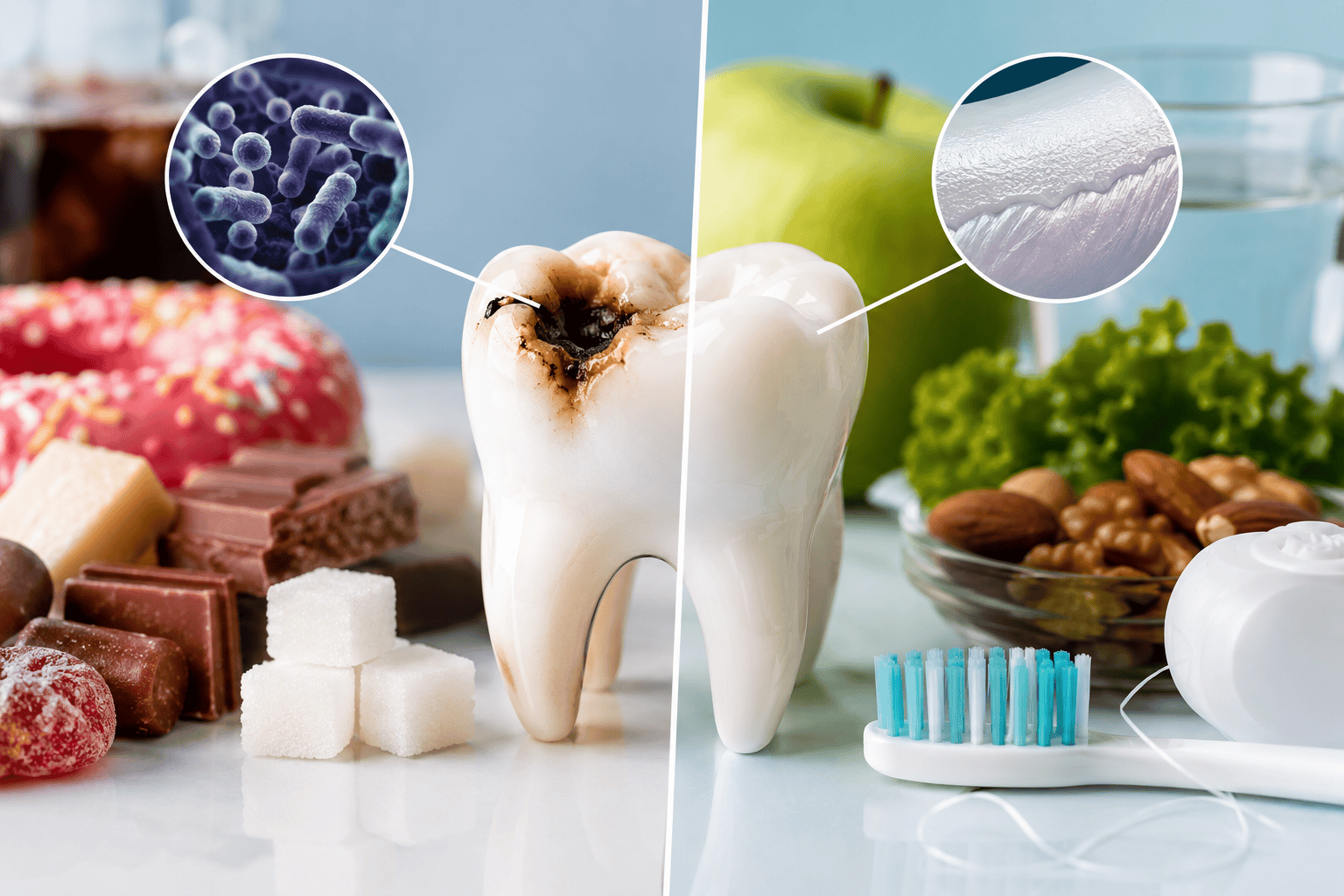

What Causes Cavities and How to Prevent Them
Almost all of us have heard the dreaded news at least once during a routine dental checkup: “You have a cavity.” It is a uniquely frustrating moment, often followed by a quick mental review of your recent brushing and flossing habits. You might wonder how it happened, especially if you feel like you take decent care of your teeth.
Tooth decay is incredibly common, but it does not happen overnight. It is a slow, quiet process that sneaks up on you over weeks and months. Understanding exactly what triggers this breakdown in your mouth is the most effective way to protect your smile from future damage.
If you want to keep your teeth strong and avoid unexpected dental fillings, you need to look at the daily environment inside your mouth. Let us break down the real factors behind tooth decay, what happens beneath the surface, and how you can stop the process before it starts.
The Hidden Mechanics: What Causes Cavities?
To put it simply, a cavity is a permanent tiny hole or structural weak spot in the hard surface of your tooth. But if you want to understand what causes cavities, you have to look at the microscopic battle happening on your enamel every single day.
Your mouth is a living ecosystem. Every time you eat or drink, you are not just feeding yourself; you are also feeding the invisible organisms that live on your teeth, gums, and tongue. When certain elements combine, they create a sticky, colorless film known as dental plaque. If that plaque is allowed to sit undisturbed on your enamel, it starts a chemical reaction that slowly dissolves the protective outer minerals of your teeth.
This process of demineralization is the true baseline of what causes cavity development. If the cycle continues without intervention, the enamel collapses, creating a physical void that requires a professional dental restoration.
Meeting the Culprit: What Bacteria Causes Cavities?
Many people assume that sugar itself physically burns holes into their teeth, but that is actually a misconception. Sugar is just the fuel. The real damage is done by microscopic organisms living inside the plaque biofilm.
If you dive into the science of what bacteria causes cavities, the primary troublemaker is a strain called Streptococcus mutans. This specific bacterium thrives in the oral cavity and is exceptionally good at sticking to smooth tooth surfaces. Another group frequently responsible for ongoing decay is Lactobacillus.
So, how do these tiny organisms cause so much trouble? When you consume carbohydrates, these specific bacteria consume the leftover remnants. As they break down the sugars, they produce a highly acidic byproduct. It is this specific acid, rather than the food itself, that strips away the essential calcium and phosphate minerals from your enamel. When looking at what bacteria causes dental cavities, it is this continuous cycle of acid production that does all the heavy lifting.
Dietary Triggers: What Foods Cause Cavities?
Your diet plays a massive role in how often your teeth are exposed to dangerous acid attacks. While we all know that candy isn’t great for our oral health, the list of what foods cause cavities goes much deeper than just chocolate bars and lollipops.
The real danger comes from fermentable carbohydrates. These are simple sugars and starches that break down quickly right inside your mouth, giving bacteria an immediate food source.
- Sticky Treats: Dried fruits, gummy vitamins, caramels, and honey might seem harmless, but they get trapped in the deep grooves of your molars, providing a long-term feast for oral bacteria.
- Processed Starches: Chips, crackers, white bread, and pasta tend to turn into a sticky paste as you chew, wedging tightly between your teeth.
- Sugary and Acidic Drinks: Soda, fruit juices, sports drinks, and sweetened coffees continuously bathe your teeth in both sugars and direct acids, giving your enamel double the stress.
It is also worth noting that how you eat matters just as much as what you eat. Grazing on snacks or sipping on a sugary drink over several hours is much harder on your teeth than eating or drinking them all at once. Every time you take a bite, your mouth stays acidic for about twenty minutes. Continuous snacking means your teeth never get a break to heal.
Anatomy of Decay: What Causes a Tooth Cavity to Grow?
A cavity does not pop up out of nowhere; it moves through distinct physical stages. Understanding what causes tooth cavity progression can help you spot issues before they turn into severe physical pain.
Stage 1: The Incipient Lesion (White Spots)
Before a physical hole forms, you might notice a chalky white spot on your tooth. This is a sign that the acid has stripped away minerals, leaving the enamel weak. At this incredibly early stage, the damage can actually be reversed with proper care and mineral treatments such as fluoride treatments.
Stage 2: Enamel Breakdown
If the acid attacks continue, the surface enamel completely fractures. Since enamel does not contain living nerves, you usually will not feel any pain during this phase, making it easy to ignore unless a professional spots it on a digital X-ray. In some cases, dental sealants can also provide an added protective barrier over vulnerable grooves and surfaces.
Stage 3: Penetrating the Dentin
Underneath your enamel lies a softer, more sensitive layer called dentin. Once the decay breaks through the enamel shield, it travels much faster through the dentin. This is typically the stage where you notice sudden sensitivity to cold water, hot coffee, or sweet foods.
Practical Steps to Prevent Cavities
The good news is that tooth decay is highly preventable. By disrupting the plaque biofilm and keeping your enamel strong, you can easily break the cycle of decay.
- Brush with Fluoride Twice a Day: Fluoride acts like a shield for your teeth. It flows into the weak structures of your enamel, replacing lost minerals and making the surface much more resistant to future acid attacks.
- Clean Between Your Teeth Daily: A toothbrush simply cannot reach the tight spaces where teeth touch. Daily flossing or using an interdental brush is the only way to clear out the trapped food and plaque that cause cavities between teeth.
- Rinse After Meals: If you cannot brush your teeth immediately after lunch, rinse your mouth thoroughly with plain water to help wash away loose food particles and bring your mouth’s pH levels back to normal.
- Schedule Regular Cleanings: Even the most meticulous brushers can miss a spot. Over time, plaque hardens into a substance called tartar, which can only be safely removed by a professional dental hygienist. Regular professional teeth cleaning can help keep accumulated plaque and tartar under control.
Keep Your Smile Healthy in Schaumburg
At the end of the day, keeping your teeth free of decay requires a mix of solid daily habits and consistent professional oversight. If it has been a while since your last checkup, or if you have noticed a localized spot of sensitivity when drinking cold fluids, getting a professional look is the best way to keep a small issue from turning into an expensive emergency.
If decay has already progressed beyond the point where preventive measures can help, restorative treatment may be necessary. Depending on the extent of the damage, tooth-colored fillings may be used to restore the affected tooth.
The dedicated team at Royal Dental Care is here to help you stay ahead of decay with comprehensive cleanings, advanced digital diagnostics, and personalized prevention strategies built around your daily life. Contact Royal Dental Care in Schaumburg today to schedule your next visit and keep your smile shining bright.
Frequently Asked Questions
Q: Can a cavity go away on its own without a filling?
A: It depends entirely on the stage of the decay. If the decay is caught in its earliest phase when it is just a chalky white spot on the enamel, it can often be reversed and healed through improved hygiene and mineral treatments. However, once the enamel physically breaks down and a hole forms, it cannot heal itself and requires a professional filling.
Q: Why do I get cavities even though I brush my teeth regularly?
A: While brushing is crucial, other underlying variables could be at play. Your genetics, the natural shape and deep grooves of your teeth, chronic dry mouth, and your overall diet all impact your risk levels. Additionally, if you skip daily flossing, you leave nearly a third of your tooth surfaces completely uncleaned.
Q: Does a dry mouth make you more prone to tooth decay?
A: Yes, significantly. Your saliva is your mouth’s natural defense system. It continuously washes away loose food particles, neutralizes the harmful acids produced by bacteria, and supplies fresh calcium and phosphate to rebuild your enamel. When your saliva flow drops, bacteria thrive, and acid damage accelerates.
Q: Are baby teeth cavities a big deal since they just fall out anyway?
A: Yes, they matter immensely. Baby teeth hold the essential structural alignment spaces for the adult permanent teeth growing underneath. If a baby tooth decays and has to be extracted too early, the surrounding teeth can shift out of place, causing severe crowding and alignment issues for their adult smile later on.
Real Patients. Real Reviews.



Luke
1 year ago
Isabella was great!! Highly recommend her

Julia Swider
1 year ago
Great experience, everyone is very kind and patient. Take time to educate you on what is going on, which is much appreciated. Highly recommend!
Response from the owner
Hi Julia,
Thank you for leaving us a review! Your feedback is appreciated.2 years ago

Pawel Blaszczak
1 year ago

Casey Kinsella
1 year ago
The atmosphere was great. The professionals were friendly. The communication between the office, dentist and patient was awful. I’ve found this with most dentist offices that once they get your money, they forget about you. Not happy with the customer service.

Scott Donaldson
1 year ago

Szymon Szuster
1 year ago

Ozzie Skenderi
1 year ago
Everyone is so nice and helpful!! They are great!!
Response from the owner
Hi Ozzie,
We appreciate you taking the time to provide your feedback. We're happy to hear you had a positive experience at our practice!2 years ago

Jacqueline Hernandez
1 year ago
Really clean and great service

Rafal Raszewski
1 year ago

vivian trankina (viv)
1 year ago
amazing service everyone is kind here i’ve been going here for about 2 ywars

Keluarga Bahagia
1 year ago
Since I moved from another dentist to this Royal Dental treatment has felt so amazing, all the women who work at the desk are very kind to help me and my husband for scheduling, especially for me a dental cleaner who cleans my teeth Lois is my favorite, she is very friendly and does clean details. The dentist is also good, twice helped by the dentist forgot his name, he is also very helpful to check, for all the good and happy come to this Kingdom's teeth

Karina Czajko
1 year ago
Very professional, always respectful! Highly recommend!

Yoly navarrete
1 year ago
The atmosphere is beautiful the place is very clean. Very professional service. I went in for a free consultation. They were very thorough at explaining everything. I will be coming back and I Recommend them.


Alyssa Silvia
1 year ago
Response from the owner
Hi Alyssa Silvia Thanks for visiting Royal Dental Care. We truly value your feedback and your confidence in our team.
1 year ago

Amreen Jalal
1 year ago
izabela was so sweet and made the entire appointment very easy and enjoyable. the environment was really friendly, welcoming and clean. would definitely recommend to others, they’re very thorough with their work!
Response from the owner
Hi Amreen Jalal Thanks for taking the time to leave a review. Your input helps us continue providing high-quality care at Royal Dental Care.
1 year ago

LUKASZ WROBLEWSKI
1 year ago
This is a great place for those who want a gentle dentist, a thorough hygienist, and friendly staff. Everyone is so nice, and the whole office is clean and modern.
Response from the owner
Hi LUKASZ WROBLEWSKI Thank you for your kind words. We're so pleased to know you had a great experience at Royal Dental Care. 1 year ago

Katherine Dynak
1 year ago
Pretty good service
Response from the owner
Hi Katherine Dynak Your feedback means a lot to our team. We're committed to continuing the excellent care you’ve come to expect. 1 year ago

Melissa
1 year ago
Very friendly staff. Professional, I’ve been coming here for years now
Response from the owner
Hi Melissa We appreciate your support and are grateful you chose Royal Dental Care for your dental needs. Looking forward to seeing you again. 1 year ago

Bobby Anderson
1 year ago
I love this place! Been coming for years. I’ve had a lot of work done lol
Response from the owner
Hi Bobby Anderson Thank you for your kind words. We're so pleased to know you had a great experience at Royal Dental Care. 1 year ago

Rosa Rendon
1 year ago
Very good experience, Israa was amazing and did a great job
Response from the owner
Hi Rosa Rendon Your feedback means a lot to our team. We're committed to continuing the excellent care you’ve come to expect. 1 year ago