

Can You Get an MRI With Dental Crowns? Safety, Risks & What to Expect
If you have been scheduled for an MRI (Magnetic Resonance Imaging) scan, you might be feeling a bit of anxiety about the metal in your mouth. Whether you have a single dental crown or a full set of restorations, the question of safety is a common concern for patients at Royal Dental Care in Schaumburg.
The short answer is yes, you can safely undergo an MRI with dental crowns. However, there are a few technical nuances regarding how the scan is performed and how the metal might affect the images your doctor needs to see.
How MRI Machines Interact With Dental Work
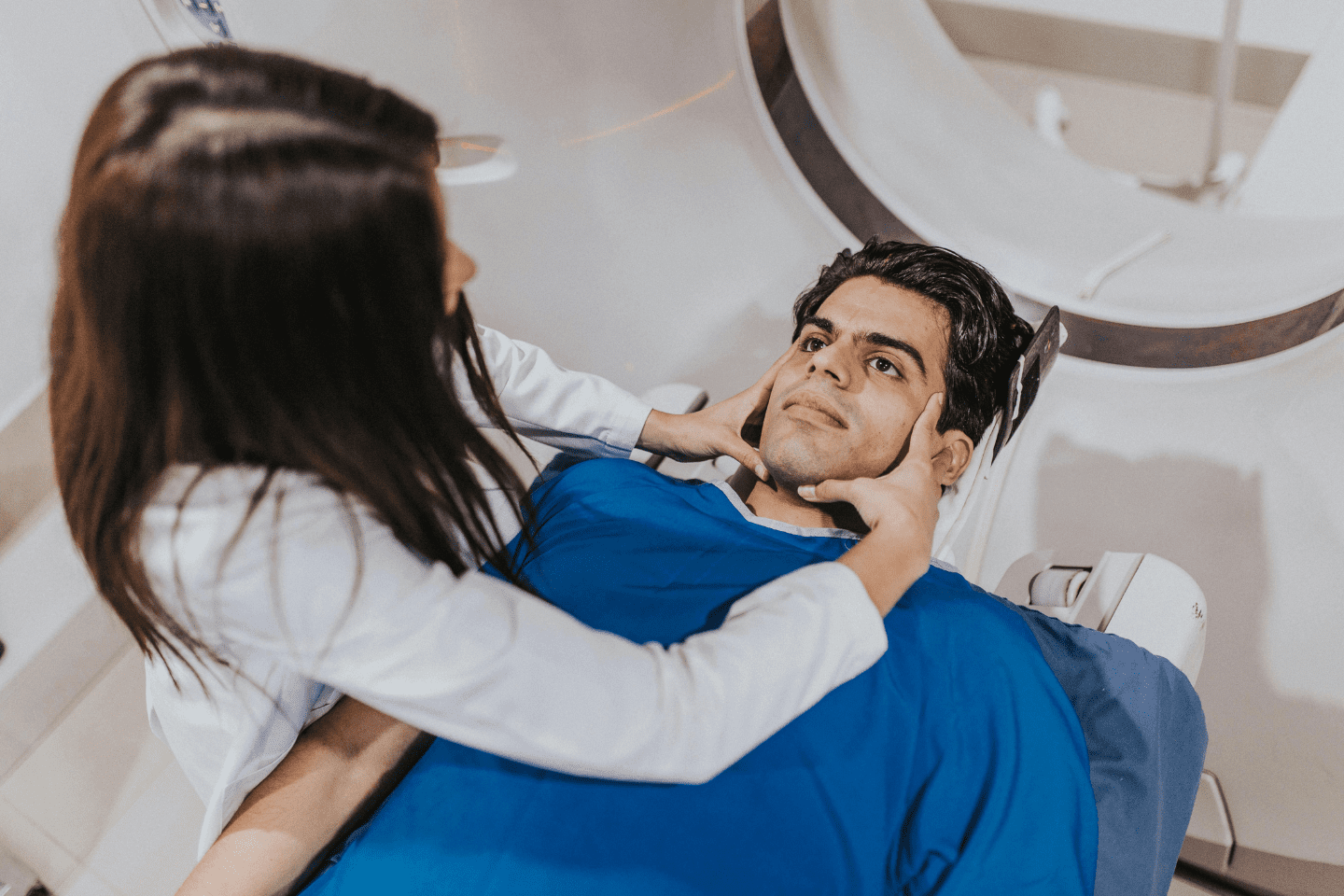
An MRI uses powerful magnets and radio waves to create detailed images of the organs and tissues inside your body. Because the machine uses a massive magnet, any metal object brought into the room can be a concern.
Most modern dental crowns are made from materials that are non-ferrous, meaning they do not contain iron and are not magnetic. Even if your crown has a metal base, it is usually made of gold, silver, or a medical-grade alloy that is considered MRI-safe.
Porcelain, Zirconia, PFM, and Gold Crowns — What’s Actually Safe
The specific material used in your restoration plays a role in how the MRI interacts with your mouth. At Royal Dental Care, we use a variety of materials depending on the location of the tooth and your specific needs.
Porcelain and Zirconia Crowns: These are the most common crowns used today. Since they are essentially ceramic or crystalline, they are completely non-metallic. They will not react to the magnet, and they will not cause any interference with the scan.
Porcelain-Fused-to-Metal (PFM) Crowns: These crowns have a metal structure covered by a porcelain shell. The metal used in these is typically a noble metal or a base metal alloy. These are safe for the MRI machine, though they may cause a small amount of “noise” on the image.
Gold Crowns: Gold is non-ferrous and non-magnetic. If you have a gold crown, you can rest easy knowing it will not be pulled by the magnet or heat up during the scan.
Image Artifacts: Why Crowns Can Blur a Brain, Jaw, or Neck Scan
While safety is rarely an issue, the primary concern for radiologists is something called an image artifact. This is essentially a distortion or a blind spot on the MRI image caused by the presence of metal.
If the MRI is focused on your knee or your lower back, your dental crowns will have zero impact on the results. However, if you are having a scan of your brain, jaw, or neck, the metal in a crown can create a blurry area on the scan.
The radiologist is trained to work around these distortions. In some cases, they may use different settings on the machine to minimize the interference caused by dental work. It is always a good idea to inform the MRI technician that you have dental crowns before the scan begins so they can adjust their approach accordingly.
Will My Crown Feel Different During the Scan?
A common worry is whether the crown will vibrate, heat up, or be pulled out of the mouth. Because dental restorations are cemented firmly to your natural tooth structure and the metals used are non-magnetic, you should not feel any movement or tugging.
Occasionally, some patients report a slight tingling sensation or a metallic taste in their mouth during the procedure, but this is harmless and subsides as soon as the machine stops.
Implants, Braces, and Dentures: Different Rules for Different Dental Work
If you have other dental work beyond just crowns, the rules are slightly different.
- Dental Implants: Much like crowns, implants are usually made of titanium. Titanium is non-ferromagnetic and is considered safe for MRI procedures.
- Braces and Fixed Retainers: These often contain stainless steel. While still generally safe, they are more likely to cause significant image distortion if the scan is being performed on the head or neck.
- Removable Dentures: If your dentures have metal clips or frameworks, you will simply be asked to remove them before entering the MRI suite.
What to Tell Your MRI Technician Before the Scan
Even though dental crowns are safe, transparency is key to a successful medical imaging session. Before your appointment in Schaumburg or the surrounding area, make sure to disclose all dental work to the imaging facility.
If you are unsure what your crowns are made of, our team at Royal Dental Care can review your records and provide you with a list of the materials used in your restorations. This information can be very helpful for the radiologist in determining the best settings for your scan.
Summary of MRI Compatibility
For the vast majority of patients, dental crowns are a non-issue when it comes to medical imaging. You can proceed with your diagnostic tests with confidence, knowing that your dental work is secure and compatible with modern medical technology.
Frequently Asked Questions on Getting MRI with Dental Crowns
Do dental crowns set off metal detectors?
Most modern dental crowns are made from porcelain or zirconia and contain no metal at all, so they will not trigger a metal detector. Crowns made with a metal base, such as porcelain-fused-to-metal (PFM) or gold crowns, contain only a small amount of metal and typically do not set off standard walk-through metal detectors either. If you have a large amount of dental hardware, mention it if asked, but it’s rarely an issue in practice.
Can I get an MRI right after getting a new crown?
Yes, in almost all cases you can have an MRI right after getting a new crown, since crowns are bonded in place and aren’t magnetic implants that need healing time. The main thing to consider is letting the MRI facility know what type of crown you have, especially if it contains metal, so they can plan for any image artifact near your jaw or skull. If you have any doubts about your specific crown material, ask your dentist or the imaging center before your appointment.
Will my dental work show up on the scan images?
Metal-containing dental work, like PFM or gold crowns, amalgam fillings, and metal braces, can create a localized bright or dark distortion called an artifact on MRI images, particularly for scans of the brain, sinuses, jaw, or neck. All-ceramic crowns such as porcelain or zirconia typically cause little to no artifact since they contain no metal. Radiologists are experienced reading around these artifacts, but it’s still helpful to tell your technician about any dental work near the area being scanned.
Real Patients. Real Reviews.



Luke
1 year ago
Isabella was great!! Highly recommend her

Julia Swider
1 year ago
Great experience, everyone is very kind and patient. Take time to educate you on what is going on, which is much appreciated. Highly recommend!
Response from the owner
Hi Julia,Thank you for leaving us a review! Your feedback is appreciated.2 years ago

Pawel Blaszczak
1 year ago

Casey Kinsella
1 year ago
The atmosphere was great. The professionals were friendly. The communication between the office, dentist and patient was awful. I’ve found this with most dentist offices that once they get your money, they forget about you. Not happy with the customer service.

Scott Donaldson
1 year ago

Szymon Szuster
1 year ago

Ozzie Skenderi
1 year ago
Everyone is so nice and helpful!! They are great!!
Response from the owner
Hi Ozzie,We appreciate you taking the time to provide your feedback. We're happy to hear you had a positive experience at our practice!2 years ago

Jacqueline Hernandez
1 year ago
Really clean and great service

Rafal Raszewski
1 year ago

vivian trankina (viv)
1 year ago
amazing service everyone is kind here i’ve been going here for about 2 ywars

Keluarga Bahagia
1 year ago
Since I moved from another dentist to this Royal Dental treatment has felt so amazing, all the women who work at the desk are very kind to help me and my husband for scheduling, especially for me a dental cleaner who cleans my teeth Lois is my favorite, she is very friendly and does clean details. The dentist is also good, twice helped by the dentist forgot his name, he is also very helpful to check, for all the good and happy come to this Kingdom's teeth

Karina Czajko
1 year ago
Very professional, always respectful! Highly recommend!

Yoly navarrete
1 year ago
The atmosphere is beautiful the place is very clean. Very professional service. I went in for a free consultation. They were very thorough at explaining everything. I will be coming back and I Recommend them.

Alyssa Silvia
1 year ago
Response from the owner
Hi Alyssa Silvia Thanks for visiting Royal Dental Care. We truly value your feedback and your confidence in our team.1 year ago

Amreen Jalal
1 year ago
izabela was so sweet and made the entire appointment very easy and enjoyable. the environment was really friendly, welcoming and clean. would definitely recommend to others, they’re very thorough with their work!
Response from the owner
Hi Amreen Jalal Thanks for taking the time to leave a review. Your input helps us continue providing high-quality care at Royal Dental Care.1 year ago

LUKASZ WROBLEWSKI
1 year ago
This is a great place for those who want a gentle dentist, a thorough hygienist, and friendly staff. Everyone is so nice, and the whole office is clean and modern.
Response from the owner
Hi LUKASZ WROBLEWSKI Thank you for your kind words. We're so pleased to know you had a great experience at Royal Dental Care. 1 year ago

Katherine Dynak
1 year ago
Pretty good service
Response from the owner
Hi Katherine Dynak Your feedback means a lot to our team. We're committed to continuing the excellent care you’ve come to expect. 1 year ago

Melissa
1 year ago
Very friendly staff. Professional, I’ve been coming here for years now
Response from the owner
Hi Melissa We appreciate your support and are grateful you chose Royal Dental Care for your dental needs. Looking forward to seeing you again. 1 year ago

Bobby Anderson
1 year ago
I love this place! Been coming for years. I’ve had a lot of work done lol
Response from the owner
Hi Bobby Anderson Thank you for your kind words. We're so pleased to know you had a great experience at Royal Dental Care. 1 year ago

Rosa Rendon
1 year ago
Very good experience, Israa was amazing and did a great job
Response from the owner
Hi Rosa Rendon Your feedback means a lot to our team. We're committed to continuing the excellent care you’ve come to expect. 1 year ago