
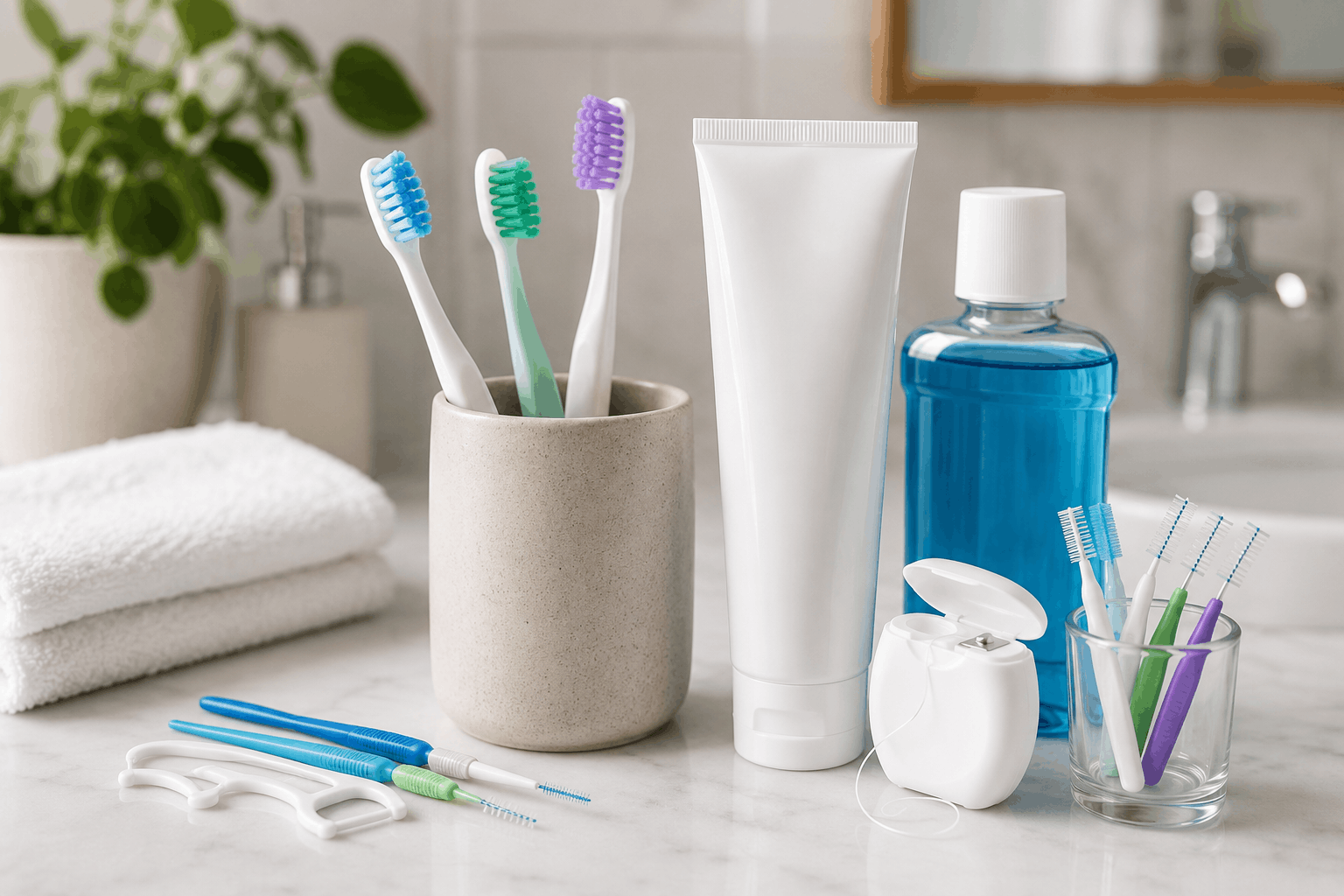

The Best Oral Care Products (Toothpaste, Toothbrushes, and Interdental Tools) Recommended by Our Dentists
Walk down the oral care aisle of any store and you will find countless options claiming to deliver whiter teeth, healthier gums, fresher breath, and better overall oral health. With so many choices available, it can be difficult to know which products are actually worth using.
The truth is that there is no single oral care product that works perfectly for everyone. Your oral health needs are unique, and the best products for you depend on factors such as your gum health, cavity risk, dental restorations, and personal preferences.
At Royal Dental Care Norridge, we often help patients build effective home care routines using products that are simple, practical, and easy to use consistently. Here is what we typically recommend when choosing toothpaste, toothbrushes, and interdental cleaning tools.
Why Choosing the Right Oral Care Products Matters
Even the most advanced dental treatments require proper home care to maintain long-term results. The products you use every day can help:
- Reduce plaque buildup
- Protect tooth enamel
- Support healthy gums
- Prevent cavities
- Freshen breath
- Improve overall oral health
While professional cleanings remain essential, your daily oral hygiene routine plays a major role in keeping your smile healthy between appointments.
Choosing the Right Toothpaste
Toothpaste does much more than freshen your breath. The right formula can help strengthen enamel, reduce sensitivity, and support gum health.
Look for fluoride
One of the most important ingredients to look for is fluoride.
Fluoride helps:
- Strengthen tooth enamel
- Reduce the risk of cavities
- Protect teeth from acid attacks
- Support long-term oral health
For most patients, a fluoride toothpaste remains the foundation of an effective oral care routine. Your dentist may also recommend professional fluoride treatments if you have a higher risk of developing cavities.
Consider Your Specific Needs
Different toothpaste formulations address different concerns.
For example:
- Sensitive teeth may benefit from desensitizing toothpaste.
- Patients prone to cavities may benefit from higher fluoride options.
- Individuals with gum concerns may benefit from toothpaste designed to support gum health.
While specialized toothpastes can be helpful, they work best when combined with proper brushing and flossing habits.
Selecting the Right Toothbrush
Many patients ask whether they should use a manual toothbrush or an electric toothbrush. The answer often depends on personal preference and brushing technique.
Soft Bristles Are Best
Regardless of the type of toothbrush you choose, soft bristles are typically recommended.
Soft-bristled brushes help the following:
- Clean teeth effectively
- Protect tooth enamel
- Minimize gum irritation
- Reduce the risk of gum recession
Contrary to popular belief, harder bristles do not clean better and may actually damage teeth and gums over time.
Manual Toothbrushes
A manual toothbrush can be highly effective when used correctly.
Benefits include:
- Affordable cost
- Easy availability
- Simple design
- Effective plaque removal with proper technique
The key is brushing gently for two minutes twice daily using small circular motions.
Electric Toothbrushes
Electric toothbrushes can be especially helpful for patients who struggle with brushing technique.
Advantages may include:
- Consistent brushing motion
- Improved plaque removal
- Built-in timers
- Pressure sensors that prevent aggressive brushing
- Easier cleaning around hard-to-reach areas
Many patients find that electric toothbrushes help them maintain a more consistent oral hygiene routine.
Why Cleaning Between Your Teeth Is Essential
Even the best toothbrush cannot adequately clean the spaces between teeth.
Plaque often accumulates in these areas, increasing the risk of:
- Gum disease
- Cavities between teeth
- Bad breath
- Gum inflammation
Daily interdental cleaning is one of the most important steps in maintaining healthy gums.
Choosing the Right Interdental Cleaning Tool
Fortunately, there are several effective options available.
Traditional Dental Floss
Dental floss remains one of the most widely recommended interdental cleaning tools.
Benefits include:
- Access to tight spaces
- Effective plaque removal
- Low cost
- Easy portability
For many patients, flossing once daily remains an important part of maintaining healthy gums.
Interdental Brushes
Interdental brushes are small brushes specifically designed to clean between teeth.
They may be particularly useful for:
- Larger spaces between teeth
- Orthodontic patients
- Patients with bridges
- Individuals with dental implants
Many people find interdental brushes easier to use than traditional floss.
Soft Picks and Rubber Interdental Cleaners
Rubber interdental cleaners provide a flexible and comfortable alternative to floss.
These tools can be helpful for:
- Sensitive gums
- Patients who dislike flossing
- Cleaning around restorations
- Daily plaque removal
Because they are easy to use, many patients are more likely to use them consistently.
Water Flossers
Water flossers use a stream of water to remove food particles and plaque from around teeth and gums.
They can be beneficial for:
- Patients with braces
- Dental implant patients
- Individuals with limited dexterity
- Those who find traditional floss difficult to use
While water flossers can be a valuable addition to an oral hygiene routine, they should not always be viewed as a complete replacement for traditional interdental cleaning methods.
Building an Oral Care Routine You Can Stick With
The best oral care routine is one that you can maintain consistently.
Rather than purchasing every product on the shelf, focus on creating a routine that includes:
- Brushing twice daily
- Using fluoride toothpaste
- Cleaning between your teeth daily
- Replacing your toothbrush regularly
- Attending routine dental checkups
Consistency often has a greater impact on oral health than choosing the most expensive.
products available.
Personalized Oral Care Recommendations at Royal Dental Care Norridge
Every smile is different, which is why oral care recommendations should be tailored to your individual needs.
At Royal Dental Care Norridge, we help patients identify the products and techniques that work best for their unique oral health goals. Whether you are managing sensitive teeth, gum disease, dental implants, or orthodontic treatment, our team can provide personalized guidance to help you maintain a healthy smile between visits.
If you are unsure whether your current oral care products are meeting your needs, bring them to your next appointment. We are always happy to review your routine and recommend solutions that support long-term oral health.
Frequently Asked Questions
Should I switch to an electric toothbrush?
Electric toothbrushes can be very effective, especially for patients who struggle with brushing technique or tend to brush too hard. However, a manual toothbrush can also provide excellent results when used properly.
How often should I clean between my teeth?
Most dentists recommend cleaning between your teeth at least once daily using floss, interdental brushes, soft picks, or another appropriate interdental cleaning tool.
Are expensive toothpastes better than regular toothpaste?
Not necessarily. The most important factor is choosing a toothpaste that contains fluoride and addresses your specific oral health needs. Consistent use is often more important than price.
What should I do if my gums bleed when flossing?
Mild bleeding may occur when starting a new flossing routine, especially if inflammation is present. However, persistent bleeding should be evaluated by a dental professional, as it may indicate gum disease.
How often should I replace my toothbrush?
Most toothbrushes should be replaced every three to four months or sooner if the bristles become frayed.
How can I tell if I am brushing too hard?
If your toothbrush bristles become flattened quickly, or if you experience gum recession and sensitivity, you may be brushing too aggressively. Soft bristles and gentle pressure are typically recommended.
Real Patients. Real Reviews.



Luke
1 year ago
Isabella was great!! Highly recommend her

Julia Swider
1 year ago
Great experience, everyone is very kind and patient. Take time to educate you on what is going on, which is much appreciated. Highly recommend!
Response from the owner
Hi Julia,Thank you for leaving us a review! Your feedback is appreciated.2 years ago

Pawel Blaszczak
1 year ago

Casey Kinsella
1 year ago
The atmosphere was great. The professionals were friendly. The communication between the office, dentist and patient was awful. I’ve found this with most dentist offices that once they get your money, they forget about you. Not happy with the customer service.

Scott Donaldson
1 year ago

Szymon Szuster
1 year ago

Ozzie Skenderi
1 year ago
Everyone is so nice and helpful!! They are great!!
Response from the owner
Hi Ozzie,We appreciate you taking the time to provide your feedback. We're happy to hear you had a positive experience at our practice!2 years ago

Jacqueline Hernandez
1 year ago
Really clean and great service

Rafal Raszewski
1 year ago

vivian trankina (viv)
1 year ago
amazing service everyone is kind here i’ve been going here for about 2 ywars

Keluarga Bahagia
1 year ago
Since I moved from another dentist to this Royal Dental treatment has felt so amazing, all the women who work at the desk are very kind to help me and my husband for scheduling, especially for me a dental cleaner who cleans my teeth Lois is my favorite, she is very friendly and does clean details. The dentist is also good, twice helped by the dentist forgot his name, he is also very helpful to check, for all the good and happy come to this Kingdom's teeth

Karina Czajko
1 year ago
Very professional, always respectful! Highly recommend!

Yoly navarrete
1 year ago
The atmosphere is beautiful the place is very clean. Very professional service. I went in for a free consultation. They were very thorough at explaining everything. I will be coming back and I Recommend them.


Alyssa Silvia
1 year ago
Response from the owner
Hi Alyssa Silvia Thanks for visiting Royal Dental Care. We truly value your feedback and your confidence in our team.1 year ago

Amreen Jalal
1 year ago
izabela was so sweet and made the entire appointment very easy and enjoyable. the environment was really friendly, welcoming and clean. would definitely recommend to others, they’re very thorough with their work!
Response from the owner
Hi Amreen Jalal Thanks for taking the time to leave a review. Your input helps us continue providing high-quality care at Royal Dental Care.1 year ago

LUKASZ WROBLEWSKI
1 year ago
This is a great place for those who want a gentle dentist, a thorough hygienist, and friendly staff. Everyone is so nice, and the whole office is clean and modern.
Response from the owner
Hi LUKASZ WROBLEWSKI Thank you for your kind words. We're so pleased to know you had a great experience at Royal Dental Care. 1 year ago

Katherine Dynak
1 year ago
Pretty good service
Response from the owner
Hi Katherine Dynak Your feedback means a lot to our team. We're committed to continuing the excellent care you’ve come to expect. 1 year ago

Melissa
1 year ago
Very friendly staff. Professional, I’ve been coming here for years now
Response from the owner
Hi Melissa We appreciate your support and are grateful you chose Royal Dental Care for your dental needs. Looking forward to seeing you again. 1 year ago

Bobby Anderson
1 year ago
I love this place! Been coming for years. I’ve had a lot of work done lol
Response from the owner
Hi Bobby Anderson Thank you for your kind words. We're so pleased to know you had a great experience at Royal Dental Care. 1 year ago

Rosa Rendon
1 year ago
Very good experience, Israa was amazing and did a great job
Response from the owner
Hi Rosa Rendon Your feedback means a lot to our team. We're committed to continuing the excellent care you’ve come to expect. 1 year ago