

Bioclear vs Veneers: Which Is the Better Investment?
Deciding to give your smile a makeover is a pretty major personal choice. Maybe you are tired of dealing with stubborn tooth staining that standard whitening pastes just cannot shift, or perhaps you have small gaps, minor chips, or uneven edges that always seem to catch your eye in photos. Modern cosmetic dentistry offers some remarkable paths forward. When patients start looking into their options around Norridge, two specific treatments almost always enter the conversation: Bioclear and traditional porcelain veneers.
At first glance, both approaches promise a striking, polished finish. But once you look under the hood, they rely on entirely different philosophies, materials, and clinical techniques. If you are currently weighing bioclear vs veneers and trying to figure out which path makes sense for your schedule, your budget, and your long-term oral health, here is a breakdown to help you navigate your choices at Royal Dental Care Norridge.
What Are Porcelain Veneers?
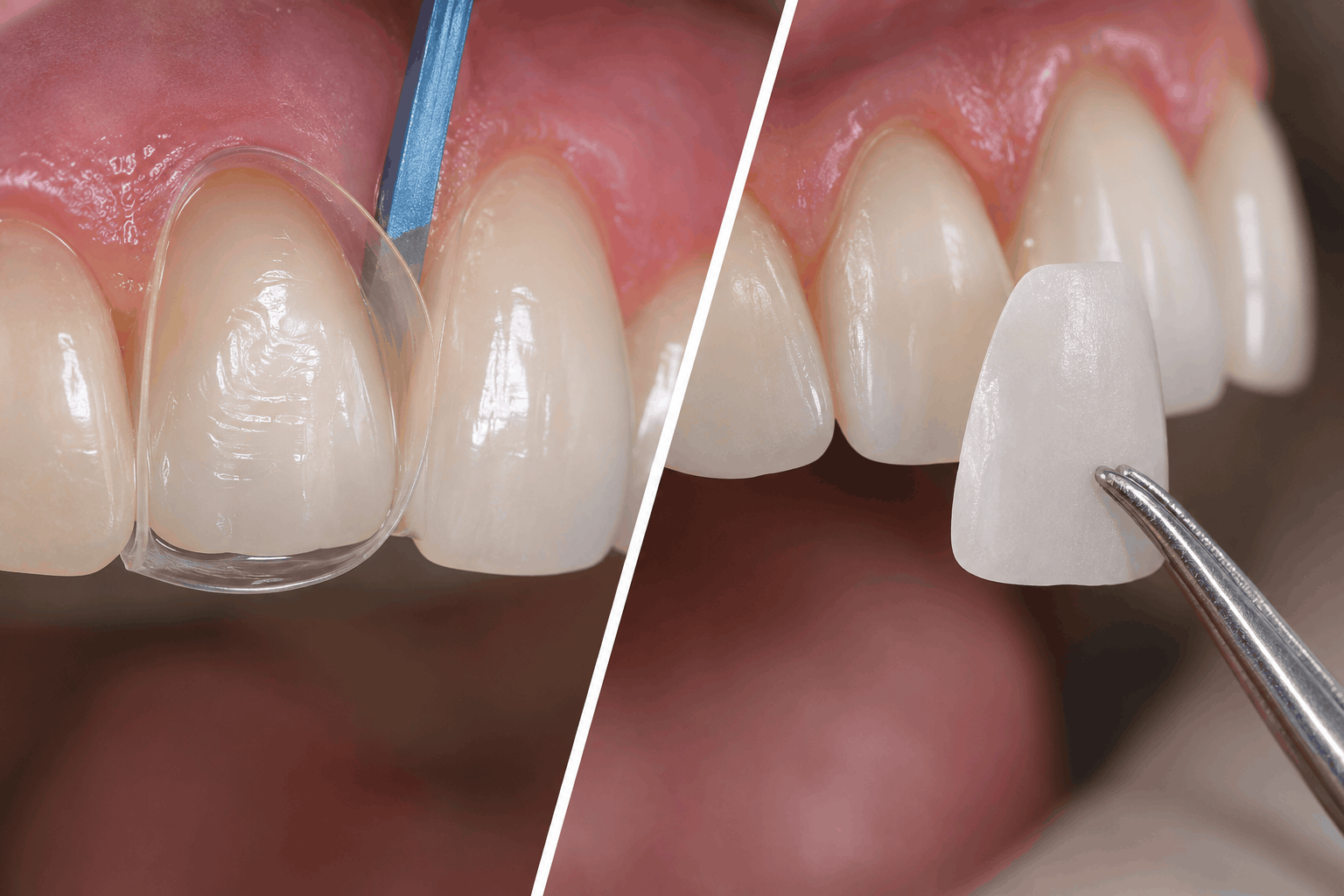
Porcelain veneers have been widely used in cosmetic dentistry for decades, and for good reason. They consist of ultra-thin, custom-crafted shells made from ceramic that are bonded right onto the front-facing surfaces of your teeth.
The Porcelain Veneer Treatment Journey
Going the traditional route usually requires a couple of focused visits. Your dentist will typically remove a small amount of your natural tooth enamel to make physical room for the porcelain so it sits flush with your surrounding teeth. Precise impressions are taken, a specialized dental lab builds your custom veneers by hand, and then they are securely bonded into place during your second appointment.
Porcelain Veneer Pros and Cons
The Pros: Porcelain mimics the natural translucency and light-reflecting qualities of real enamel exceptionally well. It is highly resistant to staining, and it can dramatically alter the shape, length, and shade of an entire smile line.
The Cons: Because the process requires permanently removing enamel, it is generally considered irreversible. If a porcelain veneer chips or cracks years down the road, you cannot just patch it up; the entire ceramic shell generally has to be replaced.
What Is the Bioclear Matrix System?
The Bioclear method is a newer, highly innovative alternative that approaches cosmetic improvements from a completely different angle. Instead of capping a tooth in a manufactured shell, Bioclear uses specialized clear plastic forms called matrices alongside advanced injection-molded composite resins to build up, contour, and wrap the tooth structure.
The Bioclear Procedure
During a Bioclear appointment, your dentist injects a warm, flowable composite material directly into the customized matrix mold wrapped snugly around your tooth. The material is meticulously shaped and then cured using a high-intensity dental light. The result is a seamless, monolithic layer of composite that blends smoothly into your natural tooth without harsh transition lines.
Bioclear Pros and Cons
The Pros: It is a truly additive technique, so little to no natural tooth enamel needs to be shaved down or removed. That is why many patients who ask “is Bioclear safe?” find the answer reassuring. It can often be repaired if minor wear occurs later, and it is often more cost-effective than porcelain.
The Cons: While modern composite materials have advanced significantly, they are slightly more prone to surface staining over many years compared to porcelain and may benefit from occasional polishing during routine cleanings.
Comparing Your Options: Bioclear vs Veneers
When you put these two treatments head to head, it really comes down to what you are trying to fix.
Bioclear takes a purely additive route, meaning your dentist usually leaves your natural enamel untouched for a much more conservative treatment. That makes it a go-to choice if you are trying to close dark “black triangles” near your gums, smooth out a tiny chip, or bridge a small gap. Because it uses composite resin, it can pick up a bit of staining down the road, and how long it stays looking pristine depends on your daily hygiene habits and lifestyle.
Porcelain veneers are the stronger choice when you want a more dramatic change. They can be used for comprehensive smile makeovers and for certain types of deep, stubborn discoloration that may not respond well to whitening.
Which one is right for you?
- Bioclear may suit you if you want to preserve your natural enamel, are fixing small gaps, chips or black triangles, and prefer a repairable, more budget-friendly option.
- Porcelain veneers may suit you if you want to reshape, lengthen or change the shade of several teeth, and you value maximum stain resistance and longevity.
Which Is the Better Investment?
The answer depends on your goals. Bioclear is often more cost-effective per tooth and keeps your natural enamel intact, which makes it a smart choice for targeted, conservative improvements. Porcelain veneers involve more steps and lab work, but their stain resistance and durability can make them worthwhile for a full smile transformation. The final cost depends on how many teeth are treated and the result you want, and we will talk you through it at your consultation.
Call Royal Dental Care Norridge Today
Choosing the right cosmetic dental treatment is a deeply personal decision, and you certainly do not have to weigh all the options alone. Whether you are leaning toward the conservative, enamel-preserving approach of Bioclear or the durability of porcelain veneers, our team is here to walk you through every step. Reach out to Royal Dental Care Norridge today to schedule a consultation, and let us help you design a smile you feel confident showing off every day.
Frequently Asked Questions on Bioclear vs Veneers
Is Bioclear safe for your natural teeth?
Yes, Bioclear is generally considered a conservative approach. Because it does not typically require cutting away healthy tooth enamel, it can help preserve the natural structural integrity of your teeth compared with traditional restorative options.
Which option lasts longer?
Porcelain veneers generally have a longer lifespan, often lasting many years depending on factors such as home care, oral habits, and maintenance. Bioclear restorations are very durable, though they may occasionally need minor touch-ups or polishing over time.
Is Bioclear cheaper than veneers?
Bioclear is often more cost-effective than porcelain veneers because it is an additive treatment that does not rely on lab-made shells. The final cost depends on how many teeth are treated and the result you want, and we will explain it during your consultation.
Can Bioclear fix crooked teeth?
Bioclear is useful for closing gaps, fixing black triangles between teeth, and smoothing out minor chips or uneven edges. However, if you have severe crowding or alignment issues, orthodontic treatment or veneers might still be recommended as a better foundational fix.
Do Bioclear composite resins stain easily?
Modern composite materials used in Bioclear are much more advanced and stain-resistant than older bonding materials. However, they can still pick up minor surface staining over time from heavy coffee, tea, or red wine consumption, which can be polished during your regular dental cleanings.
Real Patients. Real Reviews.



Luke
1 year ago
Isabella was great!! Highly recommend her

Julia Swider
1 year ago
Great experience, everyone is very kind and patient. Take time to educate you on what is going on, which is much appreciated. Highly recommend!
Response from the owner
Hi Julia,
Thank you for leaving us a review! Your feedback is appreciated.2 years ago

Pawel Blaszczak
1 year ago

Casey Kinsella
1 year ago
The atmosphere was great. The professionals were friendly. The communication between the office, dentist and patient was awful. I’ve found this with most dentist offices that once they get your money, they forget about you. Not happy with the customer service.

Scott Donaldson
1 year ago

Szymon Szuster
1 year ago

Ozzie Skenderi
1 year ago
Everyone is so nice and helpful!! They are great!!
Response from the owner
Hi Ozzie,
We appreciate you taking the time to provide your feedback. We're happy to hear you had a positive experience at our practice!2 years ago

Jacqueline Hernandez
1 year ago
Really clean and great service

Rafal Raszewski
1 year ago

vivian trankina (viv)
1 year ago
amazing service everyone is kind here i’ve been going here for about 2 ywars

Keluarga Bahagia
1 year ago
Since I moved from another dentist to this Royal Dental treatment has felt so amazing, all the women who work at the desk are very kind to help me and my husband for scheduling, especially for me a dental cleaner who cleans my teeth Lois is my favorite, she is very friendly and does clean details. The dentist is also good, twice helped by the dentist forgot his name, he is also very helpful to check, for all the good and happy come to this Kingdom's teeth

Karina Czajko
1 year ago
Very professional, always respectful! Highly recommend!

Yoly navarrete
1 year ago
The atmosphere is beautiful the place is very clean. Very professional service. I went in for a free consultation. They were very thorough at explaining everything. I will be coming back and I Recommend them.

Alyssa Silvia
1 year ago
Response from the owner
Hi Alyssa Silvia Thanks for visiting Royal Dental Care. We truly value your feedback and your confidence in our team.
1 year ago

Amreen Jalal
1 year ago
izabela was so sweet and made the entire appointment very easy and enjoyable. the environment was really friendly, welcoming and clean. would definitely recommend to others, they’re very thorough with their work!
Response from the owner
Hi Amreen Jalal Thanks for taking the time to leave a review. Your input helps us continue providing high-quality care at Royal Dental Care.
1 year ago

LUKASZ WROBLEWSKI
1 year ago
This is a great place for those who want a gentle dentist, a thorough hygienist, and friendly staff. Everyone is so nice, and the whole office is clean and modern.
Response from the owner
Hi LUKASZ WROBLEWSKI Thank you for your kind words. We're so pleased to know you had a great experience at Royal Dental Care. 1 year ago

Katherine Dynak
1 year ago
Pretty good service
Response from the owner
Hi Katherine Dynak Your feedback means a lot to our team. We're committed to continuing the excellent care you’ve come to expect. 1 year ago

Melissa
1 year ago
Very friendly staff. Professional, I’ve been coming here for years now
Response from the owner
Hi Melissa We appreciate your support and are grateful you chose Royal Dental Care for your dental needs. Looking forward to seeing you again. 1 year ago

Bobby Anderson
1 year ago
I love this place! Been coming for years. I’ve had a lot of work done lol
Response from the owner
Hi Bobby Anderson Thank you for your kind words. We're so pleased to know you had a great experience at Royal Dental Care. 1 year ago

Rosa Rendon
1 year ago
Very good experience, Israa was amazing and did a great job
Response from the owner
Hi Rosa Rendon Your feedback means a lot to our team. We're committed to continuing the excellent care you’ve come to expect. 1 year ago