

Dental Bridge vs. Dental Implant: Cost, Longevity, and What Dentists Recommend
Losing a tooth is something that changes more than just your smile. It changes how you chew, how you talk, and sometimes, how you feel when you are around other people. If you have a gap in your smile, you have likely started looking into your options. Two of the most common ways to fill that space are dental bridges and dental implants.
If you are currently looking for a solution near Norridge, IL, it is normal to feel a bit torn between the two. At Royal Dental Care, we help patients weigh these options every single day. There is no magic answer that works for everyone, but there is definitely a choice that is best for your specific mouth, your goals, and your long term health. Let us talk through how they compare.
What Is a Dental Bridge?
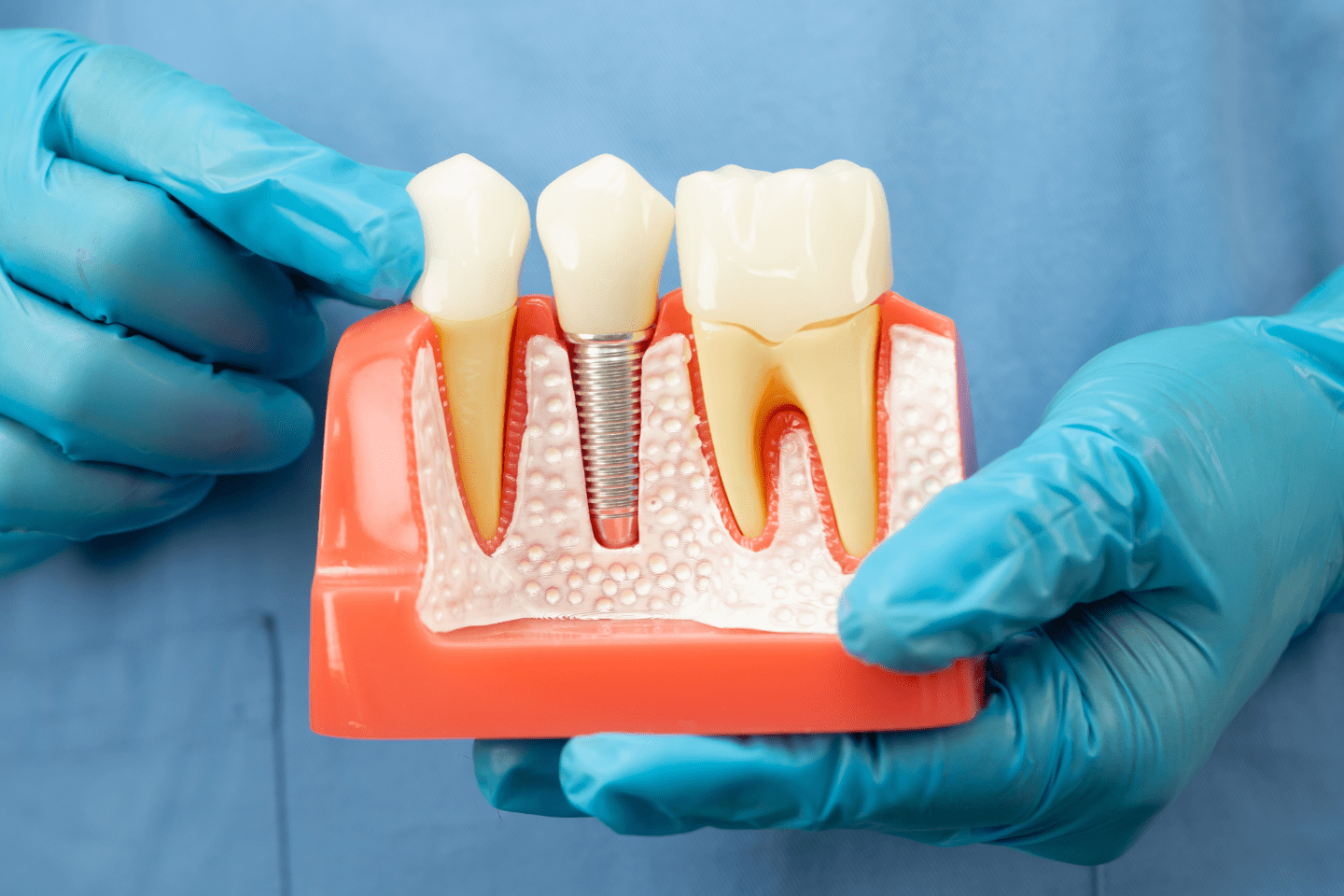
A dental bridge is a traditional way to replace a missing tooth. The name actually gives you a great hint about how it works: it bridges the gap. To create a bridge, we use the teeth on either side of the empty space as anchors. We place crowns on those adjacent teeth, and a replacement tooth, called a pontic, is attached to those crowns, effectively spanning the gap.
Why People Choose Bridges
The biggest advantage of a bridge is that it is a tried and true procedure. It is generally faster than the implant process because you do not have to wait for the jawbone to heal. If the teeth on either side of your gap already need crowns or have large fillings, a bridge can actually be a very efficient way to address those issues and replace the missing tooth at the same time.
What Is a Dental Implant?
An implant is a more modern approach that functions much more like a natural tooth. Instead of relying on the neighboring teeth for support, an implant is placed directly into your jawbone. It consists of a tiny titanium post that acts as a root, and a custom made crown that sits on top.
Why People Choose Implants
Implants are widely considered the gold standard for tooth replacement because they are independent. They do not require us to touch or modify the healthy teeth next to your gap. Plus, because they are anchored into the bone, they stimulate the bone tissue, which helps prevent the bone loss that often occurs when a tooth is missing. Many of our patients feel that an implant is the closest thing they can get to having their original tooth back.
Comparing Longevity and Maintenance
This is often where the decision becomes clearer for our patients.
A dental bridge is a durable solution, but it is not permanent. On average, a bridge can last about ten to fifteen years, sometimes longer with perfect care. However, because it is essentially a unit of three or more teeth connected together, it can be a bit more challenging to clean under. You will need to use a special type of floss or a threader to make sure you are getting underneath the bridge to keep the gums healthy.
Implants are built for the long haul. Because they are integrated into your jaw, they can last for a lifetime if they are well cared for. They are also much easier to maintain because you can clean them just like you clean your natural teeth. You brush and floss them as part of your normal routine, which makes a big difference for many people.
The Cost Factor
It is true that implants often have a higher upfront cost than a bridge. This is because the procedure is more involved and requires advanced technology and surgical skill. However, when you look at the total cost of ownership, implants can sometimes be more cost effective over time.
A bridge might seem cheaper today, but because it relies on the neighboring teeth, if one of those anchor teeth develops a problem down the road, you might have to replace the entire bridge. With an implant, if the crown on top ever needs to be replaced, it is a much simpler process because the implant root itself stays in place.
Why Your Choice Matters
Choosing a replacement is a big deal, and we take it seriously at Royal Dental Care Norridge. We always look at your overall oral health. If your jawbone is strong and healthy, an implant might be a fantastic choice. If you have other dental work that needs to be done on the surrounding teeth, a bridge might be a more holistic way to handle everything at once.
We also consider your lifestyle. Some people prefer the shorter timeframe of a bridge, while others are happy to wait a few months for the long term benefits of an implant. We want you to feel confident in your choice, so we take all the time you need to answer your questions during your visit.
Taking the Next Step Towards Healthy Smile
Whatever you choose, the most important thing is that you do not leave the gap there forever. When you have a missing tooth, the surrounding teeth start to drift and tilt to fill the space. This can change your bite, cause jaw pain, and make it harder to clean your teeth. By filling that space, you are not just getting your smile back you are protecting the health of your entire mouth.
If you are ready to see what is possible, come visit us. We can look at the space, check your bone health, and give you a clear picture of what the process would look like for both options.
Frequently Asked Questions on Dental Bridges vs Implants
Does the implant surgery hurt?
Most patients are pleasantly surprised by how comfortable the procedure is. We use local anesthesia to numb the area, and most people report feeling very little pain during or after the process. It is generally much less intense than people expect.
How long does the implant process take from start to finish?
It can take a few months because we need to allow time for the implant to fuse with your bone. This process, called osseointegration, is what makes the implant so strong. We will give you a specific timeline based on your health.
Is a bridge better if I am in a hurry?
Generally, yes. The bridge process is much faster than the implant process. If you have an important event coming up and need a quick solution, we can discuss if a bridge is a good fit for you.
Can I get an implant years after losing a tooth?
Yes, absolutely. However, if the tooth has been missing for a long time, the bone might have started to recede. We may need to discuss a bone graft to ensure the implant has a solid foundation.
Which option is easier to clean?
Implants are generally easier to clean because they are separate units, just like your natural teeth. Bridges require more focused cleaning efforts to keep the area underneath the pontic free of plaque.
Are there cases where one is not an option?
Yes. If you do not have enough bone to support an implant, or if the teeth next to your gap are not healthy enough to support a bridge, we will explore other options with you. We always customize our recommendations to what is physically possible for your mouth.
Real Patients. Real Reviews.



Luke
1 year ago
Isabella was great!! Highly recommend her

Julia Swider
1 year ago
Great experience, everyone is very kind and patient. Take time to educate you on what is going on, which is much appreciated. Highly recommend!
Response from the owner
Hi Julia,
Thank you for leaving us a review! Your feedback is appreciated.2 years ago

Pawel Blaszczak
1 year ago

Casey Kinsella
1 year ago
The atmosphere was great. The professionals were friendly. The communication between the office, dentist and patient was awful. I’ve found this with most dentist offices that once they get your money, they forget about you. Not happy with the customer service.

Scott Donaldson
1 year ago

Szymon Szuster
1 year ago

Ozzie Skenderi
1 year ago
Everyone is so nice and helpful!! They are great!!
Response from the owner
Hi Ozzie,
We appreciate you taking the time to provide your feedback. We're happy to hear you had a positive experience at our practice!2 years ago

Jacqueline Hernandez
1 year ago
Really clean and great service

Rafal Raszewski
1 year ago

vivian trankina (viv)
1 year ago
amazing service everyone is kind here i’ve been going here for about 2 ywars

Keluarga Bahagia
1 year ago
Since I moved from another dentist to this Royal Dental treatment has felt so amazing, all the women who work at the desk are very kind to help me and my husband for scheduling, especially for me a dental cleaner who cleans my teeth Lois is my favorite, she is very friendly and does clean details. The dentist is also good, twice helped by the dentist forgot his name, he is also very helpful to check, for all the good and happy come to this Kingdom's teeth

Karina Czajko
1 year ago
Very professional, always respectful! Highly recommend!

Yoly navarrete
1 year ago
The atmosphere is beautiful the place is very clean. Very professional service. I went in for a free consultation. They were very thorough at explaining everything. I will be coming back and I Recommend them.

Alyssa Silvia
1 year ago
Response from the owner
Hi Alyssa Silvia Thanks for visiting Royal Dental Care. We truly value your feedback and your confidence in our team.
1 year ago

Amreen Jalal
1 year ago
izabela was so sweet and made the entire appointment very easy and enjoyable. the environment was really friendly, welcoming and clean. would definitely recommend to others, they’re very thorough with their work!
Response from the owner
Hi Amreen Jalal Thanks for taking the time to leave a review. Your input helps us continue providing high-quality care at Royal Dental Care.
1 year ago

LUKASZ WROBLEWSKI
1 year ago
This is a great place for those who want a gentle dentist, a thorough hygienist, and friendly staff. Everyone is so nice, and the whole office is clean and modern.
Response from the owner
Hi LUKASZ WROBLEWSKI Thank you for your kind words. We're so pleased to know you had a great experience at Royal Dental Care. 1 year ago

Katherine Dynak
1 year ago
Pretty good service
Response from the owner
Hi Katherine Dynak Your feedback means a lot to our team. We're committed to continuing the excellent care you’ve come to expect. 1 year ago

Melissa
1 year ago
Very friendly staff. Professional, I’ve been coming here for years now
Response from the owner
Hi Melissa We appreciate your support and are grateful you chose Royal Dental Care for your dental needs. Looking forward to seeing you again. 1 year ago

Bobby Anderson
1 year ago
I love this place! Been coming for years. I’ve had a lot of work done lol
Response from the owner
Hi Bobby Anderson Thank you for your kind words. We're so pleased to know you had a great experience at Royal Dental Care. 1 year ago

Rosa Rendon
1 year ago
Very good experience, Israa was amazing and did a great job
Response from the owner
Hi Rosa Rendon Your feedback means a lot to our team. We're committed to continuing the excellent care you’ve come to expect. 1 year ago