
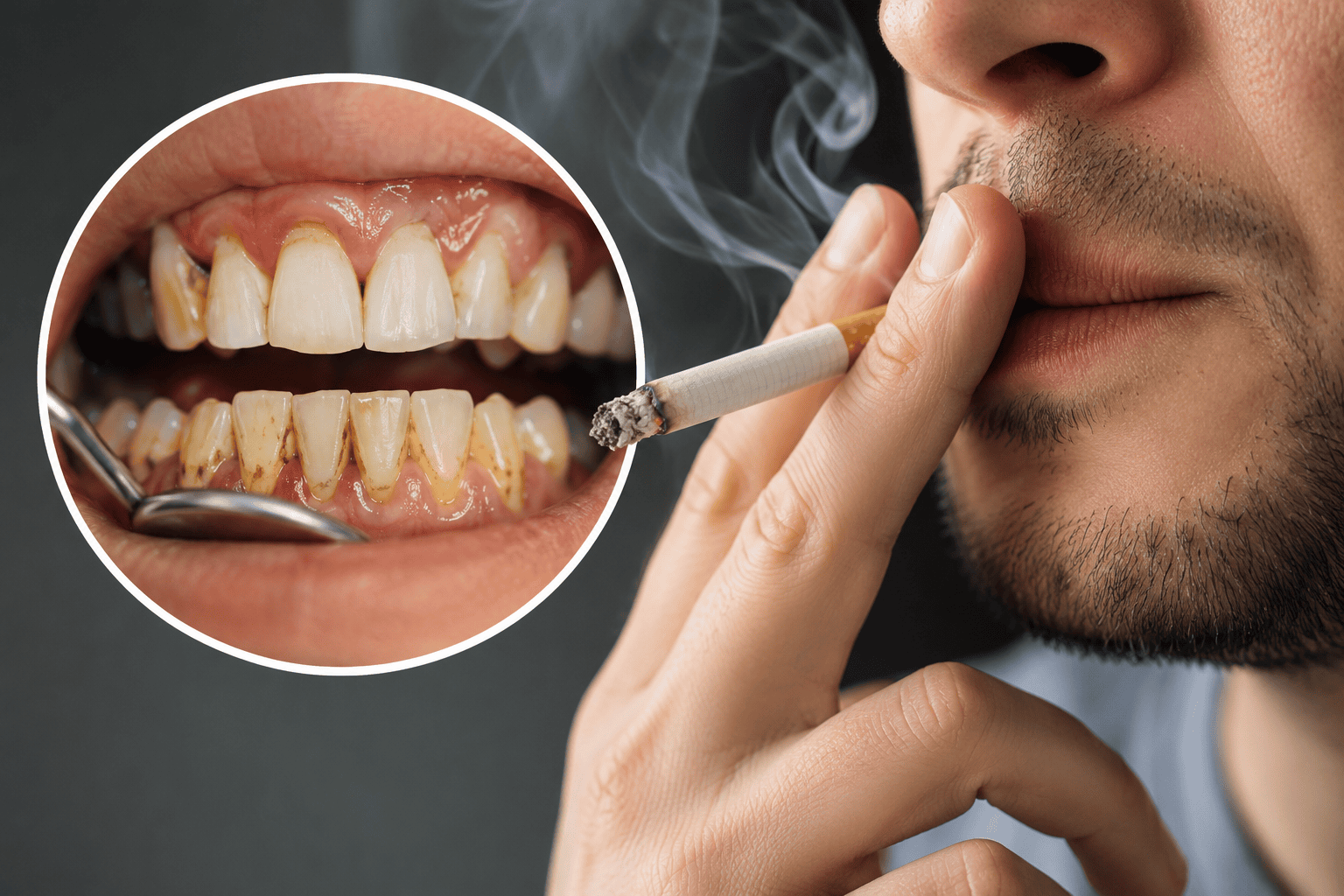

Smoking and Oral Health: How Quitting Improves Dental Outcomes and Implant Success
Most people know that smoking can harm their lungs and overall health, but many are surprised to learn just how significantly it can affect their oral health. From stained teeth and persistent bad breath to gum disease and tooth loss, tobacco use can have a serious impact on the health of your mouth.
For patients considering dental implants, smoking presents additional challenges. Successful implant treatment depends on healthy gums, adequate blood flow, and proper healing. Smoking can interfere with all of these factors, potentially affecting both short-term recovery and long-term treatment outcomes.
At Royal Dental Care, we believe that understanding the connection between smoking and oral health can help patients make informed decisions about their dental care and overall well-being.
How Smoking Affects Oral Health
The chemicals found in cigarettes and other tobacco products can affect nearly every part of the mouth.
Some of the most common oral health concerns associated with smoking include:
- Tooth staining and discoloration
- Persistent bad breath
- Increased plaque and tartar buildup
- Gum disease
- Delayed healing after dental procedures
- Increased risk of tooth loss
- Higher risk of oral cancer
While some effects are cosmetic, others can significantly impact the health and stability of your teeth and gums.
The Connection Between Smoking and Gum Disease
Healthy gums provide the foundation for a healthy smile. Unfortunately, smoking is one of the most significant risk factors for developing periodontal disease.
Reduced Blood Flow to the Gums
Smoking restricts blood vessels throughout the body, including those that supply the gums. Reduced blood flow limits the delivery of oxygen and nutrients needed to maintain healthy tissue and support healing.
Increased Risk of Infection
Tobacco use can weaken the body’s immune response, making it more difficult to fight harmful bacteria that contribute to gum disease. Early periodontal disease treatment can help protect your gums and reduce the risk of long-term complications.
Masked Symptoms
Smokers may experience less bleeding during brushing and flossing due to reduced blood flow. While this may seem positive, it can actually delay the detection of gum disease and allow it to progress unnoticed.
Over time, untreated gum disease can lead to bone loss, gum recession, and eventual tooth loss.
How Smoking Affects Dental Implant Success
Dental implants rely on a process called osseointegration, during which the implant fuses with the surrounding jawbone. Healthy healing is essential for this process to occur successfully.
Delayed Healing After Surgery
Smoking can slow the body’s natural healing response by reducing oxygen levels in the blood and limiting circulation to surgical sites.
As a result, patients who smoke may experience:
- Slower recovery
- Increased discomfort
- Higher risk of infection
- Greater chance of complications
Learning what to expect during the dental implant procedure can help patients better understand why proper healing is so important.
Reduced Implant Integration
Successful implant treatment depends on the jawbone bonding securely with the implant surface. Smoking can interfere with this process and may increase the risk of implant failure.
Increased Risk of Peri-Implant Disease
Just as smokers are more likely to develop gum disease around natural teeth, they may also be at greater risk of developing inflammation and infection around dental implants.
Conditions such as peri-implant mucositis and peri-implantitis can damage the supporting tissues and compromise the long-term stability of an implant.
The Benefits of Quitting Before Dental Treatment
The good news is that quitting smoking can have a positive impact on both your oral health and your overall health.
Patients who stop smoking before dental treatment often experience:
Improved Healing
Better circulation allows oxygen and nutrients to reach healing tissues more effectively.
Healthier Gums
The risk of gum disease decreases when tobacco use is eliminated, helping protect the foundation of your teeth and implants.
Better Implant Outcomes
Research consistently shows higher implant success rates among non-smokers and former smokers compared to current smokers.
Reduced Risk of Complications
Quitting smoking can lower the likelihood of infection, delayed healing, and post-operative complications following oral surgery.
How Soon Can Oral Health Improve After Quitting?
Many people are surprised by how quickly the body begins to recover after quitting tobacco.
Some improvements may include:
- Improved circulation within weeks
- Reduced inflammation
- Better gum tissue health
- Fresher breath
- Improved sense of taste and smell
- Lower risk of future gum disease progression
While some long-term damage may not be fully reversible, quitting can significantly improve future dental health and treatment outcomes.
Tips for Quitting Smoking Before Dental Implant Treatment
Quitting smoking can be challenging, but many patients find that upcoming dental treatment provides additional motivation.
Strategies that may help include:
- Setting a quit date
- Using nicotine replacement products if recommended by your physician
- Seeking support from family and friends
- Joining smoking cessation programs
- Speaking with your healthcare provider about available resources
Even reducing tobacco use before treatment may provide some benefits, although complete cessation offers the greatest advantage.
Supporting Long-Term Oral Health at Royal Dental Care Schaumburg
Whether you are considering dental implants, preparing for oral surgery, or simply looking to improve your oral health, quitting smoking is one of the most beneficial steps you can take.
At Royal Dental Care Schaumburg, we work closely with patients to create personalized treatment plans that support long-term oral health and successful treatment outcomes. Our team is committed to providing education, guidance, and ongoing support to help patients protect their smiles for years to come.
If you have questions about smoking, dental implants, or your oral health, we encourage you to schedule a consultation to discuss your options.
Frequently Asked Questions Smoking and Oral Health
Can smokers still get dental implants?
Yes. Many smokers successfully receive dental implants. However, smoking may increase the risk of complications and implant failure. Your dentist will evaluate your oral health and discuss any additional risks during treatment planning.
How does smoking affect dental implant healing?
Smoking reduces blood flow and oxygen delivery to healing tissues, which can slow recovery and interfere with the implant’s ability to integrate with the jawbone.
Should I quit smoking before implant surgery?
Quitting before surgery can improve healing and increase the likelihood of successful implant integration. Your dentist may recommend stopping smoking before and after the procedure whenever possible.
Does vaping affect dental implant success?
While research is ongoing, nicotine in vaping products may also affect blood flow and healing. Patients should discuss vaping habits with their dentist during treatment planning.
How long should I avoid smoking after dental implant placement?
Your dentist will provide individualized recommendations. In general, avoiding smoking during the healing period can help reduce complications and support successful implant integration.
Can quitting smoking improve gum disease?
Quitting smoking can improve circulation, reduce inflammation, and support healthier gums. Combined with professional dental care, smoking cessation can significantly improve periodontal health.
Real Patients. Real Reviews.

Luke
12 months ago
Isabella was great!! Highly recommend her

Julia Swider
12 months ago
Great experience, everyone is very kind and patient. Take time to educate you on what is going on, which is much appreciated. Highly recommend!
Response from the owner
Hi Julia,Thank you for leaving us a review! Your feedback is appreciated.1 year ago

Pawel Blaszczak
12 months ago

Casey Kinsella
12 months ago
The atmosphere was great. The professionals were friendly. The communication between the office, dentist and patient was awful. I’ve found this with most dentist offices that once they get your money, they forget about you. Not happy with the customer service.

Scott Donaldson
12 months ago

Szymon Szuster
12 months ago

Ozzie Skenderi
12 months ago
Everyone is so nice and helpful!! They are great!!
Response from the owner
Hi Ozzie,We appreciate you taking the time to provide your feedback. We're happy to hear you had a positive experience at our practice!1 year ago

Jacqueline Hernandez
12 months ago
Really clean and great service

Rafal Raszewski
12 months ago

vivian trankina (viv)
12 months ago
amazing service everyone is kind here i’ve been going here for about 2 ywars

Keluarga Bahagia
12 months ago
Since I moved from another dentist to this Royal Dental treatment has felt so amazing, all the women who work at the desk are very kind to help me and my husband for scheduling, especially for me a dental cleaner who cleans my teeth Lois is my favorite, she is very friendly and does clean details. The dentist is also good, twice helped by the dentist forgot his name, he is also very helpful to check, for all the good and happy come to this Kingdom's teeth

Karina Czajko
12 months ago
Very professional, always respectful! Highly recommend!

Yoly navarrete
12 months ago
The atmosphere is beautiful the place is very clean. Very professional service. I went in for a free consultation. They were very thorough at explaining everything. I will be coming back and I Recommend them.

Alyssa Silvia
12 months ago
Response from the owner
Hi Alyssa Silvia Thanks for visiting Royal Dental Care. We truly value your feedback and your confidence in our team.12 months ago

Amreen Jalal
12 months ago
izabela was so sweet and made the entire appointment very easy and enjoyable. the environment was really friendly, welcoming and clean. would definitely recommend to others, they’re very thorough with their work!
Response from the owner
Hi Amreen Jalal Thanks for taking the time to leave a review. Your input helps us continue providing high-quality care at Royal Dental Care.12 months ago

LUKASZ WROBLEWSKI
12 months ago
This is a great place for those who want a gentle dentist, a thorough hygienist, and friendly staff. Everyone is so nice, and the whole office is clean and modern.
Response from the owner
Hi LUKASZ WROBLEWSKI Thank you for your kind words. We're so pleased to know you had a great experience at Royal Dental Care. 12 months ago

Katherine Dynak
12 months ago
Pretty good service
Response from the owner
Hi Katherine Dynak Your feedback means a lot to our team. We're committed to continuing the excellent care you’ve come to expect. 12 months ago

Melissa
12 months ago
Very friendly staff. Professional, I’ve been coming here for years now
Response from the owner
Hi Melissa We appreciate your support and are grateful you chose Royal Dental Care for your dental needs. Looking forward to seeing you again. 12 months ago

Bobby Anderson
12 months ago
I love this place! Been coming for years. I’ve had a lot of work done lol
Response from the owner
Hi Bobby Anderson Thank you for your kind words. We're so pleased to know you had a great experience at Royal Dental Care. 12 months ago

Rosa Rendon
12 months ago
Very good experience, Israa was amazing and did a great job
Response from the owner
Hi Rosa Rendon Your feedback means a lot to our team. We're committed to continuing the excellent care you’ve come to expect. 12 months ago