

Dental Sedation for Children: Safety, Types & What Parents Should Know
Taking your child to the dentist can sometimes feel like a real balancing act. On one hand, you want to make sure those little teeth stay healthy and cavity-free. On the other hand, a dental office can be pretty intimidating for a young child. When a routine cleaning turns into a conversation about deep fillings, crowns, or extractions, keeping your child calm and still becomes a major priority.
This is usually when the topic of dental sedation for children comes up.
It is incredibly common to feel a little anxious or hesitant when a professional mentions sedation for children’s dental work. Your gut instinct as a parent is always to protect your little one, so words like sedation might bring up questions about safety, what it feels like, and if it is truly necessary. At Royal Dental Care in Norridge, we believe that clear, honest information is the best way to replace those worries with a confident plan for your family.
Why Do Providers Use Dental Sedation for Kids?
Before looking at the different options, it helps to understand why pediatric dentists rely on these methods. Sedation isn’t just about making the appointment smoother for the dental team. Its real purpose is to create a safe, pain-free, and emotionally gentle experience for your child.
Young kids naturally struggle to sit perfectly still for long periods. If a complex procedure requires precision, a child’s sudden movements or fear can actually create a safety hazard.
Beyond that, dental anxiety is very real. A single scary experience early on can cause a lifelong fear of the dentist. By using carefully measured, personalized sedation, we can get your child the care they need without leaving them with lasting emotional stress.
The Main Types of Dental Sedation for Children
Dental sedation runs on a spectrum. It goes from mild relaxation, where your child stays completely awake, all the way to deeper options, where they sleep through the visit. The right choice depends heavily on your child’s age, their anxiety level, and the type of work they need.
Nitrous Oxide (Laughing Gas)
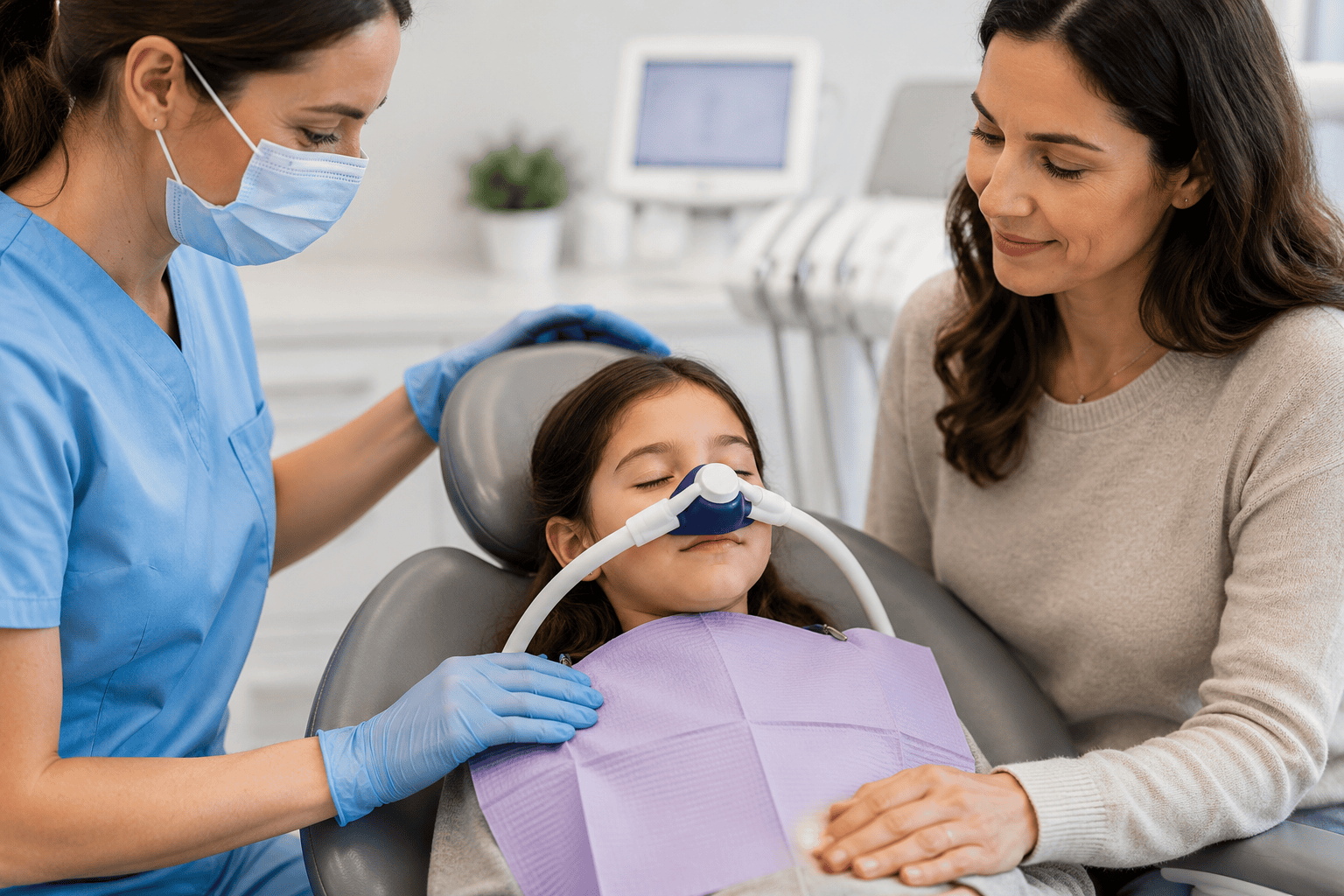
This is the mildest and most common choice for children’s dental visits. It is a sweet gas blended with oxygen that your child breathes through a small, soft mask over their nose.
Within just a couple of minutes, kids usually start to feel warm, relaxed, and a little silly. They stay completely awake and can chat with the dentist, but the sounds and tools in the room won’t bother them anymore. The best part about nitrous oxide is how fast it wears off. As soon as the gas is turned off and they breathe pure oxygen, the effects disappear completely. They will be back to their usual selves before you even leave the chair.
Mild to Moderate Oral Sedation
When laughing gas isn’t quite enough to calm an incredibly nervous child, oral sedation for children’s dental work is often the next step. This involves giving your child a liquid medicine or a small pill to swallow a little while before the procedure starts.
When we use oral sedation for dental procedures in children, our main goal is deep relaxation. Your child will still be awake and able to follow simple directions, but they will feel very sleepy. Many kids actually drift off into a light nap during their care, though they wake right up with a gentle tap or a soft word. As a bonus, this medication often causes a bit of temporary amnesia, so your child likely won’t remember much of the appointment at all.
Deep Sedation and General Anesthesia
For major dental surgeries, intense phobias, or very young children who need a lot of teeth fixed at once, general anesthesia is sometimes required. This level of sedation is always handled by a dedicated specialist, like a certified dental anesthesiologist. Your child will sleep deeply through the entire visit, won’t feel a thing, and will be monitored by advanced medical equipment the whole time.
Special Care: Dental Sedation for Autistic Children
Going to the dentist requires an even more thoughtful, personalized approach if your child has sensory sensitivities or developmental differences. For families exploring dental sedation for autistic children, the priority is always about preventing sensory overload.
A lively dental office can quickly overwhelm an autistic child. The bright overhead lights, high-pitched tools, and strange textures can easily trigger a fight-or-flight response. Often, standard behavioral techniques aren’t enough to make them feel secure.
Depending on your child’s specific sensory needs, customized sedation can change the whole experience. A bit of nitrous oxide can help soften the impact of loud sounds and bright lights. For children who experience severe distress with physical contact, a specific oral sedative or general anesthesia allows them to get essential dental care safely and peacefully, without any risk of emotional trauma.
Safety and What Parents Should Expect
It is completely normal to wonder if dental sedation is safe for a child. When it is handled by a trained professional following the strict guidelines of the American Academy of Pediatric Dentistry, it is an incredibly safe, routine process.
A smooth appointment comes down to good teamwork and communication between parents and the dental office.
Before the Visit
Safety starts with a clear look at your child’s health history. Make sure to tell the dental team about any allergies, daily medications, or chronic health conditions. If oral sedation or anesthesia is on the calendar, you will get strict rules about fasting. Your child will need to stop eating and drinking a certain number of hours before the appointment. Following these rules perfectly is vital to prevent nausea and keep them safe.
During the Care
While your child is sedated, their comfort and vitals are carefully watched. With nitrous oxide, the dentist will keep talking to your child to make sure they feel fine. For oral sedation, we use small, gentle sensors like a pulse oximeter to keep an eye on their heart rate and oxygen levels throughout the visit.
At-Home Recovery
How your child feels afterward depends on the type of sedation used. Kids who have nitrous oxide bounce right back within minutes.
With oral sedation, that sleepy feeling can stay around for a few hours. You will want to watch them closely at home so they don’t trip, fall, or accidentally chew on a numb lip or tongue. Plan for a cozy day on the couch with soft foods, plenty of water, and their favorite movies.
Partnering with Royal Dental Care in Norridge
At Royal Dental Care, we treat our youngest patients with the exact same patience, kindness, and detailed care we would want for our own kids. We know that every child is an individual. What works perfectly for a busy toddler might be completely different from what comforts a child dealing with deep dental anxiety or sensory needs.
If your child has an upcoming treatment and you want to talk about our comfort options, our Norridge team is here to listen to your goals and answer your questions. We want to build a treatment plan that keeps your child’s physical and emotional health first.
Call our Norridge office today to book a consultation, and let’s work together to build a safe, positive start for your child’s smile.
Frequently Asked Questions on Dental Sedation for Children
Q: Can my child go right back to school after being sedated?
A: If they only had nitrous oxide, yes. The effects wear off right away, so they can head back to school or daycare. But if they had oral sedation or deeper anesthesia, the drowsiness would linger. They should spend the rest of the day relaxing at home with an adult keeping an eye on them.
Q: Will my child remember their dental work after sedation?
A: It depends on what they received. With laughing gas, kids usually remember the visit but just recall feeling very relaxed. With oral sedation, the medicine often causes temporary amnesia. They might remember walking into the office and leaving, but the actual dental work in the middle will be a blank.
Q: What if my child fights the mask or refuses the medicine?
A: This happens all the time, and our team knows exactly how to handle it with patience. We never force a child into a procedure. If they resist, we pause, use gentle guidance to build comfort, or talk with you about other paths to make sure your child never leaves our office feeling scared.
Real Patients. Real Reviews.



Luke
1 year ago
Isabella was great!! Highly recommend her

Julia Swider
1 year ago
Great experience, everyone is very kind and patient. Take time to educate you on what is going on, which is much appreciated. Highly recommend!
Response from the owner
Hi Julia,
Thank you for leaving us a review! Your feedback is appreciated.2 years ago

Pawel Blaszczak
1 year ago

Casey Kinsella
1 year ago
The atmosphere was great. The professionals were friendly. The communication between the office, dentist and patient was awful. I’ve found this with most dentist offices that once they get your money, they forget about you. Not happy with the customer service.

Scott Donaldson
1 year ago

Szymon Szuster
1 year ago

Ozzie Skenderi
1 year ago
Everyone is so nice and helpful!! They are great!!
Response from the owner
Hi Ozzie,
We appreciate you taking the time to provide your feedback. We're happy to hear you had a positive experience at our practice!2 years ago

Jacqueline Hernandez
1 year ago
Really clean and great service

Rafal Raszewski
1 year ago

vivian trankina (viv)
1 year ago
amazing service everyone is kind here i’ve been going here for about 2 ywars

Keluarga Bahagia
1 year ago
Since I moved from another dentist to this Royal Dental treatment has felt so amazing, all the women who work at the desk are very kind to help me and my husband for scheduling, especially for me a dental cleaner who cleans my teeth Lois is my favorite, she is very friendly and does clean details. The dentist is also good, twice helped by the dentist forgot his name, he is also very helpful to check, for all the good and happy come to this Kingdom's teeth

Karina Czajko
1 year ago
Very professional, always respectful! Highly recommend!

Yoly navarrete
1 year ago
The atmosphere is beautiful the place is very clean. Very professional service. I went in for a free consultation. They were very thorough at explaining everything. I will be coming back and I Recommend them.

Alyssa Silvia
1 year ago
Response from the owner
Hi Alyssa Silvia Thanks for visiting Royal Dental Care. We truly value your feedback and your confidence in our team.
1 year ago

Amreen Jalal
1 year ago
izabela was so sweet and made the entire appointment very easy and enjoyable. the environment was really friendly, welcoming and clean. would definitely recommend to others, they’re very thorough with their work!
Response from the owner
Hi Amreen Jalal Thanks for taking the time to leave a review. Your input helps us continue providing high-quality care at Royal Dental Care.
1 year ago

LUKASZ WROBLEWSKI
1 year ago
This is a great place for those who want a gentle dentist, a thorough hygienist, and friendly staff. Everyone is so nice, and the whole office is clean and modern.
Response from the owner
Hi LUKASZ WROBLEWSKI Thank you for your kind words. We're so pleased to know you had a great experience at Royal Dental Care. 1 year ago

Katherine Dynak
1 year ago
Pretty good service
Response from the owner
Hi Katherine Dynak Your feedback means a lot to our team. We're committed to continuing the excellent care you’ve come to expect. 1 year ago

Melissa
1 year ago
Very friendly staff. Professional, I’ve been coming here for years now
Response from the owner
Hi Melissa We appreciate your support and are grateful you chose Royal Dental Care for your dental needs. Looking forward to seeing you again. 1 year ago

Bobby Anderson
1 year ago
I love this place! Been coming for years. I’ve had a lot of work done lol
Response from the owner
Hi Bobby Anderson Thank you for your kind words. We're so pleased to know you had a great experience at Royal Dental Care. 1 year ago

Rosa Rendon
1 year ago
Very good experience, Israa was amazing and did a great job
Response from the owner
Hi Rosa Rendon Your feedback means a lot to our team. We're committed to continuing the excellent care you’ve come to expect. 1 year ago