
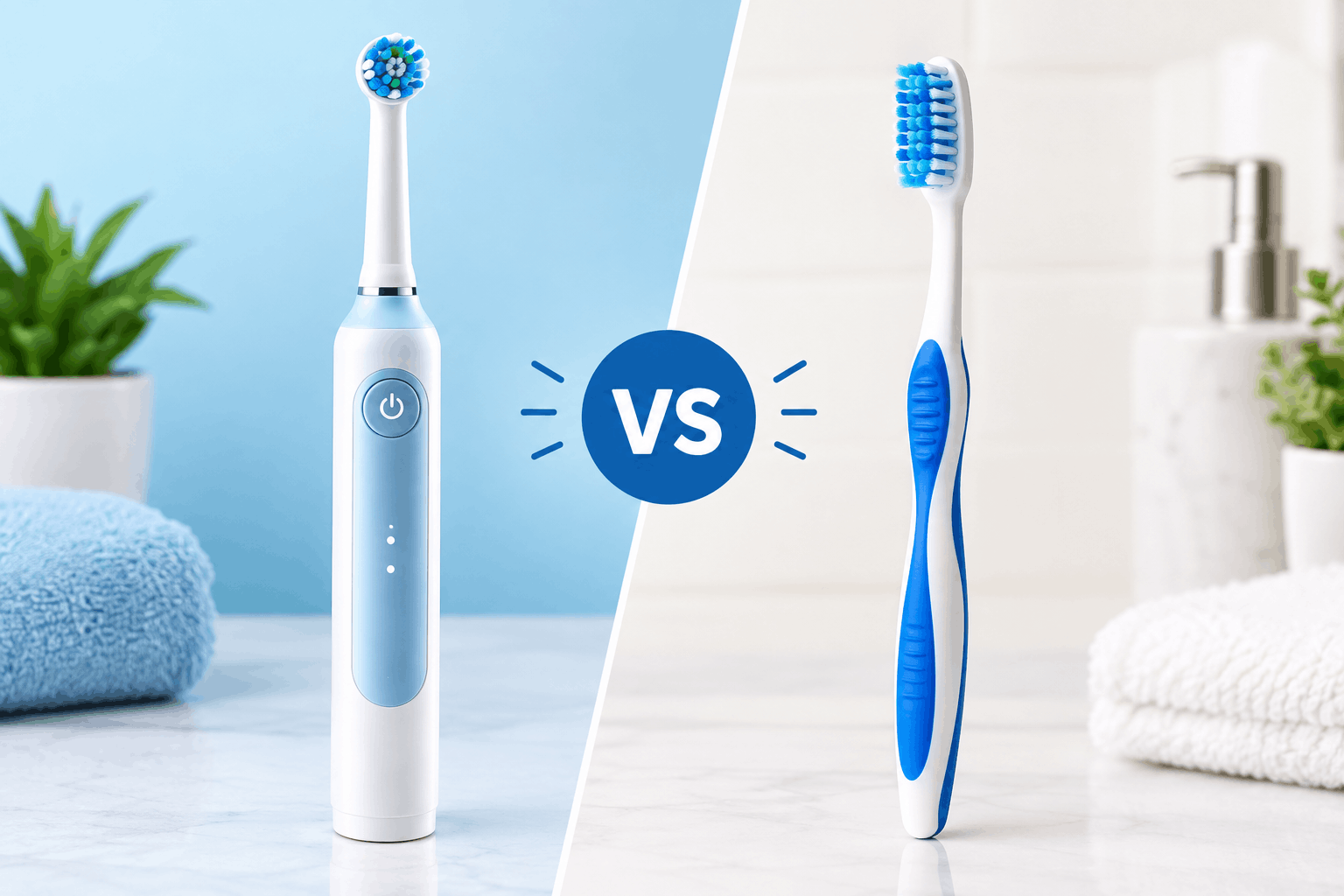

Electric Toothbrush vs Manual: Which One Actually Cleans Better?
That quick trip to the grocery store pharmacy usually starts with good intentions and ends in total confusion. You find yourself standing in front of an endless wall of dental care products, staring down a choice that feels oddly weighty. On one side, simple manual toothbrushes sit neatly in rows for just a few bucks. Right next to them, high-end electric devices display smart digital screens, Bluetooth sync icons, blinking pressure warnings, and a price tag ten times higher.
It makes anyone pause and question whether those fancy features actually matter, or if a regular brush has been doing the job just fine. Patients bring up the eternal electric toothbrush vs manual debate all the time during checkups. People genuinely want to know if upgrading to electric toothbrushes vs manual options yields a real, measurable improvement in their gum health, or if it is mostly clever marketing.
At Royal Dental Care in Norridge, we love helping patients cut through the noise to find practical solutions for their daily routines. Let us break down how an electric toothbrush vs manual toothbrush matchup looks in real life, what clinical studies say about manual toothbrush vs electric cleaning power, and how to decide which tool belongs on your bathroom sink.
The Mechanics: How Each Tool Works
To understand why these two styles perform differently, we have to look past the branding and examine the actual physics of brushing.
The Classic Manual Brush
When you use a manual toothbrush, every single motion relies entirely on your wrist and hand. Manual brushing relies on repeated hand and wrist movements to clean the teeth and gums.
The Good: They cost next to nothing, require zero charging cables, slip easily into any travel bag, and give you absolute physical control over your technique.
The Catch: Human hands struggle to maintain speed and consistency for a full two minutes, and replicating thousands of rapid micro-movements is physically impossible.
The Modern Electric Brush
Electric models take over some of the heavy lifting by using built-in motors to generate high-speed sonic vibrations or rapid oscillating rotations. Depending on the specific design, electric brushes can generate tens of thousands of brush movements per minute.
The Good: The rapid movement can help improve plaque removal, particularly when combined with proper brushing technique and coverage along the gumline and between teeth.
The Catch: They require an upfront investment, need regular charging, and mean you have to remember to purchase replacement heads periodically.
Plaque, Tartar, and Gum Health: What Research Shows
When dental researchers test an electric toothbrush vs regular manual brush head-to-head, the results generally favor powered toothbrushes. Multiple clinical reviews tracking plaque reduction and gum inflammation have found modest advantages for powered devices.
The main reason? Human nature. While a manual brush can clean teeth beautifully if used with good technique for a full two minutes twice daily, most people rush. Electric brushes feature internal pacers and timers that help keep you on track, while their powered bristles can help break up sticky bacterial film with less manual effort.
Patients who switch may notice improvements in plaque control and gum bleeding during their next cleaning, particularly when they use the powered toothbrush consistently and correctly.
Who Benefits Most from Making the Switch?
While almost anyone can benefit from an electric upgrade, certain individuals may see a particularly noticeable improvement in their daily hygiene:
People with Hand or Wrist Stiffness
If conditions like arthritis or carpal tunnel make vigorous scrubbing painful, an electric motor reduces the amount of manual brushing effort required.
Rushed Brushers
Built-in two-minute quad-pacing timers can help prevent cutting brushing time short.
Braces Wearers
Navigating metal wires and brackets with a manual brush is frustrating. Electric brushes can make cleaning around orthodontic hardware easier.
Heavy-Handed Scrubbers
Many advanced models include sensors that flash a light or slow down if you press too hard, helping protect your enamel and gums from excessive brushing pressure.
When Is a Manual Toothbrush Still Perfectly Fine?
Does this mean manual brushes belong in the trash? Absolutely not. If you possess meticulous brushing habits, clean for a full two minutes twice a day, floss faithfully, and see your dental team regularly, a manual brush can keep your teeth in great shape.
Furthermore, manual brushes remain unbeatable for quick trips, camping, or emergency bags where keeping a charger plugged in isn’t realistic. The best tool is always the one you use properly and consistently every single day, as part of a solid daily oral hygiene routine.
Find Your Best Routine With Us in Norridge
Picking the right toothbrush is a fantastic step, but it is only one piece of the puzzle. Regular professional cleanings and comprehensive exams ensure your daily habits keep decay far away from your smile.
Schedule Your Next Dental Checkup Today
Ready to give your oral hygiene routine a professional review? Contact Royal Dental Care in today to schedule your comprehensive dental exam and let our team help you protect your smile.
Frequently Asked Questions on Electric Toothbrush vs Manual
Q: Can an electric toothbrush damage my gums if I use it wrong?
A: Potentially, yes. If you mash an electric brush down hard against your teeth, treating it like a stiff scrub brush instead of guiding it gently, it can irritate your gum tissue. This is why models equipped with pressure sensors are so helpful.
Q: How often should I swap out my brush head?
A: Whether you use a standard manual brush or an electric replacement head, you should replace it every 3 to 4 months. If the bristles look frayed or bent, replace it sooner.
Q: Are expensive smart electric toothbrushes worth the extra money?
A: Basic electric models offering reliable sonic vibrations and a standard two-minute timer can provide many of the same cleaning benefits. High-end features like Bluetooth tracking apps are fun bonuses, but they aren’t required for a healthy mouth.
Q: Are electric toothbrushes safe and engaging for children?
A: Yes, many kids actually find electric toothbrushes much more fun to use, which can encourage longer, more thorough brushing habits. Just be sure to pick child-sized heads and gentle vibration settings.
Real Patients. Real Reviews.



Luke
1 year ago
Isabella was great!! Highly recommend her

Julia Swider
1 year ago
Great experience, everyone is very kind and patient. Take time to educate you on what is going on, which is much appreciated. Highly recommend!
Response from the owner
Hi Julia,
Thank you for leaving us a review! Your feedback is appreciated.2 years ago

Pawel Blaszczak
1 year ago

Casey Kinsella
1 year ago
The atmosphere was great. The professionals were friendly. The communication between the office, dentist and patient was awful. I’ve found this with most dentist offices that once they get your money, they forget about you. Not happy with the customer service.

Scott Donaldson
1 year ago

Szymon Szuster
1 year ago

Ozzie Skenderi
1 year ago
Everyone is so nice and helpful!! They are great!!
Response from the owner
Hi Ozzie,
We appreciate you taking the time to provide your feedback. We're happy to hear you had a positive experience at our practice!2 years ago

Jacqueline Hernandez
1 year ago
Really clean and great service

Rafal Raszewski
1 year ago

vivian trankina (viv)
1 year ago
amazing service everyone is kind here i’ve been going here for about 2 ywars

Keluarga Bahagia
1 year ago
Since I moved from another dentist to this Royal Dental treatment has felt so amazing, all the women who work at the desk are very kind to help me and my husband for scheduling, especially for me a dental cleaner who cleans my teeth Lois is my favorite, she is very friendly and does clean details. The dentist is also good, twice helped by the dentist forgot his name, he is also very helpful to check, for all the good and happy come to this Kingdom's teeth

Karina Czajko
1 year ago
Very professional, always respectful! Highly recommend!

Yoly navarrete
1 year ago
The atmosphere is beautiful the place is very clean. Very professional service. I went in for a free consultation. They were very thorough at explaining everything. I will be coming back and I Recommend them.

Alyssa Silvia
1 year ago
Response from the owner
Hi Alyssa Silvia Thanks for visiting Royal Dental Care. We truly value your feedback and your confidence in our team.
1 year ago

Amreen Jalal
1 year ago
izabela was so sweet and made the entire appointment very easy and enjoyable. the environment was really friendly, welcoming and clean. would definitely recommend to others, they’re very thorough with their work!
Response from the owner
Hi Amreen Jalal Thanks for taking the time to leave a review. Your input helps us continue providing high-quality care at Royal Dental Care.
1 year ago

LUKASZ WROBLEWSKI
1 year ago
This is a great place for those who want a gentle dentist, a thorough hygienist, and friendly staff. Everyone is so nice, and the whole office is clean and modern.
Response from the owner
Hi LUKASZ WROBLEWSKI Thank you for your kind words. We're so pleased to know you had a great experience at Royal Dental Care. 1 year ago

Katherine Dynak
1 year ago
Pretty good service
Response from the owner
Hi Katherine Dynak Your feedback means a lot to our team. We're committed to continuing the excellent care you’ve come to expect. 1 year ago

Melissa
1 year ago
Very friendly staff. Professional, I’ve been coming here for years now
Response from the owner
Hi Melissa We appreciate your support and are grateful you chose Royal Dental Care for your dental needs. Looking forward to seeing you again. 1 year ago

Bobby Anderson
1 year ago
I love this place! Been coming for years. I’ve had a lot of work done lol
Response from the owner
Hi Bobby Anderson Thank you for your kind words. We're so pleased to know you had a great experience at Royal Dental Care. 1 year ago

Rosa Rendon
1 year ago
Very good experience, Israa was amazing and did a great job
Response from the owner
Hi Rosa Rendon Your feedback means a lot to our team. We're committed to continuing the excellent care you’ve come to expect. 1 year ago