
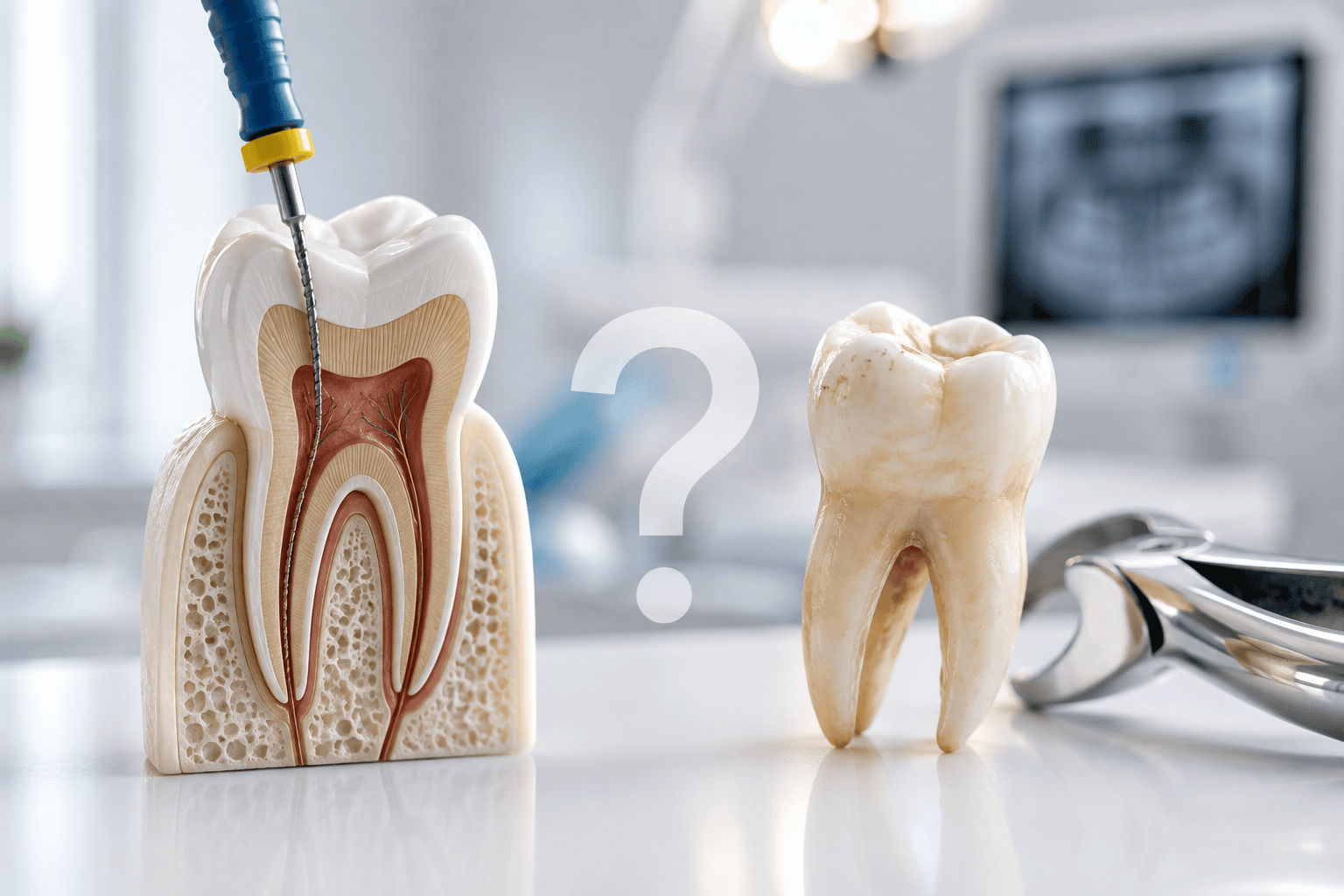

Root Canal vs Tooth Extraction: Which Is the Better Long-Term Choice?
When you are dealing with a severe toothache, a deep cavity, or a sudden dental injury, your mind usually goes straight to one goal: getting rid of the pain. When you visit a dentist, you are often faced with a crucial decision about how to handle the compromised tooth. For most patients, this crossroad comes down to a choice of a tooth root canal vs extraction.
It is incredibly common to wonder if it is better to simply extract tooth vs root canal therapy to fix the issue permanently. After all, pulling a tooth might sound like a quick, definitive fix to a painful problem. However, from a long-term oral health perspective, the decision requires looking far beyond temporary pain relief.
Every tooth in your mouth plays an essential role in your ability to chew, speak, and maintain the natural structure of your jawbone. At Royal Dental Care in Norridge, we want our patients to feel fully confident in their treatment paths. Let’s break down the realities of a tooth extraction vs root canal, how they compare in cost, and what they mean for your smile over the next ten, twenty, or thirty years.
Understanding the Two Procedures
To make an informed decision, it helps to understand what actually happens during each of these dental treatments. While both successfully eliminate active dental infection and pain, their structural approaches are entirely opposite.
What is a Root Canal?
A root canal is a restorative procedure aimed at saving a severely damaged or infected tooth. Inside every tooth, beneath the hard outer layers of enamel and dentin, lies a soft tissue called the pulp. This pulp contains blood vessels, connective tissue, and nerves. When a deep cavity or structural fracture allows bacteria to enter this inner chamber, the pulp becomes inflamed or infected, often causing significant discomfort.
During a root canal, a dentist gently accesses the interior of the tooth, removes the diseased or dead pulp tissue, cleans out the root canals, and sanitizes the area. Once the space is sterilized, it is filled with a biocompatible material called gutta-percha and sealed. Because removing the nerves leaves the tooth somewhat brittle over time, the treated tooth is almost always reinforced with a custom dental crown. This crown restores the tooth’s physical strength and natural appearance, allowing you to use it normally.
What is a Tooth Extraction?
A tooth extraction is exactly what it sounds like: the complete removal of the tooth from its socket in the jawbone. This is typically classified as either a simple extraction (for teeth visible above the gum line) or a surgical extraction (for teeth that have broken off at the gum line or remain trapped beneath the bone).
While extraction removes the source of infection instantly, it leaves behind an empty space in your smile and your jaw. Unless you plan to leave a gap, which comes with its own set of long-term alignment risks, an extraction is rarely a single-step treatment. It usually represents the first phase of a multi-step process to replace the missing tooth with a bridge, partial denture, or dental implant.
Direct Comparison: Root Canal vs Tooth Extraction
When weighing a root canal vs tooth extraction, looking at how each path impacts your daily life can clarify which option makes the most sense for your future.
With root canal therapy, the primary goal is preservation. You get to keep your natural tooth, which means your original chewing power and natural bite alignment remain completely intact. Because the original tooth root stays nestled in the jaw, it continuously protects and maintains your local bone density. The initial treatment is usually completed in just one or two office visits, followed by the placement of a crown. When paired with good oral hygiene, it offers an exceptionally high long-term success rate.
A tooth extraction, on the other hand, shifts the goal from preservation to total removal. Because the tooth is gone, your natural chewing function is immediately disrupted, requiring an artificial replacement like a bridge or an implant to restore your bite. Without the tooth root to stimulate the area, you face a risk of gradual bone loss in the jaw where the root used to be. While the extraction itself is a quick single visit, the overall journey can stretch over several months of healing and dental appointments if you choose to anchor a dental implant in its place.
The Value of Preserving Natural Teeth
Modern dentistry heavily favors preserving your natural teeth whenever possible. There is simply no artificial replacement that perfectly replicates the exact look, feel, and function of a tooth you were born with.
When you choose a root canal, you preserve the natural root structure. This root acts as an anchor in your jawbone. Every time you chew, the pressure running through the root stimulates the surrounding bone tissue, signaling to your body that the bone is still needed.
When a tooth is pulled, that vital stimulation stops. Over time, the jawbone in that specific area can begin to resorb, meaning it gradually dissolves and shrinks. This bone loss can eventually compromise the stability of neighboring teeth, causing them to shift, tilt, or loosen. In more severe cases involving multiple missing back teeth, a changing jaw structure can subtly alter your facial shape, giving the lower face a slightly sunken appearance.
Special Consideration: Cracked Tooth Root Canal vs Extraction
Deciding between treatments can become a bit more complex when you are dealing with a fractured or broken tooth. If you are comparing a cracked tooth root canal vs extraction, the final recommendation will depend entirely on the direction and depth of the fracture.
- When a Root Canal Works: If the crack is limited to the upper crown of the tooth or only extends slightly below the gum line without reaching the root system, a root canal can save it. The dentist removes the inner nerve tissue that is registering the pain, fills the canal, and places a protective crown over the fracture to hold the tooth securely together.
- When an Extraction is Necessary: If the crack runs vertically straight down into the root beneath the bone line, the tooth is structurally compromised beyond repair. Bacteria will continuously find their way into a vertical root fracture, leading to chronic infections. In this scenario, extracting the tooth and replacing it is the only predictable, healthy option left.
Root Canal vs Tooth Extraction Cost Comparison
Financial considerations are a major factor for many families when deciding on dental care. When looking strictly at the upfront fee for the initial appointment, a tooth extraction vs root canal cost comparison can feel misleading.
An extraction is almost always less expensive in the short term than a root canal. A root canal requires specialized tools, precision cleaning, and an accompanying dental crown to protect the remaining tooth structure.
However, looking at the comprehensive root canal vs tooth extraction cost comparison over a lifetime often reveals a different story. If you opt for an extraction, you must factor in the expense of replacing that missing tooth to avoid shifting bites, chewing difficulties, and bone recession.
Replacing a single tooth with a high-quality dental implant and crown, or a fixed dental bridge, typically costs significantly more than a root canal and a crown. If you choose to forgo a replacement altogether, the long-term dental costs associated with fixing shifted teeth, treating secondary decay, or addressing advanced bone loss down the road can far exceed the price of saving the tooth initially.
Life After Treatment: Recovery and Longevity
The healing experience and long-term outlook vary gently between both choices.
Recovery Timelines
Healing after a root canal is generally straightforward. You might experience some mild tenderness or a bruised sensation around the localized area for a few days, which is normally manageable with over-the-counter pain relievers. Most patients return to their normal routines the very next day.
An extraction recovery requires a bit more active self-care. Your body must form a secure blood clot in the empty socket to heal properly. You will need to modify your diet to soft foods for several days and strictly avoid behaviors like smoking or drinking through a straw, which can dislodge the clot and cause a painful condition known as dry socket.
Longevity and Outlook
A tooth treated with a successful root canal and protected by a strong crown can easily last for a decade, or even a lifetime, provided you maintain consistent brushing, flossing, and professional cleanings. On the other side, if an extraction is followed by a dental implant, that implant also boasts an incredibly high long-term success rate. Both are durable pathways, but saving the original tooth involves fewer surgical steps.
Making Your Decision at Royal Dental Care
If you are currently experiencing dental discomfort or trying to navigate a complex treatment choice in Norridge, you do not have to guess the right answer alone. Every smile is unique, and a thorough clinical evaluation with digital X-rays is the only definitive way to determine the structural health of your tooth.
At Royal Dental Care, our dedicated team takes the time to walk you through your digital imaging, explain the structural integrity of your tooth, and provide transparent estimates for all available paths. Our priority is to help you find a solution that relieves your pain today while protecting your bite, your health, and your confidence for years to come.
Contact us today to schedule a consultation at our Norridge office, and let’s work together to keep your smile healthy and complete.
Frequently Asked Questions on Root Canal vs Tooth Extraction
Q: Is a root canal painful compared to an extraction?
A: Thanks to modern local anesthetics, both procedures are highly manageable and performed while the area is completely numb. Most patients find that a root canal feels very similar to receiving a standard, deep filling. The post-operative healing after a root canal is often shorter and milder than the recovery period required after a tooth extraction.
Q: What happens if I choose to extract a tooth and not replace it?
A: Leaving an empty space can cause the surrounding teeth to gradually drift, tilt, or shift into the open gap. This movement can disrupt your natural bite alignment, make certain areas harder to clean, increase your risk for localized gum disease, and lead to localized bone loss over time.
Q: How do I know if my tooth can actually be saved by a root canal?
A: A tooth can generally be saved if its root structure remains solid, free of vertical fractures, and supported by a healthy amount of surrounding bone. Your dentist will utilize targeted digital X-rays to check the shape and health of the roots beneath the gums before recommending a final treatment path.
Real Patients. Real Reviews.

Luke
1 year ago
Isabella was great!! Highly recommend her

Julia Swider
1 year ago
Great experience, everyone is very kind and patient. Take time to educate you on what is going on, which is much appreciated. Highly recommend!
Response from the owner
Hi Julia,Thank you for leaving us a review! Your feedback is appreciated.2 years ago

Pawel Blaszczak
1 year ago

Casey Kinsella
1 year ago
The atmosphere was great. The professionals were friendly. The communication between the office, dentist and patient was awful. I’ve found this with most dentist offices that once they get your money, they forget about you. Not happy with the customer service.

Scott Donaldson
1 year ago

Szymon Szuster
1 year ago

Ozzie Skenderi
1 year ago
Everyone is so nice and helpful!! They are great!!
Response from the owner
Hi Ozzie,We appreciate you taking the time to provide your feedback. We're happy to hear you had a positive experience at our practice!1 year ago

Jacqueline Hernandez
1 year ago
Really clean and great service

Rafal Raszewski
1 year ago

vivian trankina (viv)
1 year ago
amazing service everyone is kind here i’ve been going here for about 2 ywars

Keluarga Bahagia
1 year ago
Since I moved from another dentist to this Royal Dental treatment has felt so amazing, all the women who work at the desk are very kind to help me and my husband for scheduling, especially for me a dental cleaner who cleans my teeth Lois is my favorite, she is very friendly and does clean details. The dentist is also good, twice helped by the dentist forgot his name, he is also very helpful to check, for all the good and happy come to this Kingdom's teeth

Karina Czajko
1 year ago
Very professional, always respectful! Highly recommend!

Yoly navarrete
1 year ago
The atmosphere is beautiful the place is very clean. Very professional service. I went in for a free consultation. They were very thorough at explaining everything. I will be coming back and I Recommend them.


Alyssa Silvia
1 year ago
Response from the owner
Hi Alyssa Silvia Thanks for visiting Royal Dental Care. We truly value your feedback and your confidence in our team.1 year ago

Amreen Jalal
1 year ago
izabela was so sweet and made the entire appointment very easy and enjoyable. the environment was really friendly, welcoming and clean. would definitely recommend to others, they’re very thorough with their work!
Response from the owner
Hi Amreen Jalal Thanks for taking the time to leave a review. Your input helps us continue providing high-quality care at Royal Dental Care.1 year ago

LUKASZ WROBLEWSKI
1 year ago
This is a great place for those who want a gentle dentist, a thorough hygienist, and friendly staff. Everyone is so nice, and the whole office is clean and modern.
Response from the owner
Hi LUKASZ WROBLEWSKI Thank you for your kind words. We're so pleased to know you had a great experience at Royal Dental Care. 1 year ago

Katherine Dynak
1 year ago
Pretty good service
Response from the owner
Hi Katherine Dynak Your feedback means a lot to our team. We're committed to continuing the excellent care you’ve come to expect. 1 year ago

Melissa
1 year ago
Very friendly staff. Professional, I’ve been coming here for years now
Response from the owner
Hi Melissa We appreciate your support and are grateful you chose Royal Dental Care for your dental needs. Looking forward to seeing you again. 1 year ago

Bobby Anderson
1 year ago
I love this place! Been coming for years. I’ve had a lot of work done lol
Response from the owner
Hi Bobby Anderson Thank you for your kind words. We're so pleased to know you had a great experience at Royal Dental Care. 1 year ago

Rosa Rendon
1 year ago
Very good experience, Israa was amazing and did a great job
Response from the owner
Hi Rosa Rendon Your feedback means a lot to our team. We're committed to continuing the excellent care you’ve come to expect. 1 year ago