
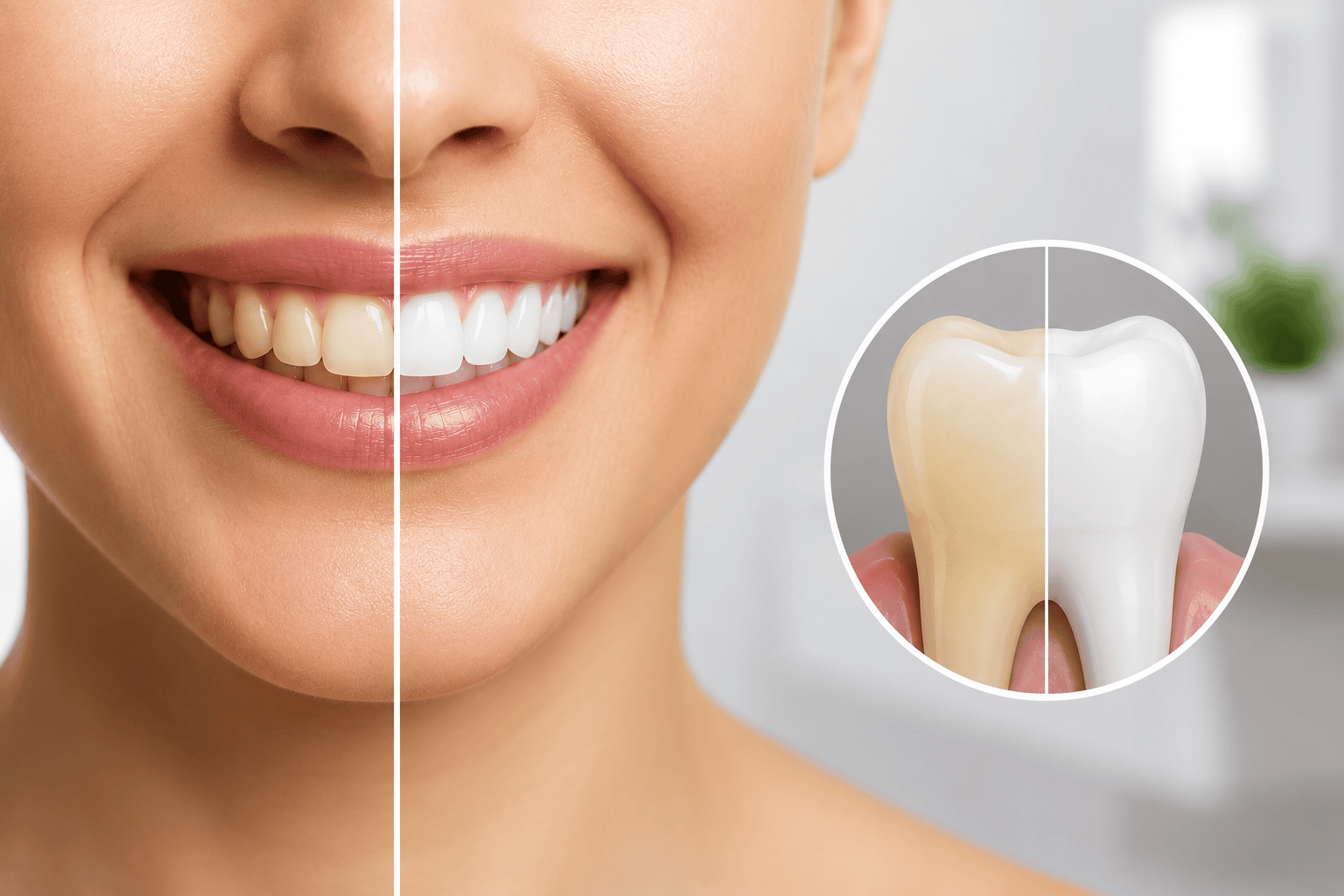

Why Do Teeth Turn Yellow? Causes, Myths & Prevention Tips
We have all had that sudden realization. You are looking at a recent photo from a family dinner, or maybe you are just brushing your teeth in front of the bathroom mirror before bed, and you notice your smile looks a bit dull. Instead of that clean, bright look you want, there is a distinct tint left behind.
It is completely natural for your smile to change shades as time goes on. But online, you get flooded with conflicting advice, strange DIY trends, and endless products promising overnight fixes. It makes finding out why do teeth turn yellow feel incredibly complicated. You might start asking yourself, “why do your teeth turn yellow?” even if you follow a pretty solid daily routine.
The truth is, teeth stain and change color due to a mix of everyday habits, internal anatomy, and simple aging. To really get a handle on your oral health, you have to look past the myths and understand the physical biology of what is happening inside your mouth.
The Basic Science Behind the Shade
To figure out why do my teeth turn yellow, you first need to look at how a tooth is built. The part of the tooth you see when you smile is made up of two primary layers of tissue. For a closer look at how these structures work together, you can also explore the anatomy of a tooth:
- The Enamel Shield: This is the hard, glossy outer layer. Natural enamel is rich in minerals and has a white hue, but it is also translucent. Light passes right through it.
- The Dentin Core: This sits directly beneath your enamel. Dentin is a much softer, dense layer of tissue that is naturally pale yellow or light brown.
When you are younger, your enamel is thick and completely covers the darker core underneath. This gives your teeth a bright, white appearance. But as you use your teeth every day, that outer shield slowly thins out from simple friction and exposure to normal dietary acids. As that white barrier wears down, the dark dentin begins to show through more clearly. This creates an internal color shift that surface scrubbing alone cannot fix.
The Daily Routine: Why Color Changes Happen Fast
It is incredibly frustrating to invest time into cleaning your mouth, only to feel like your efforts are backfiring. One of the most common questions people ask during a routine checkup is, “why do my teeth turn yellow after brushing?”
This usually happens because of abrasive products. Many over the counter “intense whitening” toothpastes or charcoal powders are surprisingly gritty. If you scrub your teeth too hard with these products, or use a brush with stiff bristles, you are not actually scrubbing the stains away. Instead, you are creating tiny scratches on your protective enamel. Over time, you wear that outer layer down, exposing the yellow dentin underneath right after you finish cleaning. Following healthy oral hygiene habits can help you clean effectively without unnecessarily wearing down your enamel.
Another common frustration is noticing immediate shifts throughout the day, leaving you wondering, “why do my teeth turn yellow after I eat?”
This comes down to an invisible, sticky protein layer on your teeth called the pellicle. When you eat deeply pigmented foods or drinks, like a morning cup of black coffee, dark teas, red wine, or rich pasta sauces, the intense color pigments easily stick to this film. On top of that, if your meal is highly acidic, it temporarily softens your enamel. This allows dark food particles to settle into the microscopic pores of your teeth before your saliva has a chance to wash them away.
The Post Treatment Blues: Discoloration After Bleaching
If you have recently used an over the counter kit or an intense whitening treatment, it can be incredibly disheartening to look in the mirror and ask, “why do my teeth turn yellow after whitening?”
This setback usually happens due to a mix of dehydration and timing. Professional and store bought bleaching gels contain active peroxides that pull moisture straight out of your teeth during the treatment process. When your enamel is completely dehydrated, it takes on an artificial, chalky white look. Over the next couple of days, your saliva naturally rehydrates the teeth. As the normal moisture levels return, your teeth settle back into their actual shade, which can make them look slightly more yellow by comparison.
Furthermore, whitening treatments temporarily open up the tiny pores on the surface of your enamel. For the first 24 to 48 hours after a treatment, your teeth act like a dry sponge. If you drink coffee, eat dark berries, or use tobacco products during this vulnerable window, your enamel will absorb those dark pigments incredibly fast, reversing your bright results almost immediately. Tobacco can also contribute to discoloration and other oral health concerns, which is why understanding the effects of smoking on oral health is important.
Genetics and Speed: Why Some People Stain Faster
If you feel like you are fighting a losing battle compared to your friends, you might find yourself searching for answers to questions like, “why do my teeth turn yellow so easily?” or “why do my teeth turn yellow so fast?”
When your teeth discolor at an accelerated rate, it is generally driven by a few distinct factors:
Chronic Dry Mouth
Saliva is your body’s built in defense mechanism against stains and decay. It constantly washes away loose food particles, neutralizes the acids produced by oral bacteria, and supplies fresh minerals to keep your enamel strong. If you suffer from a dry mouth due to specific medications, mouth breathing, or genetics, your enamel loses that daily protection. This allows stains to lock onto the surface much more easily.
Natural Enamel Thickness
Genetics play a massive role in the structural makeup of your smile. Some people are simply born with naturally thinner enamel or a much darker, richer shade of dentin from the start. If your genetics lean toward thinner enamel, your teeth will show a yellow tint far more easily than someone with thick, completely opaque enamel.
Plaque and Tartar Accumulation
If soft bacterial plaque is left undisturbed along your gum line, it absorbs minerals from your saliva and hardens into a rough substance called tartar within a matter of days. Tartar is highly porous and acts like a magnet for food stains, causing rapid yellowing near the gums that regular brushing cannot remove.
Simple, Everyday Ways to Protect Your Enamel
Slowing down the staining process does not mean you have to completely change your lifestyle or give up your morning routines. Making a few conscious adjustments can make a significant difference over time.
- Sip Through a Straw: When enjoying iced coffee, dark teas, or sodas, using a straw helps direct the liquids past your front teeth, minimizing direct contact with your enamel.
- Rinse with Plain Water: If you cannot brush your teeth immediately after lunch or a cup of coffee, swish some water around your mouth. This helps dilute lingering acids and clears away loose color pigments before they set.
- Switch to Soft Bristles: Protect your enamel from early wear by using a soft bristled toothbrush and a nonabrasive fluoride toothpaste. Gentle, circular motions are all it takes to clear away plaque without stripping your enamel.
- Keep Up with Regular Cleanings: A dental hygienist uses specialized tools to safely scale away hardened tartar that your regular toothbrush cannot budge. Clearing this buildup instantly reveals a cleaner, brighter baseline.
Refresh Your Smile in Schaumburg
If you are tired of dealing with quick discoloration and want to find a safe, effective way to brighten your teeth without damaging your enamel, getting a professional evaluation is the best path forward.
At Royal Dental Care, we take the time to figure out the exact cause of your staining. Whether your discoloration is sitting on the surface from your favorite foods or is tied to naturally thinning enamel, we can build a customized plan that protects your oral health while restoring your confidence. Reach out to the friendly team at Royal Dental Care in Schaumburg today to book your consultation and keep your smile healthy and bright.
Frequently Asked Questions
Q: Can a professional dental cleaning remove all yellow stains?
A: A professional cleaning is excellent for removing soft plaque and scraping away hardened, yellow tartar that you cannot remove at home. It can also lift many extrinsic surface stains caused by food and drinks. However, if the yellow appearance is caused by naturally thin enamel or dark dentin inside the tooth, you will likely need professional whitening treatment or cosmetic solutions to change the shade.
Q: Is professional teeth whitening safe for sensitive teeth?
A: Yes, when it is monitored by a professional. Modern clinical whitening treatments use carefully balanced formulas that minimize nerve irritation. Your dentist can adjust the strength of the bleaching gel and apply protective barriers to your gums, making the process much safer and more comfortable than unpredictable over the counter options.
Q: How often should I get a checkup to keep tartar from causing discoloration?
A: For most patients, visiting the office every six months is the ideal interval to keep plaque and tartar from building up. If you naturally form tartar quickly or have a history of gum issues, your dentist might recommend coming in a bit more frequently to keep your enamel clean and protected.
Q: Why do my teeth look yellow near the gumline?
A: This is typically where plaque and tartar accumulate most heavily because it can be difficult to reach with a standard toothbrush. Since tartar is highly porous, it absorbs stains from your diet very quickly, turning a dark yellow or light brown color right against your gums.
Real Patients. Real Reviews.



Luke
1 year ago
Isabella was great!! Highly recommend her

Julia Swider
1 year ago
Great experience, everyone is very kind and patient. Take time to educate you on what is going on, which is much appreciated. Highly recommend!
Response from the owner
Hi Julia,
Thank you for leaving us a review! Your feedback is appreciated.2 years ago

Pawel Blaszczak
1 year ago

Casey Kinsella
1 year ago
The atmosphere was great. The professionals were friendly. The communication between the office, dentist and patient was awful. I’ve found this with most dentist offices that once they get your money, they forget about you. Not happy with the customer service.

Scott Donaldson
1 year ago

Szymon Szuster
1 year ago

Ozzie Skenderi
1 year ago
Everyone is so nice and helpful!! They are great!!
Response from the owner
Hi Ozzie,
We appreciate you taking the time to provide your feedback. We're happy to hear you had a positive experience at our practice!2 years ago

Jacqueline Hernandez
1 year ago
Really clean and great service

Rafal Raszewski
1 year ago

vivian trankina (viv)
1 year ago
amazing service everyone is kind here i’ve been going here for about 2 ywars

Keluarga Bahagia
1 year ago
Since I moved from another dentist to this Royal Dental treatment has felt so amazing, all the women who work at the desk are very kind to help me and my husband for scheduling, especially for me a dental cleaner who cleans my teeth Lois is my favorite, she is very friendly and does clean details. The dentist is also good, twice helped by the dentist forgot his name, he is also very helpful to check, for all the good and happy come to this Kingdom's teeth

Karina Czajko
1 year ago
Very professional, always respectful! Highly recommend!

Yoly navarrete
1 year ago
The atmosphere is beautiful the place is very clean. Very professional service. I went in for a free consultation. They were very thorough at explaining everything. I will be coming back and I Recommend them.

Alyssa Silvia
1 year ago
Response from the owner
Hi Alyssa Silvia Thanks for visiting Royal Dental Care. We truly value your feedback and your confidence in our team.
1 year ago

Amreen Jalal
1 year ago
izabela was so sweet and made the entire appointment very easy and enjoyable. the environment was really friendly, welcoming and clean. would definitely recommend to others, they’re very thorough with their work!
Response from the owner
Hi Amreen Jalal Thanks for taking the time to leave a review. Your input helps us continue providing high-quality care at Royal Dental Care.
1 year ago

LUKASZ WROBLEWSKI
1 year ago
This is a great place for those who want a gentle dentist, a thorough hygienist, and friendly staff. Everyone is so nice, and the whole office is clean and modern.
Response from the owner
Hi LUKASZ WROBLEWSKI Thank you for your kind words. We're so pleased to know you had a great experience at Royal Dental Care. 1 year ago

Katherine Dynak
1 year ago
Pretty good service
Response from the owner
Hi Katherine Dynak Your feedback means a lot to our team. We're committed to continuing the excellent care you’ve come to expect. 1 year ago

Melissa
1 year ago
Very friendly staff. Professional, I’ve been coming here for years now
Response from the owner
Hi Melissa We appreciate your support and are grateful you chose Royal Dental Care for your dental needs. Looking forward to seeing you again. 1 year ago

Bobby Anderson
1 year ago
I love this place! Been coming for years. I’ve had a lot of work done lol
Response from the owner
Hi Bobby Anderson Thank you for your kind words. We're so pleased to know you had a great experience at Royal Dental Care. 1 year ago

Rosa Rendon
1 year ago
Very good experience, Israa was amazing and did a great job
Response from the owner
Hi Rosa Rendon Your feedback means a lot to our team. We're committed to continuing the excellent care you’ve come to expect. 1 year ago