
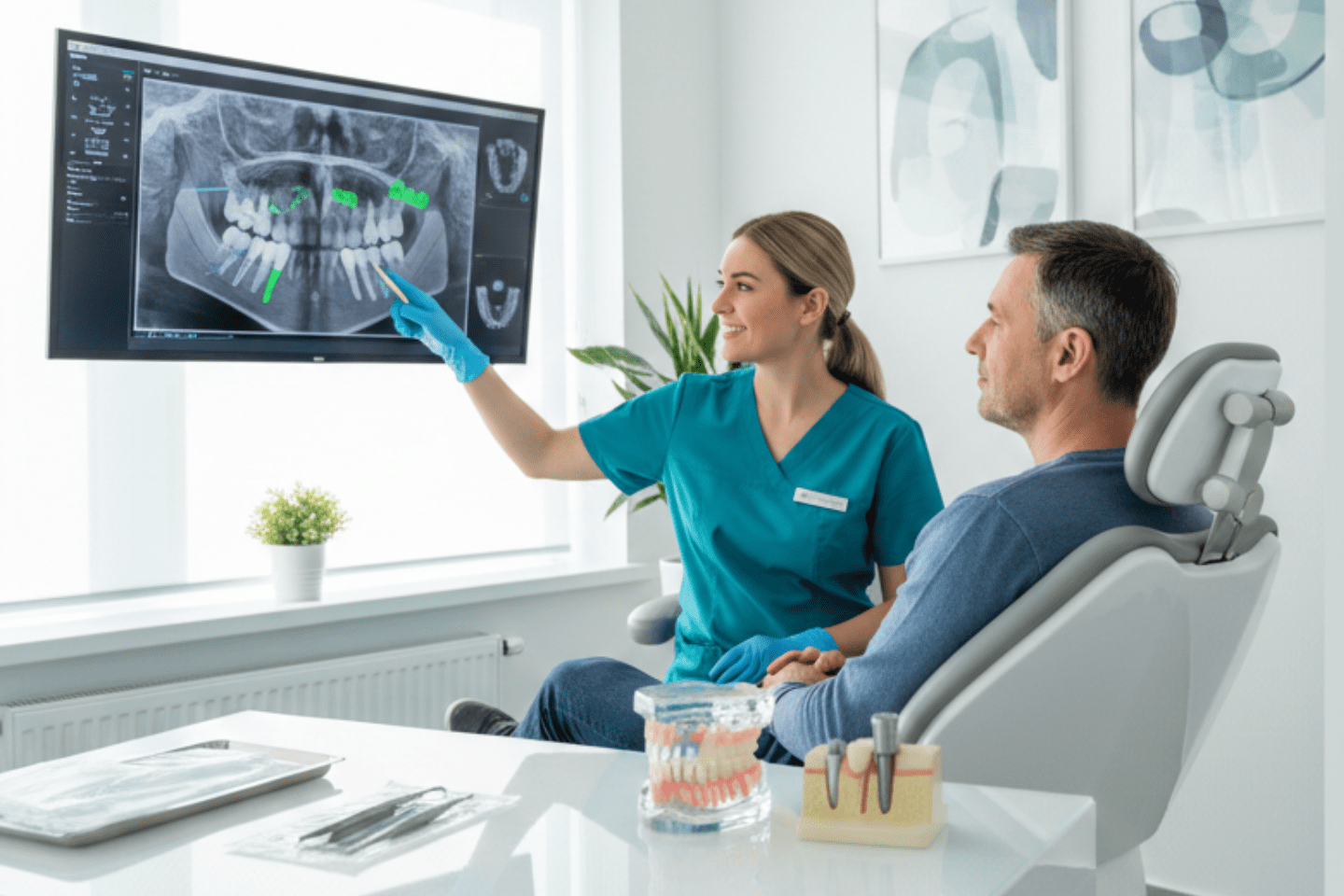

Can Dental Implants Get Infected? Signs Schaumburg Patients Should Know
You invested a lot in your smile. For many folks in Schaumburg, dental implants are more than just a medical procedure. They are a second chance to eat favorite foods and talk without feeling self-conscious. But there is a nagging question that often comes up during follow-up visits: can these things actually get infected? The truth is that while the titanium post itself cannot decay like a tooth, the living tissue around it is still vulnerable. Recognizing an issue early can be the difference between a quick fix and losing the implant entirely.
The Story of a Failing Smile
Let’s look at a scenario we see too often. A patient gets their implants and everything is great for a year or two. They feel indestructible. Life gets busy, and maybe they skip a few flossing sessions or miss a professional cleaning. It starts small. Maybe there is a little bit of pink in the sink when they brush. They figure it is just a minor irritation and ignore it.
That tiny bit of irritation is actually the start of peri-implantitis. This is essentially the implant version of gum disease. Because your body does not have the same natural ligament barriers around an implant that it does around a real tooth root, bacteria can move fast. If those bacteria reach the bone, they start to dissolve the very foundation holding your new tooth in place. What felt like a minor nuisance yesterday can become a genuine dental emergency tomorrow.
Recognizing the Warning Signs of Infection
One of the trickiest things about an infected implant is that it does not always hurt at first. Natural teeth have nerves that scream at you when something is wrong. Implants do not. You have to be a bit of a detective and watch for the physical clues your body is leaving behind.
Persistent Redness and Swelling
Healthy gums should look pale pink and feel firm. If you look in the mirror and notice the tissue around your implant looks puffy, shiny, or a deep shade of red, pay attention. While some tenderness is expected right after the initial surgery, seeing these signs months or years later is a major warning.
Discomfort or Pain During Use
You might not feel a “toothache” in the traditional sense, but you can definitely feel pressure. If chewing or even pressing on the gum with your finger causes a dull throb or sharp discomfort, the area is likely inflamed. This usually means your immune system is trying to fight off a bacterial invasion in the surrounding bone.
Unpleasant Taste or Bad Breath
Bacteria are living organisms that produce waste. If you have a localized infection, that waste can cause a constant bad taste that you just cannot get rid of. You might also notice bad breath that persists even after using mouthwash. In some cases, you might even see a tiny bit of pus or drainage near the base of the implant.
Looseness or Mobility
This is the big one. A dental implant is designed to fuse with your jawbone. It should feel as solid as a natural tooth. If you feel any wiggle or movement when you eat or touch the crown, you need to see a dentist immediately. Movement usually means the bone has already started to pull away from the post.
Why Dental Implant Infections Happen
The biggest enemy of a healthy implant is plaque. Even though the tooth is artificial, the gums around it are very real. If plaque is allowed to sit near the gum line, it hardens into tartar. This creates a rough surface that acts like a ladder for bacteria to climb down toward the bone.
Lifestyle choices play a massive role too. Smoking is one of the leading causes of implant failure because it restricts blood flow, making it much harder for your gums to heal or fight off germs. Other issues like uncontrolled diabetes or even a “heavy bite” that puts too much physical stress on the post can create the perfect storm for an infection to take hold.
The Solution: How We Treat Peri-Implantitis
The good news is that if we catch it early, we can usually save the implant. At Royal Dental Care, we do not believe in a one size fits all approach. We look at how deep the infection has gone before deciding on the best way to clear it out.
Deep Cleaning and Debridement
If the infection is caught in the early stages, we can often resolve it with a specialized deep cleaning. We use tools that are specifically designed for titanium to scrape away the bacterial colonies without damaging the surface of the implant. This lets the gums reattach and heal naturally.
Antibiotic Therapy
In many cases, we combine physical cleaning with antibiotics. These might be a prescription pill or a local antimicrobial rinse. The goal is to lower the bacterial load enough so your own immune system can take back control of the area.
Surgical Intervention
If the infection has reached the bone, we might need to perform a minor surgical procedure. This allows us to clean the implant surface thoroughly and potentially use a bone graft to replace what was lost. It sounds intimidating, but it is a very effective way to restore stability and keep your smile intact.
Preventing Future Problems
The best treatment is never needing treatment at all. Keeping your dental implants healthy comes down to a few simple daily habits.
- Check Your Tools: Use a soft toothbrush and avoid abrasive toothpastes that can scratch your restorations.
- Floss Differently: Use a water flosser or specialized implant floss to clean the “collar” where the implant meets the gum.
- Keep Your Appointments: Regular visits to Royal Dental Care allow us to use professional tools to reach spots you simply cannot reach at home.
- Watch Your Health: Managing your overall wellness and oral health helps ensure your body has the resources it needs to keep your implants stable.
Frequently Asked Questions
Q: Can I treat an implant infection with salt water at home?
A: While salt water can help soothe inflamed gums, it cannot kill the bacteria buried deep against the metal post. You still need a professional evaluation to ensure the bone is safe.
Q: How fast does an infection spread?
A: It can vary based on your health and the type of bacteria involved. However, because there are no natural ligaments to slow it down, an implant infection can often move faster than traditional gum disease.
Q: Will I have to get the implant removed?
A: Not if we catch it in time. Removal is usually a last resort when the bone loss is so severe that the implant can no longer be supported. This is why early detection is so important.
Q: Is the treatment for infection covered by insurance?
A: Most plans will cover the diagnostic exam and basic cleanings. For more advanced procedures like restorative dentistry or surgery, coverage depends on your specific policy. Our team is happy to help you check.
Q: Can anxiety or stress cause implant pain?
A: Stress often leads to teeth grinding or clenching. This extra pressure can stress the implant and make it more susceptible to issues. We offer sedation dentistry for those who need help relaxing during their appointments.
Your Path to a Healthy Smile in Schaumburg
Your smile deserves the best possible protection. If you are worried about a dull ache or notice something just does not feel right with your dental work, don’t wait for it to get worse. At Royal Dental Care, we are dedicated to helping our neighbors in Schaumburg maintain healthy, beautiful smiles for a lifetime. Whether you have an existing concern or just need a routine checkup, we are here to help you get back on track.
Notice something wrong with your implant? Contact Royal Dental Care today to book an appointment and let our experts give you the peace of mind you deserve.
Real Patients. Real Reviews.



Luke
1 year ago
Isabella was great!! Highly recommend her

Julia Swider
1 year ago
Great experience, everyone is very kind and patient. Take time to educate you on what is going on, which is much appreciated. Highly recommend!
Response from the owner
Hi Julia,
Thank you for leaving us a review! Your feedback is appreciated.2 years ago

Pawel Blaszczak
1 year ago

Casey Kinsella
1 year ago
The atmosphere was great. The professionals were friendly. The communication between the office, dentist and patient was awful. I’ve found this with most dentist offices that once they get your money, they forget about you. Not happy with the customer service.

Scott Donaldson
1 year ago

Szymon Szuster
1 year ago

Ozzie Skenderi
1 year ago
Everyone is so nice and helpful!! They are great!!
Response from the owner
Hi Ozzie,
We appreciate you taking the time to provide your feedback. We're happy to hear you had a positive experience at our practice!2 years ago

Jacqueline Hernandez
1 year ago
Really clean and great service

Rafal Raszewski
1 year ago

vivian trankina (viv)
1 year ago
amazing service everyone is kind here i’ve been going here for about 2 ywars

Keluarga Bahagia
1 year ago
Since I moved from another dentist to this Royal Dental treatment has felt so amazing, all the women who work at the desk are very kind to help me and my husband for scheduling, especially for me a dental cleaner who cleans my teeth Lois is my favorite, she is very friendly and does clean details. The dentist is also good, twice helped by the dentist forgot his name, he is also very helpful to check, for all the good and happy come to this Kingdom's teeth

Karina Czajko
1 year ago
Very professional, always respectful! Highly recommend!

Yoly navarrete
1 year ago
The atmosphere is beautiful the place is very clean. Very professional service. I went in for a free consultation. They were very thorough at explaining everything. I will be coming back and I Recommend them.

Alyssa Silvia
1 year ago
Response from the owner
Hi Alyssa Silvia Thanks for visiting Royal Dental Care. We truly value your feedback and your confidence in our team.
1 year ago

Amreen Jalal
1 year ago
izabela was so sweet and made the entire appointment very easy and enjoyable. the environment was really friendly, welcoming and clean. would definitely recommend to others, they’re very thorough with their work!
Response from the owner
Hi Amreen Jalal Thanks for taking the time to leave a review. Your input helps us continue providing high-quality care at Royal Dental Care.
1 year ago

LUKASZ WROBLEWSKI
1 year ago
This is a great place for those who want a gentle dentist, a thorough hygienist, and friendly staff. Everyone is so nice, and the whole office is clean and modern.
Response from the owner
Hi LUKASZ WROBLEWSKI Thank you for your kind words. We're so pleased to know you had a great experience at Royal Dental Care. 1 year ago

Katherine Dynak
1 year ago
Pretty good service
Response from the owner
Hi Katherine Dynak Your feedback means a lot to our team. We're committed to continuing the excellent care you’ve come to expect. 1 year ago

Melissa
1 year ago
Very friendly staff. Professional, I’ve been coming here for years now
Response from the owner
Hi Melissa We appreciate your support and are grateful you chose Royal Dental Care for your dental needs. Looking forward to seeing you again. 1 year ago

Bobby Anderson
1 year ago
I love this place! Been coming for years. I’ve had a lot of work done lol
Response from the owner
Hi Bobby Anderson Thank you for your kind words. We're so pleased to know you had a great experience at Royal Dental Care. 1 year ago

Rosa Rendon
1 year ago
Very good experience, Israa was amazing and did a great job
Response from the owner
Hi Rosa Rendon Your feedback means a lot to our team. We're committed to continuing the excellent care you’ve come to expect. 1 year ago