
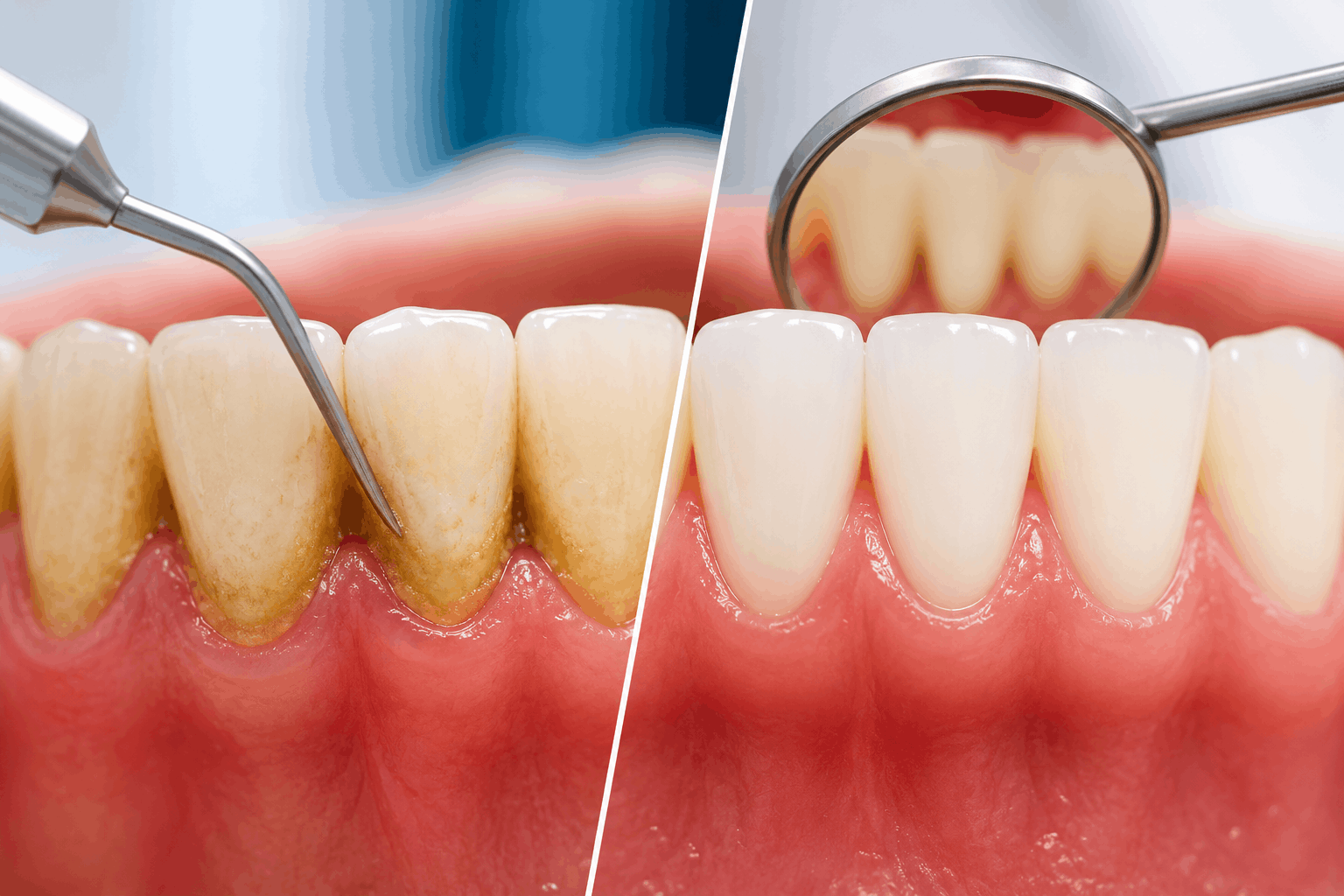

Deep Cleaning vs. Regular Cleaning: What’s the Difference and Do You Need It?
When you head into a dental office for your routine checkup, you usually expect a standard polish and a quick review of your teeth. But occasionally, after taking a few measurements of your gums, your dental hygienist might give you some unexpected news. Instead of your usual routine care, they might tell you that you actually need a deep cleaning.
If you have never heard this term before, it is completely normal to feel a bit confused or skeptical.
Many patients immediately begin wondering about deep cleaning vs. regular cleaning teeth differences or if a dental deep cleaning vs. regular cleaning is truly necessary to keep a smile healthy. It is easy to assume that a deep cleaning is just a more thorough, expensive version of a standard appointment, but the two procedures are actually entirely different treatments with completely unique medical goals.
At Royal Dental Care in Norridge, we want to clear up the confusion surrounding a deep cleaning vs. a regular cleaning so you can make the absolute best choices for your oral health.
What Is a Regular Dental Cleaning?
To understand why a deeper treatment might be necessary, we should first highlight what happens during your typical biannual visit. Formally known in the dental world as a prophylaxis, a regular teeth cleaning vs. deep cleaning focuses exclusively on preventive care for patients who currently have healthy gum tissues.
During this appointment, your hygienist uses specialized tools to remove soft plaque and hard tartar deposits that have collected on the surfaces of your teeth, specifically above the gumline. They will also gently clean between your teeth and finish up with a professional polishing compound to lift surface stains.
The main purpose here is maintenance. A regular cleaning keeps healthy gums in great shape, prevents cavities, and stops early gingivitis from developing. It is a surface-level preventive measure designed for tissue that is already well attached to the roots of your teeth.
What Is a Dental Deep Cleaning?
A deep cleaning, legally termed “scaling and root planing,” is not a preventive service at all. It is a targeted therapeutic treatment for individuals who are currently showing active signs of periodontal disease, which is chronic gum disease.
Gum disease begins when plaque and specialized bacteria bypass the visible enamel and push deep beneath the protective gumline. As tartar builds up on the hidden roots of your teeth, your immune system attempts to fight off the bacteria, causing your gums to become chronically inflamed, swollen, and prone to easy bleeding.
Over time, this chronic inflammation causes your gum tissue to detach from the tooth structure, creating deep spaces known as periodontal pockets. Once these hidden pockets form, standard toothbrushes, dental floss, and even a regular surface-level cleaning cannot physically reach the base of the infection.
The Structural Breakdown: Deep Cleaning Vs. Regular Dental Cleaning
When looking closely at a deep cleaning vs. regular dental cleaning, the physical techniques used to treat your mouth vary significantly.
During a deep cleaning, the treatment is typically split into two distinct steps across multiple visits to ensure your comfort:
- Scaling: Your provider uses ultrasonic scalers and manual tools to carefully scrape away hardened tartar and bacterial colonies from the entire surface of the tooth, reaching all the way down to the very bottom of those deep periodontal pockets.
- Root Planing: The provider smooths out any rough spots on the root surfaces of your teeth. Bacteria love to cling to rough textures, so smoothing out the dentin and cementum on the roots makes it incredibly difficult for plaque to reattach. This smooth surface also creates an ideal environment for your gum tissue to heal and firmly reattach to the tooth root.
How Does Your Dentist Decide Which One You Need?
Dentists do not guess when it comes to diagnosing gum disease. The choice between a regular dental cleaning vs. deep cleaning relies on objective measurements gathered during your periodontal exam.
Your hygienist uses a small tool called a periodontal probe to gently measure the depth of the space between your tooth and your gum tissue in millimeters.
- Healthy Gums (1 to 3 Millimeters): If your pocket depths measure between one and three millimeters, and your gums are pink and do not bleed, your tissues are healthy. A regular cleaning is exactly what you need to stay on track.
- Early to Advanced Disease (4 Millimeters and Higher): Pockets measuring four millimeters or deeper generally indicate that active bone loss and tissue detachment have started. When these depths are paired with bleeding gums or visible bone loss on your digital dental X rays, a deep cleaning is medically required to stop the infection from destroying the underlying bone that locks your teeth in place.
Patients who are unsure whether their symptoms may indicate gum disease can also learn more about the signs of gum disease and when professional treatment may be necessary.
The Cost and Timeline Reality
When evaluating a regular cleaning vs. deep cleaning, the time and financial commitments look quite different.
A regular cleaning is simple and straightforward, typically taking under an hour to complete in a single office visit. Because it is a basic preventive treatment, most standard dental insurance plans cover the fee completely twice a year.
A deep cleaning is a far more intensive, localized procedure. Because your provider is working deep beneath the sensitive gum tissue, a local anesthetic is normally used to completely numb your gums and keep you comfortable. To ensure a relaxed experience, dentists often treat one side of your mouth at a single appointment and the other side during a second visit.
Financially, a deep cleaning does carry a higher initial cost due to the specialized time, skill, and equipment required. It falls under the category of basic periodontal therapy rather than routine prevention, meaning insurance companies typically cover a percentage of the care rather than the full amount. However, treating the infection early protects you from far more costly surgical procedures, like bone grafts or dental implants, if your teeth were to loosen and fall out later in life.
What to Expect After a Deep Cleaning
Once the local anesthetic wears off after a deep cleaning, you might notice some localized tooth sensitivity, mild gum soreness, or minor swelling for a few days. This is a completely normal part of the healing process as your body works to repair the tissues. Most patients manage this easily with over-the-counter anti-inflammatory medications and temporary warm saltwater rinses.
Within a few weeks, you will likely notice a remarkable transformation. Healthy gums will look firm, pink, and tight against your teeth, and the chronic bleeding you might have noticed while brushing or flossing will significantly decrease.
After completing a deep cleaning, you will transition to a specific routine called periodontal maintenance visits. These follow-up cleanings occur every three to four months to ensure the deep pockets stay clean and free of new bacterial growth while your bone structure stabilizes.
Schedule an Evaluation at Royal Dental Care
Ignoring bleeding gums or deep periodontal pockets can allow chronic infections to quietly damage the foundation of your smile over time. If it has been a while since your last dental visit, or if you have been told in the past that you might need a deep cleaning, our compassionate team in Norridge is here to help you get a clear, honest assessment.
At Royal Dental Care, we focus on providing highly personalized, professional care using the latest gentle techniques to keep you completely comfortable from start to finish. We will take the time to show you your measurements, walk you through your digital X rays, and build a treatment plan that fits your health goals perfectly.
Regular routine dental exams and cleanings can also help your dental team identify changes in your teeth and gums before they become more serious.
Contact our Norridge office today to book your next appointment, and let’s work together to keep your teeth and gums strong for a lifetime.
Frequently Asked Questions
Q: Is a deep cleaning painful compared to a regular cleaning?
A: A regular cleaning rarely requires numbing because it stays above the gumline. For a deep cleaning, because the tools must go deep beneath the sensitive gums, we use a local anesthetic to completely numb the area first. You might feel some minor pressure during the process, but you should not feel any sharp pain.
Q: Can I just get a regular cleaning even if my dentist recommends a deep cleaning?
A: If you have active periodontal disease with deep pockets, a regular cleaning is not medically appropriate. A standard cleaning cannot reach the base of deep pockets, leaving the dangerous bacterial infection completely untouched. Performing a regular cleaning over a deep infection is like washing a car while the engine is failing. It looks nice on the surface, but the underlying problem continues to get worse.
Q: Will my gums ever grow back after a deep cleaning?
A: A deep cleaning is designed to stop active bone loss and eliminate infection so your gums can heal and tighten firmly back around the roots of your teeth. While a deep cleaning cannot regenerate bone or gum tissue that has already been lost to long-term disease, it helps stop further damage and protects your remaining smile.
Real Patients. Real Reviews.



Luke
1 year ago
Isabella was great!! Highly recommend her

Julia Swider
1 year ago
Great experience, everyone is very kind and patient. Take time to educate you on what is going on, which is much appreciated. Highly recommend!
Response from the owner
Hi Julia,
Thank you for leaving us a review! Your feedback is appreciated.2 years ago

Pawel Blaszczak
1 year ago

Casey Kinsella
1 year ago
The atmosphere was great. The professionals were friendly. The communication between the office, dentist and patient was awful. I’ve found this with most dentist offices that once they get your money, they forget about you. Not happy with the customer service.

Scott Donaldson
1 year ago

Szymon Szuster
1 year ago

Ozzie Skenderi
1 year ago
Everyone is so nice and helpful!! They are great!!
Response from the owner
Hi Ozzie,
We appreciate you taking the time to provide your feedback. We're happy to hear you had a positive experience at our practice!2 years ago

Jacqueline Hernandez
1 year ago
Really clean and great service

Rafal Raszewski
1 year ago

vivian trankina (viv)
1 year ago
amazing service everyone is kind here i’ve been going here for about 2 ywars

Keluarga Bahagia
1 year ago
Since I moved from another dentist to this Royal Dental treatment has felt so amazing, all the women who work at the desk are very kind to help me and my husband for scheduling, especially for me a dental cleaner who cleans my teeth Lois is my favorite, she is very friendly and does clean details. The dentist is also good, twice helped by the dentist forgot his name, he is also very helpful to check, for all the good and happy come to this Kingdom's teeth

Karina Czajko
1 year ago
Very professional, always respectful! Highly recommend!

Yoly navarrete
1 year ago
The atmosphere is beautiful the place is very clean. Very professional service. I went in for a free consultation. They were very thorough at explaining everything. I will be coming back and I Recommend them.

Alyssa Silvia
1 year ago
Response from the owner
Hi Alyssa Silvia Thanks for visiting Royal Dental Care. We truly value your feedback and your confidence in our team.
1 year ago

Amreen Jalal
1 year ago
izabela was so sweet and made the entire appointment very easy and enjoyable. the environment was really friendly, welcoming and clean. would definitely recommend to others, they’re very thorough with their work!
Response from the owner
Hi Amreen Jalal Thanks for taking the time to leave a review. Your input helps us continue providing high-quality care at Royal Dental Care.
1 year ago

LUKASZ WROBLEWSKI
1 year ago
This is a great place for those who want a gentle dentist, a thorough hygienist, and friendly staff. Everyone is so nice, and the whole office is clean and modern.
Response from the owner
Hi LUKASZ WROBLEWSKI Thank you for your kind words. We're so pleased to know you had a great experience at Royal Dental Care. 1 year ago

Katherine Dynak
1 year ago
Pretty good service
Response from the owner
Hi Katherine Dynak Your feedback means a lot to our team. We're committed to continuing the excellent care you’ve come to expect. 1 year ago

Melissa
1 year ago
Very friendly staff. Professional, I’ve been coming here for years now
Response from the owner
Hi Melissa We appreciate your support and are grateful you chose Royal Dental Care for your dental needs. Looking forward to seeing you again. 1 year ago

Bobby Anderson
1 year ago
I love this place! Been coming for years. I’ve had a lot of work done lol
Response from the owner
Hi Bobby Anderson Thank you for your kind words. We're so pleased to know you had a great experience at Royal Dental Care. 1 year ago

Rosa Rendon
1 year ago
Very good experience, Israa was amazing and did a great job
Response from the owner
Hi Rosa Rendon Your feedback means a lot to our team. We're committed to continuing the excellent care you’ve come to expect. 1 year ago