

Can You Get Dental Implants After Bone Loss? Your Options Explained
When people first hear that they need a tooth replacement, they often picture a straightforward process: a small titanium post goes into the jaw, a crown goes on top, and you are pretty much good to go. But what happens if a tooth has been missing for years, or if gum disease has quietly taken a toll on your overall oral health? A common worry we hear from patients walking through our doors is whether jawbone shrinkage means they have completely missed their window for a permanent fix.
If you have been told your jaw is a bit too thin or weak over the years, you might find yourself wondering: can you have dental implants with bone loss?
The short answer is yes. While having a healthy, dense jawbone is definitely ideal for long-term success, modern restorative techniques mean that bone loss and dental implants are no longer mutually exclusive. At Royal Dental Care in Schaumburg, we help patients navigate these exact scenarios, finding practical, tailored ways to rebuild what was lost and create a solid foundation for a healthy, functional smile.
Why Jawbone Deterioration Happens in the First Place
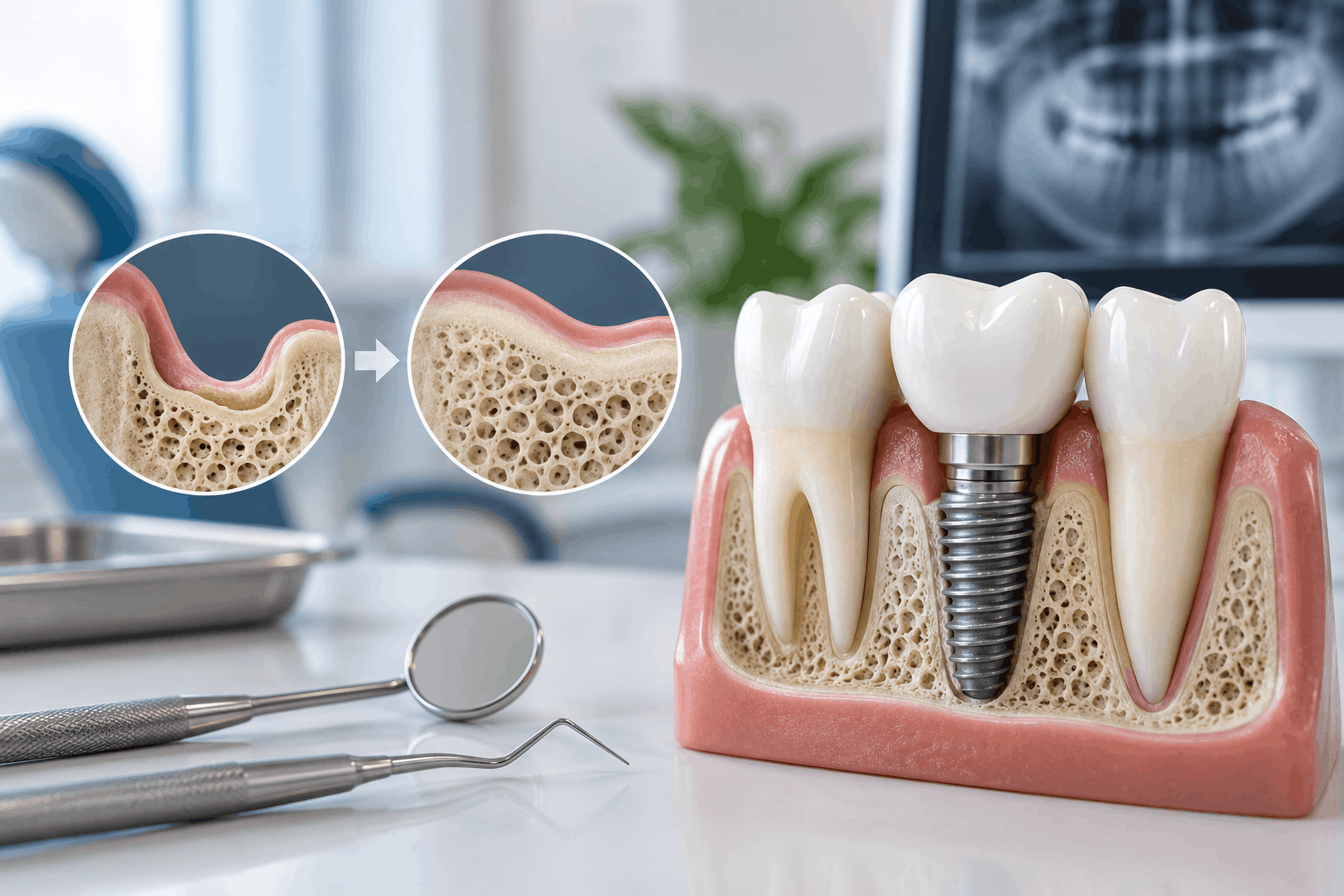
To truly understand how we fix the problem, it helps to look at why it happens in the body. Your jawbone actually relies on constant physical stimulation to maintain its density and strength over time. Every time you chew and bite, your natural tooth roots transmit physical pressure down into the surrounding bone, signaling your body to continuously repair, replenish, and maintain that bone tissue.
When a tooth is lost and left unreplaced, that vital natural stimulation simply stops. Without it, the body gradually remodels and resorbs bone that is no longer receiving normal functional stimulation. Over time, you might notice the jawbone narrowing or shrinking down in height. Periodontal disease can also accelerate this process by actively destroying the supporting structures around your teeth. Because of this, can you get dental implants with bone loss turns into one of the most frequent questions asked by individuals who have lived with gaps in their smile for an extended period.
If gum disease has contributed to the loss of supporting bone, addressing the underlying condition is an important part of protecting your oral health. Learning more about periodontal treatments can help you understand how gum health may factor into your overall treatment plan.
Your Options: How Modern Dentistry Overcomes Bone Loss
Fortunately, the field of implant dentistry has evolved far past the point where a lack of native bone automatically rules you out of treatment. Depending on your unique anatomy, several predictable pathways can make dental implants for bone loss entirely possible.
Bone Grafting and Augmentation
If your jaw lacks the necessary width or density, a bone graft can help replenish the missing volume. During this procedure, a biocompatible bone grafting material, sourced from human donor tissue, synthetic options, or even your own body, is placed right into the deficient area. Over several months, new bone can form around and integrate with the graft material, effectively regenerating a sturdy ridge capable of securely anchoring a titanium post.
For a closer look at this process, how bone grafting works for dental implants explains the role of grafting in preparing the jaw for implant placement.
Ridge Expansion
Sometimes, the jawbone is tall enough vertically, but it has become entirely too narrow to safely accommodate an implant screw. In these exact cases, a ridge expansion may be performed. The bony ridge is gently split or widened apart, and graft material is placed directly inside the gap to encourage new bone formation, creating a much wider platform for your future restoration.
Sinus Lifts for Upper Jaw Resorption
The upper jaw, particularly near your back molars, presents a unique challenge because of the maxillary sinuses located just above them. When upper teeth are lost, the maxillary sinus may expand downward, reducing the available bone height. A sinus lift procedure gently elevates the sinus membrane and places graft material underneath, creating the vertical room needed to support dental implants for severe bone loss in the upper arch.
Angled Implants and All-on-4 Solutions
If you happen to be missing a full arch of teeth, you might initially assume you need a massive amount of bone grafting across your entire mouth. However, techniques like All-on-4 leverage the naturally denser bone found right in the front of the jaw. By tilting the back implants at strategic angles, a full set of replacement teeth can be used to support a full-arch restoration without always requiring extensive grafting procedures.
If you are considering this approach, you can learn more about All-on-4 implants and how they can be used as a full-arch tooth replacement option.
Rebuilding Your Smile at Royal Dental Care
Evaluating jaw health requires precision, advanced digital imaging, and a deeply personalized touch. At our office, we take the time to map out your anatomical structure thoroughly before recommending a specific path forward. Whether you need a localized site preparation or a comprehensive full-arch approach, our team focuses heavily on matching the right procedure to your long-term comfort, health, and functional needs.
Schedule Your Consultation Today
Wondering what your personal options look like up close? A detailed diagnostic evaluation is the best way to determine how we can restore your dental health. Contact Royal Dental Care in Schaumburg to schedule your personalized consultation and take that first step toward a secure, complete smile.
Frequently Asked Questions
Q: Can you get dental implants with bone loss if it has been missing for many years?
A: Yes. Even if a tooth has been gone for a long time, supplemental treatments like bone grafting or specialized implant placements can often rebuild the necessary structural support to accommodate an implant.
Q: Are bone grafts painful?
A: The procedure is typically performed under local anesthesia, and various sedation options are often available to ensure you stay comfortable throughout. While some mild swelling and tenderness are totally normal during the initial healing days, many patients manage recovery with routine post-operative care.
Q: How long does the entire process take if I need a bone graft first?
A: Because bone grafting requires adequate time for your body to naturally integrate the new material, the overall timeline is typically extended. Healing often takes several months, depending on the graft procedure and individual healing, before the actual implant post can be safely placed.
Q: Will everyone with missing teeth need a bone graft?
A: Not necessarily at all. If an implant is placed relatively soon after a tooth extraction, or if your natural jaw density happens to remain high, you may be a great candidate for immediate or standard implant placement without any supplemental grafting.
Real Patients. Real Reviews.



Luke
1 year ago
Isabella was great!! Highly recommend her

Julia Swider
1 year ago
Great experience, everyone is very kind and patient. Take time to educate you on what is going on, which is much appreciated. Highly recommend!
Response from the owner
Hi Julia,Thank you for leaving us a review! Your feedback is appreciated.2 years ago

Pawel Blaszczak
1 year ago

Casey Kinsella
1 year ago
The atmosphere was great. The professionals were friendly. The communication between the office, dentist and patient was awful. I’ve found this with most dentist offices that once they get your money, they forget about you. Not happy with the customer service.

Scott Donaldson
1 year ago

Szymon Szuster
1 year ago

Ozzie Skenderi
1 year ago
Everyone is so nice and helpful!! They are great!!
Response from the owner
Hi Ozzie,We appreciate you taking the time to provide your feedback. We're happy to hear you had a positive experience at our practice!2 years ago

Jacqueline Hernandez
1 year ago
Really clean and great service

Rafal Raszewski
1 year ago

vivian trankina (viv)
1 year ago
amazing service everyone is kind here i’ve been going here for about 2 ywars

Keluarga Bahagia
1 year ago
Since I moved from another dentist to this Royal Dental treatment has felt so amazing, all the women who work at the desk are very kind to help me and my husband for scheduling, especially for me a dental cleaner who cleans my teeth Lois is my favorite, she is very friendly and does clean details. The dentist is also good, twice helped by the dentist forgot his name, he is also very helpful to check, for all the good and happy come to this Kingdom's teeth

Karina Czajko
1 year ago
Very professional, always respectful! Highly recommend!

Yoly navarrete
1 year ago
The atmosphere is beautiful the place is very clean. Very professional service. I went in for a free consultation. They were very thorough at explaining everything. I will be coming back and I Recommend them.

Alyssa Silvia
1 year ago
Response from the owner
Hi Alyssa Silvia Thanks for visiting Royal Dental Care. We truly value your feedback and your confidence in our team.1 year ago

Amreen Jalal
1 year ago
izabela was so sweet and made the entire appointment very easy and enjoyable. the environment was really friendly, welcoming and clean. would definitely recommend to others, they’re very thorough with their work!
Response from the owner
Hi Amreen Jalal Thanks for taking the time to leave a review. Your input helps us continue providing high-quality care at Royal Dental Care.1 year ago

LUKASZ WROBLEWSKI
1 year ago
This is a great place for those who want a gentle dentist, a thorough hygienist, and friendly staff. Everyone is so nice, and the whole office is clean and modern.
Response from the owner
Hi LUKASZ WROBLEWSKI Thank you for your kind words. We're so pleased to know you had a great experience at Royal Dental Care. 1 year ago

Katherine Dynak
1 year ago
Pretty good service
Response from the owner
Hi Katherine Dynak Your feedback means a lot to our team. We're committed to continuing the excellent care you’ve come to expect. 1 year ago

Melissa
1 year ago
Very friendly staff. Professional, I’ve been coming here for years now
Response from the owner
Hi Melissa We appreciate your support and are grateful you chose Royal Dental Care for your dental needs. Looking forward to seeing you again. 1 year ago

Bobby Anderson
1 year ago
I love this place! Been coming for years. I’ve had a lot of work done lol
Response from the owner
Hi Bobby Anderson Thank you for your kind words. We're so pleased to know you had a great experience at Royal Dental Care. 1 year ago

Rosa Rendon
1 year ago
Very good experience, Israa was amazing and did a great job
Response from the owner
Hi Rosa Rendon Your feedback means a lot to our team. We're committed to continuing the excellent care you’ve come to expect. 1 year ago