
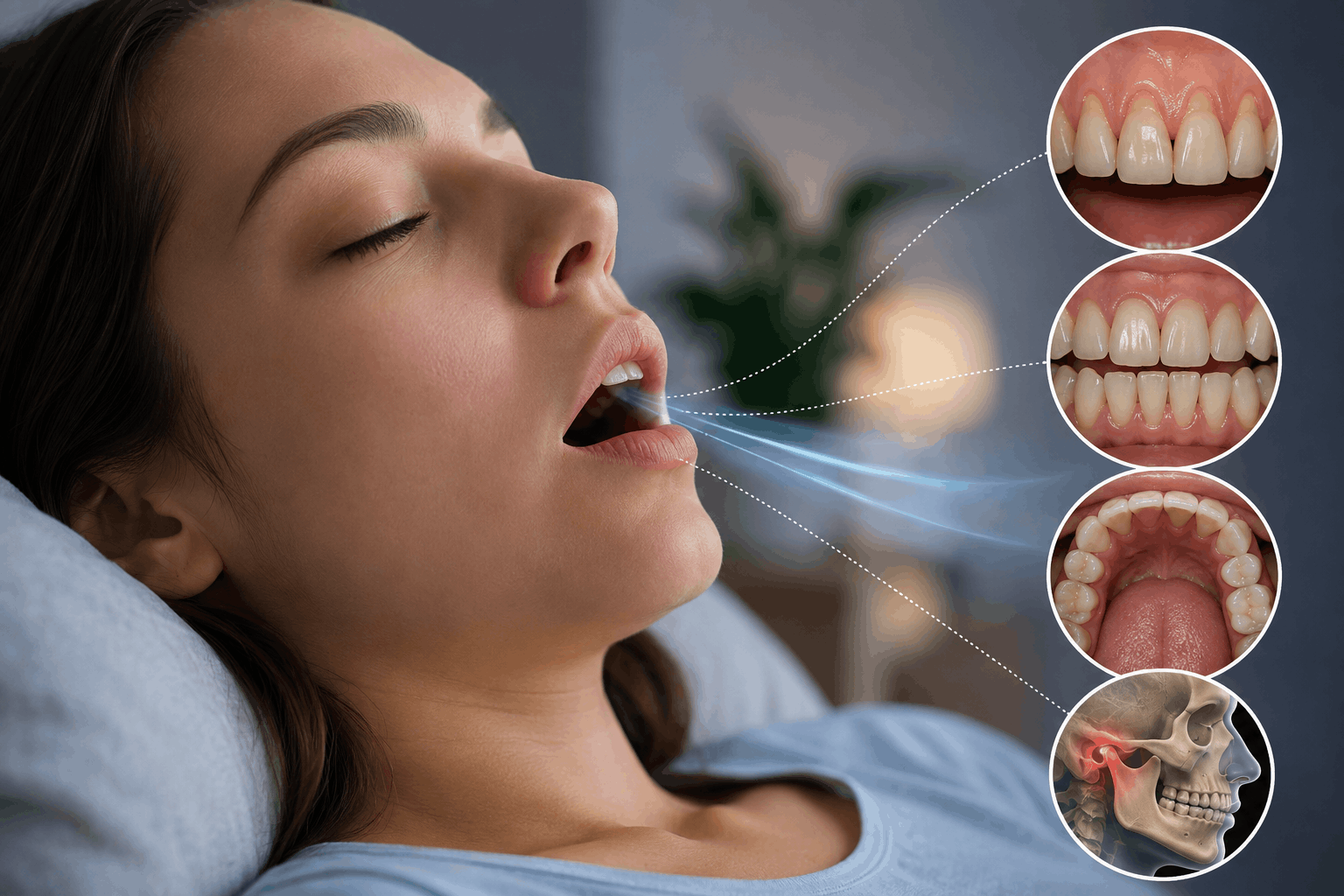

Mouth Breathing: How It Damages Your Teeth, Gums & Jaw Over Time
Most of us never give a single thought to how we breathe. It is a completely automatic process, happening in the background every single second of the day. But there is a huge difference between drawing air through your nose and pulling it through your mouth. While a stuffy nose from a temporary cold might force you to rely on your mouth for a few days, chronic, long-term mouth breathing can quietly trigger a cascade of issues for your oral health, your facial structure, and your overall well-being.
Many people ask us, is mouth breathing bad for your health over time? The short answer is yes.
When you breathe through your mouth constantly, especially during childhood or while you rest at night, it changes the physical environment inside your mouth. From chronic dry mouth to structural changes in your jawline, the habits of how you breathe leave a very visible footprint. At Royal Dental Care in Norridge, we frequently catch the early warning signs of this habit during routine cleanings and exams. Understanding how this habit changes your smile is the first step toward reclaiming a healthier airway.
The Hidden Danger of Dry Mouth
To understand why mouth breathing causes so much trouble for your teeth and gums, we have to look closely at saliva. Your saliva is essentially a built-in defense system for your mouth. It continuously washes away food particles, neutralizes harmful acids created by bacteria, and supplies vital minerals to help keep your tooth enamel strong.
When you continuously pull air over your tongue and teeth, that protective layer of saliva evaporates. Chronic mouth breathing at night leaves you waking up with a parched, sticky mouth and throat.
Without constant saliva flow, bacteria thrive and multiply at an accelerated rate. This dramatic shift creates an ideal environment for plaque buildup, which often leads to an increased risk of cavities, stubborn bad breath, and inflamed, bleeding gums. If left unchecked, that simple dryness can eventually pave the way for more severe forms of periodontal disease, or gum disease, which can ultimately threaten the stability of your teeth.
How It Shapes Your Appearance: The Mouth-Breathing Face
One of the most surprising ways chronic mouth breathing impacts the body is by physically changing the way a person’s face grows and develops. This is a particularly vital concern for young children whose bones are still malleable and growing. The phenomenon is frequently referred to as a mouth-breathing face or a classic mouth-breathing facial profile.
When you breathe naturally through your nose, your mouth stays closed and your tongue rests flat against the roof of your mouth. That upward pressure from the tongue acts as a natural support beam, helping the upper jaw expand into a wide, healthy shape.
When a child relies on mouth breathing, the jaw drops open and the tongue falls down to the floor of the mouth. Without the tongue supporting the roof of the mouth, the upper jaw often narrows over time. This lack of structural expansion can cause the teeth to become severely crowded, pushed forward, or misaligned. In many cases, it leads to a noticeably elongated facial structure, a recessed chin, and an altered bite pattern that usually requires extensive orthodontic care to correct. Parents can also benefit from understanding the importance of early orthodontic evaluations when concerns about jaw and dental development arise.
The Nighttime Battle: Mouth Breathing While Sleeping
For a lot of people, daytime breathing habits look completely normal. The real trouble starts the moment they drift off to sleep. Knowing how to stop mouth breathing at night is a common goal for patients who wake up feeling exhausted despite spending a full eight hours in bed.
When you experience mouth breathing while sleeping, you are missing out on the critical filtration and oxygen optimization that happens when you breathe through your nose. Nasal passages warm, humidify, and filter the air before it reaches your lungs while also releasing nitric oxide, a compound that helps your blood absorb oxygen more efficiently.
Mouth breathing skips this entirely, often resulting in shallower, disrupted sleep cycles. It is frequently linked to heavy snoring and can be a major warning sign of obstructive sleep apnea, a condition where breathing repeatedly stops and starts during the night. If you notice your child sleeping with their mouth wide open or snoring softly, it is worth discussing with a professional early on to protect their sleep quality and development.
Practical Steps: How to Stop Mouth Breathing
Untangling a chronic breathing habit usually requires identifying the underlying cause first. People rarely choose to breathe through their mouths; they typically do it because something is blocking their nasal airway.
Here are the most effective strategies for transitioning back to healthy nasal breathing:
- Address the Airway Obstruction: Chronic allergies, a deviated septum, nasal polyps, or enlarged tonsils and adenoids in children are incredibly common culprits. Consulting with an ear, nose, and throat doctor can help clear the physical path for breathing.
- Practice Active Nasal Exercises: If the physical blockage is gone but the mouth-breathing habit remains out of muscle memory, conscious daytime practice helps. Try keeping your lips sealed gently and focusing entirely on steady nose breathing while reading, working, or driving.
- Evaluate Nighttime Support: For those wondering how to stop mouth breathing, specialized options like myofunctional therapy exercises, contoured pillows, or medical-grade mouth tape can help encourage natural lip closure when you sleep. Always consult a healthcare provider before trying new sleep aids, especially for young children.
How Your Dentist Can Help
Because the structural signs of mouth breathing often show up in the mouth first, your dentist is frequently the first line of defense. During an evaluation at Royal Dental Care, we look far beyond simple cavities. We closely check the width of your upper arch, evaluate the natural resting position of your tongue, and check your tonsils and throat tissues for signs of chronic inflammation or airway restriction.
Catching these structural imbalances early can change the course of a child’s development. By utilizing specialized orthopedic dental appliances, we can help gently widen a narrow palate, making more room for crowded teeth and naturally opening up the nasal cavity to make nose breathing much easier. For adults, we can address the painful side effects of dry mouth, correct bite misalignments, and work hand-in-hand with airway specialists to help you get a genuinely restful night of sleep.
Regular preventive dental care can also help identify changes in your teeth, gums, bite, and oral tissues before they become more serious problems.
Connect with Royal Dental Care in Norridge.
If you or your child are dealing with chronic dry mouth, frequent snoring, morning fatigue, or noticeable changes in tooth alignment, you don’t have to navigate these symptoms without support. The way you breathe shapes your health in ways that affect your entire body, and our team is dedicated to helping you find comprehensive, long-term balance.
At Royal Dental Care, we focus on patient-centered, honest care designed to protect both your oral health and your long-term vitality. Let’s work together to identify the root cause of your symptoms and build a comfortable path forward.
For children and adults experiencing bite or alignment concerns, orthodontic treatment may be considered as part of a broader approach to improving dental function and alignment.
Reach out to our Norridge office today to book your consultation, and let’s help your family breathe, sleep, and smile with complete ease.
Frequently Asked Questions
Q: Can mouth breathing cause my teeth to shift or become crooked?
A: Yes, it absolutely can. When your mouth stays open habitually, the regular pressure that your cheeks and tongue exert on your teeth is altered. Without the upward support of the tongue against the palate, the upper jaw can narrow, leaving less physical room for teeth and causing them to crowd or protrude forward.
Q: Why does my mouth feel so incredibly dry when I wake up?
A: When you pull air through your mouth while sleeping, you evaporate the natural saliva that is supposed to protect your oral tissues. This lack of moisture creates a dry, sticky environment where oral bacteria can multiply rapidly, often resulting in a morning sore throat, bad breath, and a higher risk for tooth decay.
Q: Is it safe to use mouth tape to stop breathing through my mouth at night?
A: Mouth taping has become a popular topic for sleep optimization, but it should always be approached with caution. It can be a helpful tool if your nasal passages are completely clear and the habit is purely behavioral. However, if you have a physical nasal blockage or undiagnosed sleep apnea, forcing your lips shut can be dangerous. You should always get a comprehensive airway evaluation from a healthcare professional before trying it.
Real Patients. Real Reviews.



Luke
1 year ago
Isabella was great!! Highly recommend her

Julia Swider
1 year ago
Great experience, everyone is very kind and patient. Take time to educate you on what is going on, which is much appreciated. Highly recommend!
Response from the owner
Hi Julia,
Thank you for leaving us a review! Your feedback is appreciated.2 years ago

Pawel Blaszczak
1 year ago

Casey Kinsella
1 year ago
The atmosphere was great. The professionals were friendly. The communication between the office, dentist and patient was awful. I’ve found this with most dentist offices that once they get your money, they forget about you. Not happy with the customer service.

Scott Donaldson
1 year ago

Szymon Szuster
1 year ago

Ozzie Skenderi
1 year ago
Everyone is so nice and helpful!! They are great!!
Response from the owner
Hi Ozzie,
We appreciate you taking the time to provide your feedback. We're happy to hear you had a positive experience at our practice!2 years ago

Jacqueline Hernandez
1 year ago
Really clean and great service

Rafal Raszewski
1 year ago

vivian trankina (viv)
1 year ago
amazing service everyone is kind here i’ve been going here for about 2 ywars

Keluarga Bahagia
1 year ago
Since I moved from another dentist to this Royal Dental treatment has felt so amazing, all the women who work at the desk are very kind to help me and my husband for scheduling, especially for me a dental cleaner who cleans my teeth Lois is my favorite, she is very friendly and does clean details. The dentist is also good, twice helped by the dentist forgot his name, he is also very helpful to check, for all the good and happy come to this Kingdom's teeth

Karina Czajko
1 year ago
Very professional, always respectful! Highly recommend!

Yoly navarrete
1 year ago
The atmosphere is beautiful the place is very clean. Very professional service. I went in for a free consultation. They were very thorough at explaining everything. I will be coming back and I Recommend them.


Alyssa Silvia
1 year ago
Response from the owner
Hi Alyssa Silvia Thanks for visiting Royal Dental Care. We truly value your feedback and your confidence in our team.
1 year ago

Amreen Jalal
1 year ago
izabela was so sweet and made the entire appointment very easy and enjoyable. the environment was really friendly, welcoming and clean. would definitely recommend to others, they’re very thorough with their work!
Response from the owner
Hi Amreen Jalal Thanks for taking the time to leave a review. Your input helps us continue providing high-quality care at Royal Dental Care.
1 year ago

LUKASZ WROBLEWSKI
1 year ago
This is a great place for those who want a gentle dentist, a thorough hygienist, and friendly staff. Everyone is so nice, and the whole office is clean and modern.
Response from the owner
Hi LUKASZ WROBLEWSKI Thank you for your kind words. We're so pleased to know you had a great experience at Royal Dental Care. 1 year ago

Katherine Dynak
1 year ago
Pretty good service
Response from the owner
Hi Katherine Dynak Your feedback means a lot to our team. We're committed to continuing the excellent care you’ve come to expect. 1 year ago

Melissa
1 year ago
Very friendly staff. Professional, I’ve been coming here for years now
Response from the owner
Hi Melissa We appreciate your support and are grateful you chose Royal Dental Care for your dental needs. Looking forward to seeing you again. 1 year ago

Bobby Anderson
1 year ago
I love this place! Been coming for years. I’ve had a lot of work done lol
Response from the owner
Hi Bobby Anderson Thank you for your kind words. We're so pleased to know you had a great experience at Royal Dental Care. 1 year ago

Rosa Rendon
1 year ago
Very good experience, Israa was amazing and did a great job
Response from the owner
Hi Rosa Rendon Your feedback means a lot to our team. We're committed to continuing the excellent care you’ve come to expect. 1 year ago