
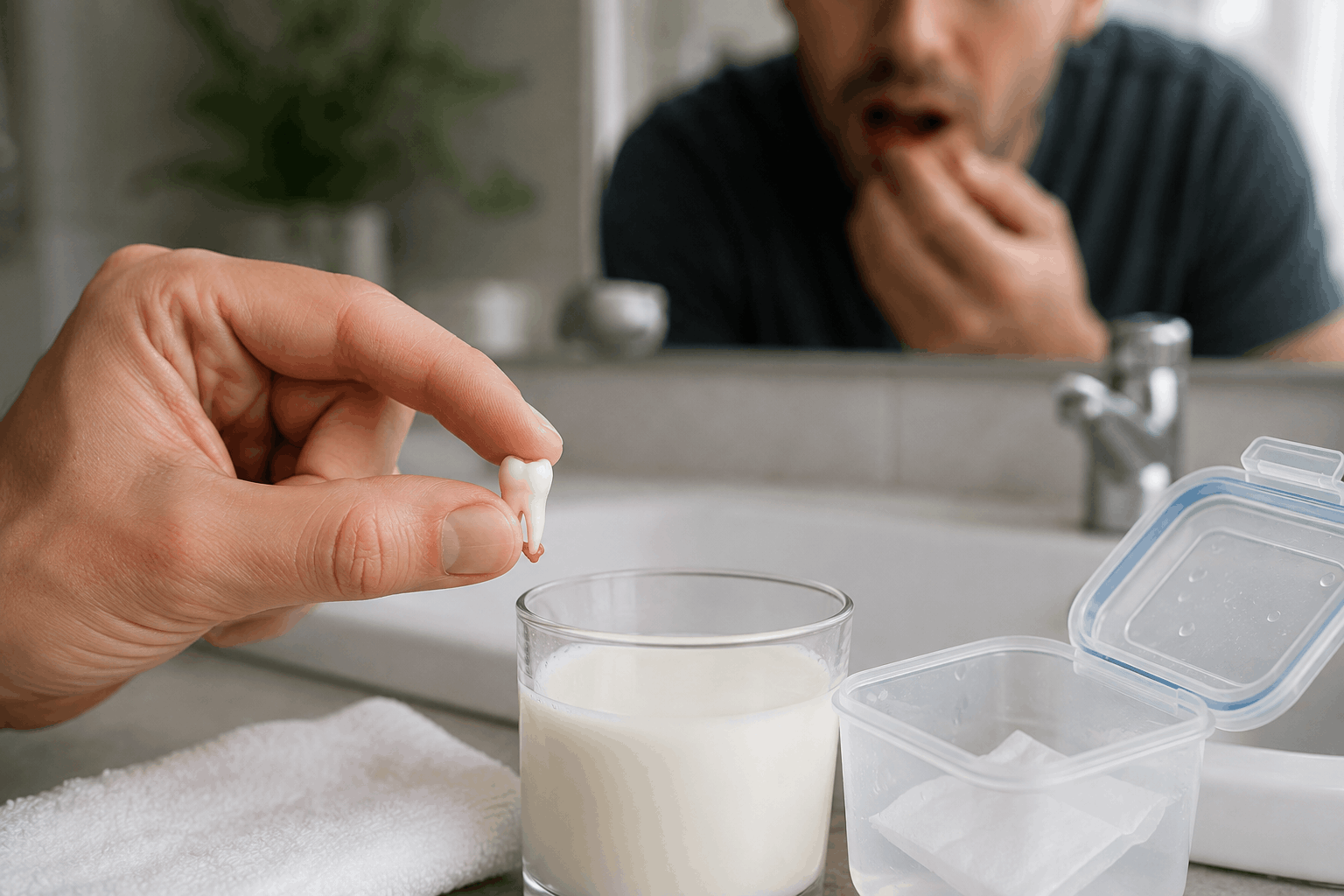

Knocked-Out Tooth? Step-by-Step Emergency Guide to Save It
It happens in a flash. You are playing a quick game of pickup soccer on the weekend, or maybe your child takes a bad tumble on the playground stairs. Before you even realize what happened, there is a sudden impact, a bit of shock, and you are staring at a permanent tooth that is no longer in someone’s mouth.
A dental emergency like this triggers immediate panic, and that is completely normal. What surprises a lot of people, though, is that a missing tooth is not automatically a lost cause. If you act fast and keep your wits about you, there is often a good chance it can be saved and replanted. Knowing what to do for a knocked-out tooth right at the scene is one of the biggest factors in preserving your natural smile and potentially avoiding more extensive treatment down the road.
If you are currently standing in the middle of a dental crisis, take a deep breath. Let us map out exactly how to handle a knocked-out tooth before you even jump in the car to see an emergency knocked out tooth dentist in Schaumburg.
The Biological Clock: Why Every Minute Counts
When you have a tooth knocked out, a literal countdown begins. The root surface of a living tooth is covered in delicate periodontal ligament cells. Think of them as the tiny biological anchors that connect your tooth directly to your jawbone. Understanding the anatomy of a tooth can help explain why protecting these tissues is so important. For a professional to put the tooth back where it belongs, those cells need to remain as healthy as possible.
Ideally, the prime window for saving a tooth is within thirty to sixty minutes of the accident. Can you save a tooth that has been out for over an hour? Sometimes, yes, but your odds begin dropping fast the moment the root starts drying out. Keeping those root tissues alive is your main goal during the first few minutes of the injury.
Your Quick Action Plan: How to Handle Knocked Out Tooth Emergencies
If you find yourself managing an active injury, try to focus entirely on these immediate steps:
1. Grab the Top, Avoid the Root
When you go to pick up the tooth, make sure you only touch the crown. That is the wider, chewing surface you normally see when you smile. Never grip or scratch the root. The root surface is incredibly delicate, and accidentally wiping away or crushing those microscopic cells can reduce the chances of a successful reattachment.
2. Clean It with Extreme Care
If the tooth landed in the grass, dirt, or sand, it needs to be cleaned up, but you have to be gentle. Hold it by the chewing edge and rinse it briefly under a very slow stream of cool water or clean saline solution.
- Do not scrub it with a washcloth or toothbrush.
- Do not use hand soap, dish soap, or rubbing alcohol.
- Do not wrap it up tightly in a dry napkin or paper towel.
3. Put It Back in Place If You Can
For an adult, the safest and most effective place for a knocked out tooth is actually its original socket. If the area is intact and not bleeding too severely, try to gently slide the clean tooth right back into the opening. Make sure it is facing the right direction. Once it is in, have the person bite down very softly on a clean piece of gauze or a damp cloth to keep it stable while you travel.
4. Use the Right Liquid If It Won’t Go Back In
If you cannot slide the tooth back into the gums, you cannot let it sit exposed to the open air. It has to stay completely wet.
- Your Best Choice: A tooth preservation solution, such as Hank’s Balanced Salt Solution, if available.
- The Regular Household Backup: Plain, cold milk. Cow’s milk works surprisingly well because its chemical makeup helps keep the root cells viable.
- The Emergency Backup: If you do not have milk nearby, have the injured person spit into a small cup and submerge the tooth completely in their own saliva.
- What to Completely Avoid: Plain tap water. Although it may seem like a good option, it is not recommended because it can damage the delicate periodontal ligament cells if the tooth remains in it for long.
What Changes When It Is a Child’s Baby Tooth?
If the person who got hurt is a toddler or a young child, the response changes completely. While it can be tough to distinguish a baby tooth from a permanent one during a stressful situation, you should never try to force a dislodged baby tooth back into a child’s gums.
Replanting a temporary baby tooth can damage or misalign the adult permanent tooth developing underneath. If possible, place the tooth in a cup of milk, comfort the child, and head straight to a local dental office to make sure there are no hidden injuries to the surrounding teeth or jaw.
Managing Pain and Bleeding in Transit
While you are focusing on preserving the tooth itself, you also need to keep the patient safe and comfortable on the drive over.
- Pressure for Bleeding: Mouth injuries often bleed heavily because the gums contain many blood vessels. Take a clean cloth or a rolled bundle of gauze, place it right over the empty socket, and have the patient apply firm, steady pressure.
- Ice for Swelling: To help reduce bruising and swelling, hold an ice pack or a bag of frozen vegetables wrapped in a thin towel against the outside of the lip or cheek.
- Comfort Measures: Over-the-counter pain medicine can help relieve discomfort, but try to avoid aspirin if the site is still actively bleeding unless advised otherwise by a healthcare professional. If the injury is severe and the tooth cannot be saved, your dentist may discuss options such as tooth extraction and replacement after evaluating the damage.
What Happens Once You Reach the Office?
When you walk through our doors with an active trauma case, our team will make every effort to see you as quickly as possible. The dentist will evaluate the empty socket, check for any debris, and take a couple of digital X-rays to ensure the surrounding bone is still intact.
If everything looks clean and the tooth is in good shape, the provider will carefully seat it back into position. To give the underlying ligaments time to repair and rebuild, they will attach a temporary splint. This is usually a small wire or flexible material bonded across the back of the injured tooth and its healthy neighbors. It keeps the tooth from moving around for a few weeks while the tissues heal.
You will need to come back for a few follow-up visits over the next couple of months so we can monitor how the inner nerve tissue is recovering. While severe trauma can sometimes mean the tooth will need a standard root canal down the road, preserving the natural tooth is generally the preferred outcome whenever possible.
Get Urgent Care in Schaumburg Right Now
When a serious dental accident happens, you do not have the luxury of time to sit around researching dental articles or waiting for a call back. Every minute truly matters when trying to save a natural tooth. If you are currently dealing with a knocked out tooth, the team at Royal Dental Care is here to provide prompt, same-day dental care whenever possible. You can also review our emergency dental guide to better understand what to do before arriving at the office.
We keep our schedule flexible to accommodate patients with urgent dental needs. Call the front desk at Royal Dental Care in Schaumburg as soon as possible so our clinical team can prepare for your arrival and provide timely treatment.
Frequently Asked Questions
Q: Can a tooth ever be saved if it has been out of the mouth for more than an hour?
A: While the odds drop significantly after the sixty-minute mark, it is still worth seeing an emergency dentist. If the tooth was stored properly, such as in milk or a tooth preservation solution, some periodontal ligament cells may still be viable.
Q: What do we do if the tooth is too damaged to be replanted?
A: If the tooth is fractured or cannot be successfully replanted, modern dentistry offers effective treatment options. Once your gums have healed, your dentist can discuss options such as a custom dental bridge or a dental implant to restore your smile.
Q: Should I just head straight to the hospital emergency room?
A: If you suspect a broken jaw, have deep facial cuts, severe dizziness, or have lost consciousness, go to the nearest hospital emergency room immediately. If the injury is limited to a knocked-out tooth, an emergency dental office is usually better equipped to provide the specialized care needed.
Q: Is there any reliable way to prevent teeth from getting knocked out?
A: One of the best ways to reduce the risk of a knocked-out tooth is by wearing a properly fitted sports mouthguard. Whether you or your children play contact sports like basketball or hockey, or participate in activities such as mountain biking or skateboarding, a custom mouthguard can help absorb the force of an impact and better protect your teeth.
Real Patients. Real Reviews.



Luke
1 year ago
Isabella was great!! Highly recommend her

Julia Swider
1 year ago
Great experience, everyone is very kind and patient. Take time to educate you on what is going on, which is much appreciated. Highly recommend!
Response from the owner
Hi Julia,
Thank you for leaving us a review! Your feedback is appreciated.2 years ago

Pawel Blaszczak
1 year ago

Casey Kinsella
1 year ago
The atmosphere was great. The professionals were friendly. The communication between the office, dentist and patient was awful. I’ve found this with most dentist offices that once they get your money, they forget about you. Not happy with the customer service.

Scott Donaldson
1 year ago

Szymon Szuster
1 year ago

Ozzie Skenderi
1 year ago
Everyone is so nice and helpful!! They are great!!
Response from the owner
Hi Ozzie,
We appreciate you taking the time to provide your feedback. We're happy to hear you had a positive experience at our practice!2 years ago

Jacqueline Hernandez
1 year ago
Really clean and great service

Rafal Raszewski
1 year ago

vivian trankina (viv)
1 year ago
amazing service everyone is kind here i’ve been going here for about 2 ywars

Keluarga Bahagia
1 year ago
Since I moved from another dentist to this Royal Dental treatment has felt so amazing, all the women who work at the desk are very kind to help me and my husband for scheduling, especially for me a dental cleaner who cleans my teeth Lois is my favorite, she is very friendly and does clean details. The dentist is also good, twice helped by the dentist forgot his name, he is also very helpful to check, for all the good and happy come to this Kingdom's teeth

Karina Czajko
1 year ago
Very professional, always respectful! Highly recommend!

Yoly navarrete
1 year ago
The atmosphere is beautiful the place is very clean. Very professional service. I went in for a free consultation. They were very thorough at explaining everything. I will be coming back and I Recommend them.

Alyssa Silvia
1 year ago
Response from the owner
Hi Alyssa Silvia Thanks for visiting Royal Dental Care. We truly value your feedback and your confidence in our team.
1 year ago

Amreen Jalal
1 year ago
izabela was so sweet and made the entire appointment very easy and enjoyable. the environment was really friendly, welcoming and clean. would definitely recommend to others, they’re very thorough with their work!
Response from the owner
Hi Amreen Jalal Thanks for taking the time to leave a review. Your input helps us continue providing high-quality care at Royal Dental Care.
1 year ago

LUKASZ WROBLEWSKI
1 year ago
This is a great place for those who want a gentle dentist, a thorough hygienist, and friendly staff. Everyone is so nice, and the whole office is clean and modern.
Response from the owner
Hi LUKASZ WROBLEWSKI Thank you for your kind words. We're so pleased to know you had a great experience at Royal Dental Care. 1 year ago

Katherine Dynak
1 year ago
Pretty good service
Response from the owner
Hi Katherine Dynak Your feedback means a lot to our team. We're committed to continuing the excellent care you’ve come to expect. 1 year ago

Melissa
1 year ago
Very friendly staff. Professional, I’ve been coming here for years now
Response from the owner
Hi Melissa We appreciate your support and are grateful you chose Royal Dental Care for your dental needs. Looking forward to seeing you again. 1 year ago

Bobby Anderson
1 year ago
I love this place! Been coming for years. I’ve had a lot of work done lol
Response from the owner
Hi Bobby Anderson Thank you for your kind words. We're so pleased to know you had a great experience at Royal Dental Care. 1 year ago

Rosa Rendon
1 year ago
Very good experience, Israa was amazing and did a great job
Response from the owner
Hi Rosa Rendon Your feedback means a lot to our team. We're committed to continuing the excellent care you’ve come to expect. 1 year ago