

Mini Dental Implants vs Regular Implants: Which Is Right for You?
Losing a tooth can change a lot more than just the appearance of your smile. It can impact how you chew your favorite meals, alter the clarity of your speech, and even cause the surrounding jawbone to gradually shrink over time. Thankfully, dental technology has come an incredibly long way, and modern implants offer a permanent, stable solution that feels remarkably like your natural teeth.
But as you start researching your tooth replacement choices, you will likely encounter a common dilemma: mini dental implants vs regular implants.
It is very common to feel unsure about how mini implants vs regular implants actually stack up against each other, or which option fits your unique mouth best. Are mini implants just a cheaper, watered-down version of the standard procedure, or do they serve a completely separate medical purpose? At Royal Dental Care in Norridge, we want to clear up the confusion so you can walk into your consultation feeling entirely informed.
Understanding the Physical Differences
To get a clear picture of mini dental implants vs regular dental implants, we have to start with their basic anatomy and physical structure. While both types are crafted from highly durable, biocompatible titanium that naturally fuses with your bone tissue, their design and size vary significantly.
Regular Dental Implants
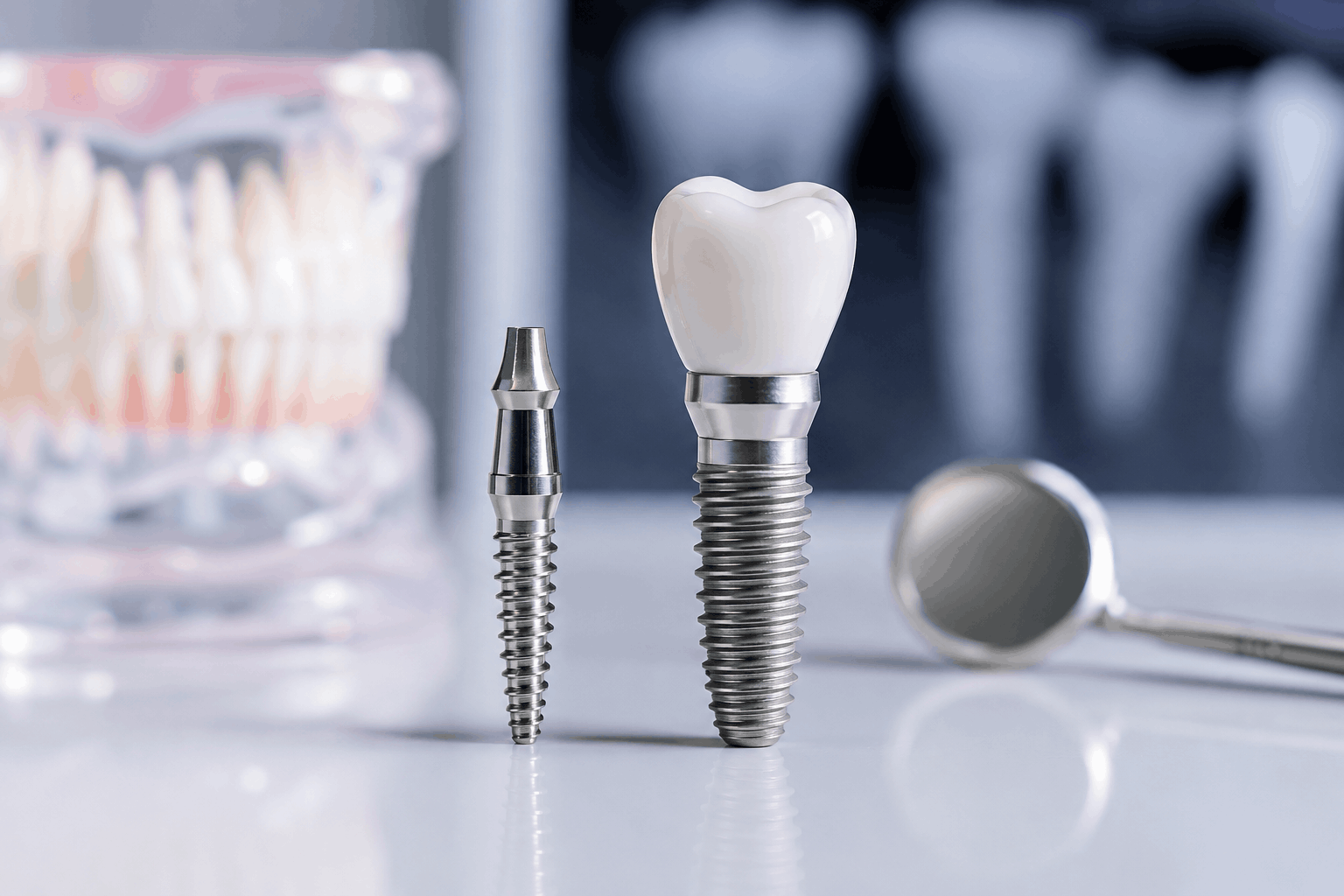
A standard, regular dental implant is typically composed of two main pieces: a hollow titanium post that mimics a natural tooth root, and a separate connector piece called an abutment that screws into the top of the post to hold your custom crown or bridge.
The diameter of a regular implant generally ranges from 3.4 to 6 millimeters. Because of this wider surface area, they require a healthy, robust amount of bone density in your jaw to anchor safely and withstand the daily chewing forces of your mouth.
The standard structure of a regular dental implant requires a multi-step component system.
Mini Dental Implants
As the name implies, mini dental implants are significantly smaller. They generally measure less than 3 millimeters in diameter, making them roughly the size of a small toothpick or a narrow wooden matchstick.
Unlike the multi-piece design of a standard implant, a mini implant is a single, solid piece of titanium. The bottom half features a narrow screw that twists directly into the bone, while the top half features a small, ball-shaped connector designed to snap directly into a dental appliance. Because they are so slender, they can be successfully placed in tight spaces or in areas where a patient has suffered significant bone loss.
Jawbone Requirements and Bone Grafting
The single biggest factor that determines whether you are a candidate for a mini implant vs regular implant is the current volume and density of your jawbone.
When you lose a tooth, the underlying bone tissue in that specific area stops receiving stimulation from chewing and naturally begins to dissolve. If you have been missing teeth for several years, your jawbone might be too thin or brittle to support a wider, standard titanium post.
If you choose a regular implant but lack the required bone structure, you will likely need a preliminary procedure called a bone graft. This involves placing bone tissue into the area and waiting several months for it to heal and thicken before the implant can finally be placed.
Mini implants completely change this dynamic. Because their thin profile requires significantly less physical bone to achieve structural stability, they often allow patients with advanced bone loss to bypass the expensive, lengthy bone grafting stage entirely.
The Procedure and Healing Timeline
The surgical experience and overall recovery timeline look quite different when comparing mini dental implants vs regular placement styles.
Placing a regular implant is a multi-stage process that requires patience. First, the dentist makes a small incision in the gum tissue, prepares the bone, and inserts the titanium post. The gums are then closed, and you must wait anywhere from three to six months for a process called osseointegration to occur, where your bone naturally grows and locks tightly around the metal. Once healing is complete, the abutment is attached, and your final crown is crafted and placed.
The placement of a mini implant is far less invasive and can often be completed in a single office visit. Because the post is so thin, it can frequently be placed directly through the gums into the bone without any heavy incisions or surgical sutures. This means you will experience significantly less post-operative swelling, minimal bleeding, and a remarkably fast recovery time. In fact, many patients can comfortably use their new teeth to eat soft foods on the very same evening.
Mini dental implants are frequently used to stabilize shifting lower dentures.
Best Uses for Each Type
Both options excel at completely different tasks, and your dentist will recommend the style that matches the structural needs of your smile.
Regular implants are the undisputed gold standard for replacing large, single teeth, particularly your back molars. Molars endure an incredible amount of biting pressure every single day when you chew tough foods. The wider diameter of a standard implant provides the heavy-duty structural base needed to absorb that force without shifting or breaking over time.
Mini implants are exceptionally well-suited for anchoring and stabilizing loose, removable lower dentures. If you have worn traditional dentures for years, you know how frustrating it can be when they slip, click, or pop out of place while you are trying to speak or eat. A dentist can place a series of four to six mini implants along your jawline, and your existing denture can be modified to snap firmly onto the ball-shaped tops. This gives you a rock-solid smile without the need for messy dental adhesives or complex surgeries. They are also ideal for replacing narrow front teeth where the physical space between roots is highly limited.
The Financial Picture: Mini Implants vs Regular Implants Cost
Financial planning is an important part of any health decision. When looking at the mini implants vs regular implants cost, mini options are almost always the more budget-friendly path upfront.
The overall cost of mini dental implants vs regular implants is lower for several reasons. First, the physical mini implant component itself is simpler and less expensive to manufacture than a complex, multi-piece standard implant. Second, the surgical placement is faster and requires fewer visits to the office, reducing the associated clinical fees.
Finally, because mini implants frequently eliminate the need for preliminary procedures like bone grafting or sinus lifts, you can avoid thousands of dollars in preparatory surgeries. However, it is vital to remember that regular implants are incredibly durable and designed to last a lifetime with proper care, making them an excellent long-term value despite the higher initial investment. You can also learn more about how long dental implants last when considering their long-term value.
Schedule a Consultation at Royal Dental Care
Choosing between mini and regular implants isn’t a decision you have to make based on guesswork. Every mouth is built differently, and a comprehensive evaluation with three-dimensional dental imaging is the only true way to measure your bone density and see which option fits your lifestyle and health goals.
At Royal Dental Care in Norridge, our experienced team takes a patient-first approach to restorative dentistry. We will take the time to evaluate your smile, explain the long-term benefits of each treatment path, and provide clear, transparent pricing options so you can move forward with complete peace of mind.
Call our Norridge office today to schedule your implant consultation, and let’s work together to restore the full health, function, and beauty of your smile.
Frequently Asked Questions on Mini Dental Implants vs Regular Implants
Q: Do mini dental implants last as long as regular implants?
A: Regular implants generally have a slightly longer clinical track record for single-tooth replacement due to their thickness and ability to handle intense chewing forces. However, when used correctly, such as for stabilizing a full lower denture, mini dental implants are highly durable and can last for many years with excellent home care and routine dental checkups.
Q: Is the placement of a mini dental implant painful?
A: Not at all. Because the procedure is far less invasive than standard implant surgery, we only need to use a small amount of local anesthetic to completely numb the area. Most patients report feeling some mild pressure during the appointment, but very little to no discomfort afterward, with many returning to normal routines the next morning.
Q: Can mini dental implants be used to replace a single back molar?
A: Generally, no. Back molars absorb the heaviest biting forces in your entire mouth. Because mini implants are thin and narrow, using a single mini implant to support a large molar crown can place too much stress on the small post, increasing the risk of it loosening or breaking. A wider, regular dental implant is almost always the safer, more reliable choice for a back tooth.
Real Patients. Real Reviews.

Luke
1 year ago
Isabella was great!! Highly recommend her

Julia Swider
1 year ago
Great experience, everyone is very kind and patient. Take time to educate you on what is going on, which is much appreciated. Highly recommend!
Response from the owner
Hi Julia,Thank you for leaving us a review! Your feedback is appreciated.2 years ago

Pawel Blaszczak
1 year ago

Casey Kinsella
1 year ago
The atmosphere was great. The professionals were friendly. The communication between the office, dentist and patient was awful. I’ve found this with most dentist offices that once they get your money, they forget about you. Not happy with the customer service.

Scott Donaldson
1 year ago

Szymon Szuster
1 year ago

Ozzie Skenderi
1 year ago
Everyone is so nice and helpful!! They are great!!
Response from the owner
Hi Ozzie,We appreciate you taking the time to provide your feedback. We're happy to hear you had a positive experience at our practice!1 year ago

Jacqueline Hernandez
1 year ago
Really clean and great service

Rafal Raszewski
1 year ago

vivian trankina (viv)
1 year ago
amazing service everyone is kind here i’ve been going here for about 2 ywars

Keluarga Bahagia
1 year ago
Since I moved from another dentist to this Royal Dental treatment has felt so amazing, all the women who work at the desk are very kind to help me and my husband for scheduling, especially for me a dental cleaner who cleans my teeth Lois is my favorite, she is very friendly and does clean details. The dentist is also good, twice helped by the dentist forgot his name, he is also very helpful to check, for all the good and happy come to this Kingdom's teeth

Karina Czajko
1 year ago
Very professional, always respectful! Highly recommend!

Yoly navarrete
1 year ago
The atmosphere is beautiful the place is very clean. Very professional service. I went in for a free consultation. They were very thorough at explaining everything. I will be coming back and I Recommend them.

Alyssa Silvia
1 year ago
Response from the owner
Hi Alyssa Silvia Thanks for visiting Royal Dental Care. We truly value your feedback and your confidence in our team.1 year ago

Amreen Jalal
1 year ago
izabela was so sweet and made the entire appointment very easy and enjoyable. the environment was really friendly, welcoming and clean. would definitely recommend to others, they’re very thorough with their work!
Response from the owner
Hi Amreen Jalal Thanks for taking the time to leave a review. Your input helps us continue providing high-quality care at Royal Dental Care.1 year ago

LUKASZ WROBLEWSKI
1 year ago
This is a great place for those who want a gentle dentist, a thorough hygienist, and friendly staff. Everyone is so nice, and the whole office is clean and modern.
Response from the owner
Hi LUKASZ WROBLEWSKI Thank you for your kind words. We're so pleased to know you had a great experience at Royal Dental Care. 1 year ago

Katherine Dynak
1 year ago
Pretty good service
Response from the owner
Hi Katherine Dynak Your feedback means a lot to our team. We're committed to continuing the excellent care you’ve come to expect. 1 year ago

Melissa
1 year ago
Very friendly staff. Professional, I’ve been coming here for years now
Response from the owner
Hi Melissa We appreciate your support and are grateful you chose Royal Dental Care for your dental needs. Looking forward to seeing you again. 1 year ago

Bobby Anderson
1 year ago
I love this place! Been coming for years. I’ve had a lot of work done lol
Response from the owner
Hi Bobby Anderson Thank you for your kind words. We're so pleased to know you had a great experience at Royal Dental Care. 1 year ago

Rosa Rendon
1 year ago
Very good experience, Israa was amazing and did a great job
Response from the owner
Hi Rosa Rendon Your feedback means a lot to our team. We're committed to continuing the excellent care you’ve come to expect. 1 year ago